
 Forest Services
Introduction of Moamoria Rebellion
The Moamoria Rebellion in Assam stands as a powerful testament to the simmering unrest that once challenged the hegemony of the Ahom Dynasty in 18th-century Assam. This socio-religious uprising, led by the Moamorias — devout followers of the Mayamara Satra, marked one of the earliest expressions of class and caste-based dissent in the northeastern region of India.
Far from being a mere power struggle, the Moamoria Rebellion in Assam was deeply rooted in systemic exploitation, social discrimination, and religious suppression. The Ahom rulers, who had maintained a long-standing autocratic regime, imposed the rigid Paik labor system, under which commoners were subjected to forced, unpaid labor in royal and military services. The Moamorias, primarily from marginalized tribal and backward castes, were excluded from the ruling structures and faced constant persecution for their non-Brahminical spiritual beliefs.

The rebellion erupted in full force in 1769 and shook the very foundations of Ahom rule. The rebels not only posed a formidable military challenge but also briefly captured the Ahom capital, Rangpur. Although the rebellion saw multiple phases, each brutally repressed, its cumulative impact was transformative — weakening the monarchy and inviting external intervention from the Burmese and eventually the British.
Understanding the Moamoria Rebellion in Assam is crucial not just from a historical lens but as a lens through which to view early resistance movements that advocated egalitarian values, spiritual freedom, and social justice in India. This uprising offers a critical perspective on how socio-religious movements, when marginalized, can evolve into full-fledged rebellions capable of altering the course of history.
- APSC Notification 2025 OUT | APSC CCE 2025 Exam Date, Vacancy, Exam Pattern, Syllabus & Eligibility
- APSC Exam 2025: A Complete Guide for Aspirants
- APSC CCE Final Result 2023: Assam Public Service Commission Declares Results for Combined Competitive Examination
- APSC Result 2025: Date, Download PDF, and Merit List
- APSC Application Form 2025: Expected Release Date , How to Apply
- APSC Cut Off 2025: Expected Cut off, Everything You Need to Know
- APSC Exam 2025: Key Dates, Eligibility, Admit Card, Syllabus, and Exam Pattern
- APSC Syllabus 2025: Subject-Wise Topics for APSC Prelims, Mains, and Interview
📚 Historical Background of the Moamoria Rebellion in Assam
To truly grasp the roots of the Moamoria Rebellion in Assam, one must first understand the socio-political landscape of Assam under the Ahom dynasty. The Ahoms, originally of Tai origin, arrived in the Brahmaputra Valley in the early 13th century and gradually established a kingdom that lasted for nearly 600 years. Over time, they assimilated into Assamese culture but maintained a highly centralized, hierarchical society dominated by aristocratic clans and a rigid administrative framework.
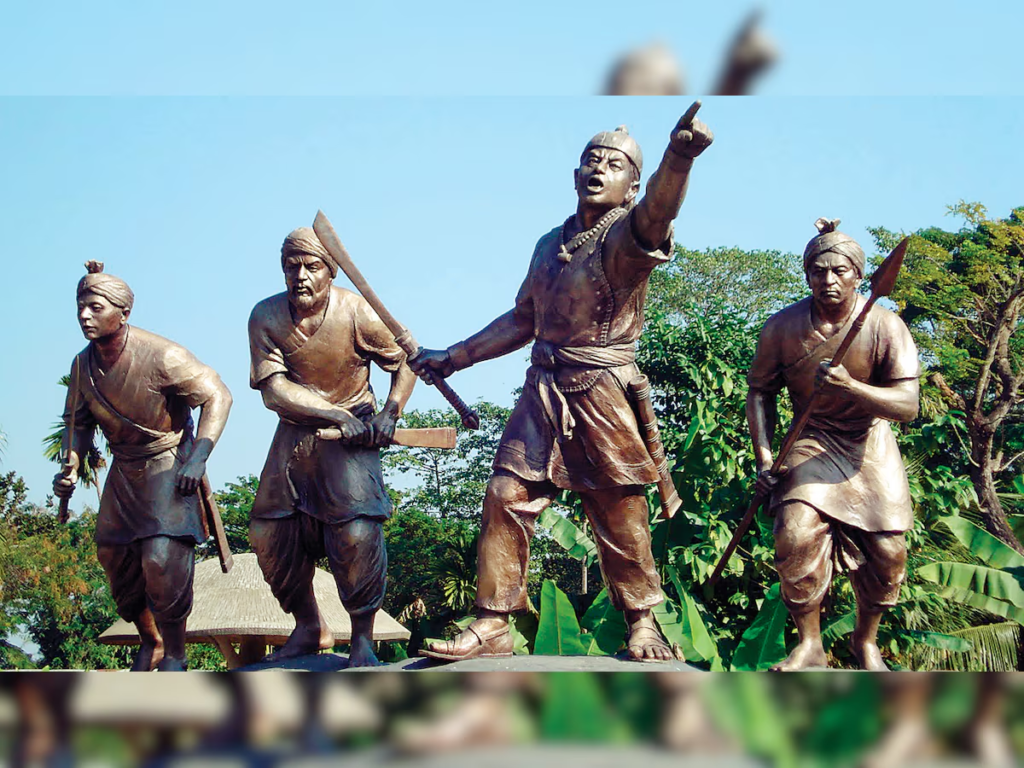
The Ahom administration was based on the Paik system, a form of compulsory labor where every male was registered as a paik (laborer or soldier) and had to serve the state for fixed periods. While efficient from a governance perspective, this system disproportionately affected the lower strata of society, especially tribal and marginalized communities. It became one of the key instruments of economic oppression, breeding discontent among the masses.
During the 17th and 18th centuries, Mayamara Satra, a liberal offshoot of Neo-Vaishnavism founded by Aniruddhadeva, gained prominence among lower caste and tribal groups. This satra emphasized equality, spiritual devotion, and social justice — principles that directly contradicted the elitist and hierarchical norms upheld by the Ahom elite. The Moamorias, ardent followers of this movement, were increasingly seen as a threat by the orthodox Ahom rulers.
The Moamorias were subjected to systemic persecution: they were denied administrative positions, their satras were often vandalized, and their religious practices suppressed. The antagonism between the Ahom monarchy and the Mayamara followers intensified, and by the mid-18th century, tensions had reached a boiling point.
It is also essential to note that the Ahom empire during this period was riddled with internal decay — succession crises, over-expansion, and increasing corruption weakened its structure. These vulnerabilities made it easier for organized resistance to emerge.
Thus, the Moamoria Rebellion in Assam did not arise in a vacuum. It was the product of systemic religious discrimination, economic exploitation, and caste-based exclusion in a decaying imperial setup. The rebellion became a convergence point for multiple suppressed communities who rallied under the banner of the Mayamara Satra to demand justice, dignity, and a reimagining of power dynamics.
Causes of the Moamoria Rebellion in Assam
The Moamoria Rebellion in Assam did not erupt spontaneously — it was the outcome of deep-seated socio-religious tensions, sustained economic burdens, and centuries of systemic marginalization. These elements collectively galvanized the Moamorias into one of the most significant anti-feudal uprisings in Assamese history.
1️⃣ Religious Discrimination
At the heart of the Moamoria Rebellion in Assam lay the issue of religious oppression. The Moamorias were followers of the Mayamara Satra, a reformist Vaishnavite sect that emerged as a reaction to Brahmanical orthodoxy and the exclusivist policies of the Ahom court. The sect’s founder, Aniruddhadeva, advocated spiritual inclusivity, allowing entry to tribal people, lower castes, and women — all of whom were generally excluded from mainstream Brahmanical rituals.
However, the Ahom rulers, influenced by upper-caste clergy, perceived this movement as subversive. The Moamoria Satras were frequently targeted: monks were tortured, monasteries desecrated, and their leaders ostracized. Even revered religious figures from the community were denied basic respect or political representation. This consistent suppression of their spiritual identity sowed the seeds of a deeply religiously motivated rebellion.
2️⃣ Economic Exploitation
Another major driver behind the Moamoria Rebellion in Assam was the exploitative Paik system, which formed the economic backbone of the Ahom administration. Under this system, commoners were enrolled as paiks, compelled to render free labor in state projects — from building embankments to fighting wars — without adequate compensation or relief. Over time, the burden of service grew disproportionate, particularly on the non-elite classes, which included the Moamorias.
Land distribution was also deeply skewed. Royal officers and aristocrats held vast tracts of fertile land, while the Moamorias and other lower-class groups struggled for subsistence. Taxation was often arbitrary and cruelly enforced, exacerbating rural distress. For a community already under spiritual attack, these economic hardships were unbearable and triggered mass unrest.
3️⃣ Social Marginalization
In addition to religious and economic factors, social exclusion played a vital role in the Moamoria uprising. The Ahom court followed a strict caste and status hierarchy, where administrative and military roles were largely reserved for the nobility or upper-caste elites. Moamorias, despite being skilled, disciplined, and deeply organized, were denied access to these positions.
Moreover, incidents of public humiliation of Moamoria leaders, denial of dignified funerals, and exclusion from community rituals and public resources created a climate of humiliation and hostility. These indignities served as powerful motivators for rebellion, especially among the younger generation of Moamorias who sought honor and justice.
Together, these interwoven causes formed a potent catalyst. The Moamoria Rebellion in Assam was not merely a revolt against a monarchy — it was an uprising of the excluded, the devout, and the dispossessed against systemic injustice.
Course of the Moamoria Rebellion in Assam
The Moamoria Rebellion in Assam unfolded not as a single event but as a protracted, multi-phased uprising spanning over half a century. It witnessed waves of rebellion, temporary victories, brutal retaliations, and political upheavals that nearly dismantled the Ahom monarchy.
The First Phase (1769–1770): The Spark
The rebellion began in 1769 during the reign of Ahom king Lakshmi Singha. Fueled by accumulated grievances, the Moamorias launched their first major offensive by mobilizing peasants, tribal allies, and discontented soldiers. The rebellion initially took shape in Upper Assam, especially around Majuli, the spiritual heartland of the Mayamara Satra.
In a daring move, the Moamoria forces attacked Rangpur, the Ahom capital. They defeated the royal army, captured the king, and installed Ragh Neog, one of their prominent leaders, as a temporary ruler. This marked the first instance in Assam’s history where a non-royal and non-upper caste figure occupied the seat of power.
➡️ This phase shook the aristocracy and revealed the vulnerability of the Ahom establishment.
The Second Phase (1780s): Guerrilla Warfare and Tactical Resistance
Although the Ahoms managed to temporarily suppress the rebellion by executing rebel leaders and destroying Moamoria strongholds, the resistance resurfaced in the 1780s, this time with more widespread support. The Moamorias adopted guerrilla warfare, attacking military outposts, sabotaging supply routes, and gaining control over strategic river routes.
Their tactics were deeply rooted in the terrain knowledge of the Brahmaputra valley — they exploited Assam’s wetlands, hills, and forests to escape and regroup quickly. Despite repeated campaigns, the Ahoms were unable to decisively crush the rebellion.
➡️ The rebellion’s longevity was made possible by mass participation and decen
t➡️ The rebellion’s longevity was made possible by mass participation and decentralized leadership, making it incredibly difficult for the Ahom forces to contain.
The Third Phase (Early 1790s): British Intervention and Decline
By the early 1790s, the Ahom kingdom was on the verge of collapse. King Gaurinath Singha, unable to quell the widespread rebellion and facing a severely depleted treasury and army, sought assistance from the British East India Company. In 1792, Captain Thomas Welsh was dispatched with a contingent of Company troops to restore order.
Captain Welsh's forces successfully suppressed the Moamoria rebels in various strongholds, including Rangpur, the Ahom capital, and restored King Gaurinath Singha to his throne. However, the British policy was not to permanently interfere in the internal affairs of native states at this point. Following the directives of Governor-General Sir John Shore, Captain Welsh withdrew his troops in 1794, leaving the Ahom kingdom once again vulnerable.
➡️ The British intervention, though temporary, highlighted the Ahom kingdom's extreme weakness and dependence on external aid.
Impact and Consequences of the Moamoria Rebellion
The Moamoria Rebellion had profound and devastating consequences for the Ahom kingdom and the region:
- Political Instability and Weakening of Ahom Authority: Decades of continuous warfare severely eroded the Ahom monarchy's power and prestige. The central administration collapsed in many areas, leading to fragmentation.
- Demographic Decline: The rebellion resulted in massive loss of life due to direct conflict, famine, and epidemics. Large tracts of land became depopulated.
- Economic Ruin: Agriculture, trade, and traditional industries were severely disrupted. The state's revenue collection mechanism broke down, leading to economic distress.
- Social Disruption: The traditional social hierarchy and community bonds were shattered. Many people were displaced, and the social fabric of Assam was deeply scarred.
- Rise of New Power Centers: In the aftermath, several local chiefs and rebel leaders carved out semi-independent territories, further challenging Ahom suzerainty.
- Paved the Way for External Invasions: The internal strife and extreme weakness of the Ahom kingdom made it susceptible to external aggression, particularly from the Burmese, which eventually led to the Burmese invasions of Assam in the early 19th century.
Significance of the Moamoria Rebellion
The Moamoria Rebellion holds significant importance in the history of Assam:
- First Major Internal Challenge: It was the first large-scale, prolonged internal rebellion that seriously threatened the Ahom kingdom's existence, demonstrating the power of popular dissent.
- Socio-Religious Dimensions: The rebellion highlighted the deep-seated grievances of marginalized communities and the power of the Vaishnavite Satras as centers of social and political mobilization.
- Mass Participation: Unlike earlier rebellions, the Moamoria uprising was characterized by widespread participation from various ethnic and social groups, transcending mere political opportunism.
- Precursor to British Annexation: The instability and devastation caused by the rebellion were crucial factors that led to the Burmese invasions and ultimately provided the British East India Company with a pretext to intervene and eventually annex Assam in 1826 (Treaty of Yandaboo).
- Legacy of Resistance: It remains a powerful symbol of resistance against oppression and a testament to the resilience of the common people of Assam.
Who were the Moamorias?
The Moamorias were followers of the Moamoria Satra (a Vaishnavite monastery) in Assam, primarily comprising tribal communities like the Morans, Chutiyas, Kacharis, and other lower-caste groups, who rebelled against the Ahom kingdom.
What were the primary causes of the Moamoria Rebellion?
The rebellion was primarily caused by religious persecution, economic exploitation, and social discrimination by the Ahom rulers against the Moamoria Vaishnavites, coupled with the Ahom kingdom's declining administrative efficiency.
What was the role of the British East India Company in the Moamoria Rebellion?
The Ahom king Gaurinath Singha sought British help. Captain Thomas Welsh's expedition temporarily suppressed the rebellion and restored the Ahom king, but the British withdrew in 1794, leaving the kingdom weakened.
What was the long-term impact of the Moamoria Rebellion on Assam?
It severely weakened the Ahom kingdom, led to significant loss of life and economic disruption, and ultimately contributed to the kingdom's vulnerability to Burmese invasions and subsequent British annexation of Assam.
Multiple Choice Questions (MCQs)
1. Which Ahom king sought British help to suppress the Moamoria Rebellion?
A) Rudra Singha
B) Sukapha
C) Gaurinath Singha
D) Siva Singha
Correct Answer: C) Gaurinath Singha
2. The Moamoria Rebellion was primarily associated with which religious sect in Assam?
A) Shaivism
B) Shaktism
C) Vaishnavism (specifically the Moamoria Satra)
D) Buddhism
Correct Answer: C) Vaishnavism (specifically the Moamoria Satra)
Mains Practice Question
Analyze the socio-religious and political factors that led to the Moamoria Rebellion and discuss its long-term consequences on the Ahom kingdom and the subsequent history of Assam. (15 Marks)
About LearnPro Editorial Standards
LearnPro editorial content is researched and reviewed by subject matter experts with backgrounds in civil services preparation. Our articles draw from official government sources, NCERT textbooks, standard reference materials, and reputed publications including The Hindu, Indian Express, and PIB.
Content is regularly updated to reflect the latest syllabus changes, exam patterns, and current developments. For corrections or feedback, contact us at admin@learnpro.in.