
 Forest Services
Religious Policy of Aurangzeb: An Introduction
Religious Policy of Aurangzeb has been a subject of intense debate among historians. Unlike his predecessors, particularly Akbar and Jahangir, who promoted religious tolerance and a syncretic culture, Aurangzeb adopted a more orthodox Islamic approach in governance. His policies included the reimposition of jizya, destruction of Hindu temples, restrictions on non-Islamic practices, and enforcement of Islamic laws.
However, it is incorrect to view Religious Policy of Aurangzeb purely as religious fanaticism. Political compulsions, economic challenges, and military necessities shaped many of his decisions. His reign saw continuous rebellions from the Rajputs, Jats, Sikhs, Marathas, and Afghans, leading him to implement policies that would strengthen his authority and maintain control over the empire. Nevertheless, these measures alienated large sections of his subjects and played a role in the eventual decline of the Mughal Empire.
Shop Now For Ebooks and PDF Compilation

Complete Ancient History Notes
Download PDF Notes (Prelims + mains)

Complete Medieval History Notes
Download PDF Notes (Prelims + mains)

Complete Modern History Notes
Download PDF Notes (Prelims + mains)

Complete World History Notes
Download PDF Notes (Mains Only)
Historical Interpretations of Aurangzeb's Religious Policy
Traditional View: Aurangzeb as a Religious Zealot
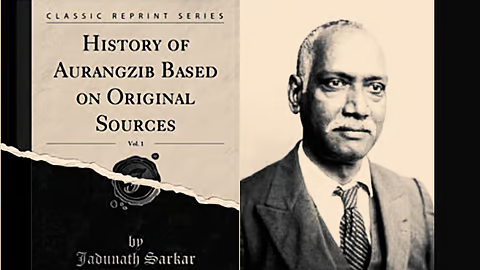
Historians such as Jadunath Sarkar, S.R. Sharma, and A.L. Srivastava argue that Aurangzeb was a religious zealot who sought to impose Islamic supremacy at the cost of Hindu and non-Muslim subjects. His policies of temple destruction, reimposition of jizya, and discrimination in government jobs are cited as evidence of religious intolerance. These scholars believe that Aurangzeb’s actions weakened Hindu-Muslim relations, alienating Rajputs, Marathas, and Sikhs, which led to widespread revolts against Mughal rule.
Revisionist View: Political Expediency over Religious Zeal
Scholars like Shibli Nomani, Zahiruddin Faruki, and Ishtiaq Hussain Qureshi argue that Aurangzeb’s religious policies were not purely ideological but politically expedient. The temple destructions, jizya tax, and restrictions on Hindus were not necessarily rooted in religious zeal but rather strategic moves to consolidate Muslim support, counter powerful Hindu elites, and generate revenue for the empire, which was engaged in continuous wars, particularly in the Deccan.
Synthesized View: A Mix of Orthodoxy and Pragmatism
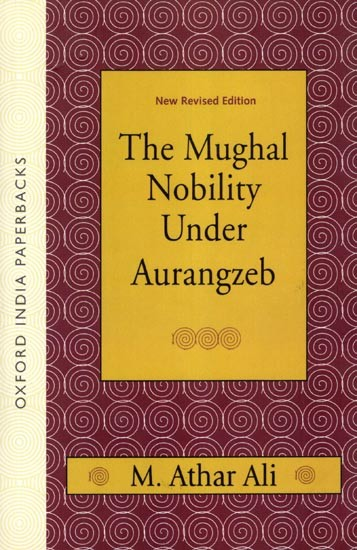
Historians such as Satish Chandra and M. Athar Ali present a mixed perspective, suggesting that Aurangzeb’s policies were a combination of religious orthodoxy, political pragmatism, and economic necessity. While he enforced strict Islamic laws, he employed more Hindu officials than his predecessors, showing contradictions in his policies. His temple grants and selective patronage of Hindu institutions indicate that he was not entirely anti-Hindu, but his inconsistent religious policies led to significant unrest.
Key Aspects of Aurangzeb's Religious Policy
Enforcement of Islamic Laws and Public Morality
Aurangzeb sought to reform the Mughal administration by enforcing Islamic laws and banning practices he deemed un-Islamic. He abolished jharokha darshan, the public appearance of the emperor for divine blessings, considering it a Hindu-influenced tradition that conflicted with Islamic principles. He also appointed Muhtasibs (censors of public morality) to regulate public behavior, banning gambling, alcohol consumption, and prostitution.
Religious processions and festivals such as Holi and Diwali were restricted in certain cities, particularly Ahmedabad, to prevent public disturbances. These measures were intended to project Aurangzeb as a pious Muslim ruler, strengthening his position among orthodox Muslims and Islamic scholars.
Temple Destruction and Grants
Aurangzeb’s temple destruction policy remains one of the most controversial aspects of his rule. In 1670, he ordered the demolition of newly constructed temples across the empire, arguing that they were built in defiance of Mughal authority. Some of the most significant temples destroyed include:
- Vishwanath Temple in Banaras
- Keshav Rai Temple in Mathura
- Somnath Temple in Gujarat
While temple destruction was widespread, historians argue that these actions were politically motivated rather than purely religious. Many temples were centers of regional political power and rebellion, and their destruction was aimed at suppressing resistance. At the same time, Aurangzeb also provided grants to certain Hindu temples, indicating that his policies were not uniformly anti-Hindu.
Reimposition of Jizya Tax
The most direct anti-Hindu measure of Aurangzeb’s reign was the reimposition of the jizya tax in 1679, which had been abolished by Akbar. The tax was structured as follows:
- Wealthy Hindus paid 48 dirhams per year.
- Middle-class Hindus paid 24 dirhams per year.
- Poor Hindus paid 12 dirhams per year.
Women, children, and Brahmins were exempt from jizya. Some historians argue that this was not financially necessary, as jizya generated minimal revenue. Instead, it was a symbolic measure meant to assert Islamic dominance and rally orthodox Muslim support during times of political instability.
Discrimination in Administration and Taxation
Aurangzeb imposed restrictions on Hindu participation in government, particularly in revenue administration. In 1671, he issued an order stating that only Muslims could be revenue collectors in khalisa (imperial) lands. However, due to administrative challenges, this policy was later relaxed, and Hindus were allowed to hold certain positions, provided their numbers remained lower than that of Muslims.
Additionally, Hindu traders were taxed at 5%, while Muslim traders paid only 2.5%, furthering economic discrimination.
Conflict with Sikhs
In 1675, Guru Tegh Bahadur was arrested and executed after he opposed forced religious conversions in Kashmir. This event led to the militarization of the Sikh community, culminating in the formation of the Khalsa by Guru Gobind Singh in 1699. The Mughal-Sikh conflict escalated, resulting in a long-term struggle for Sikh independence.
Consequences and Impact of Aurangzeb's Policies
Widespread Revolts and Alienation
Aurangzeb’s religious policies alienated several groups, leading to widespread revolts:
- Rajput rebellion (1679-1681) over Marwar’s annexation.
- Jat uprisings in Agra and Delhi due to excessive taxation.
- Maratha resistance under Shivaji and later Sambhaji, leading to prolonged Deccan wars.
- Sikh rebellion under Guru Gobind Singh, culminating in open conflict in Punjab.
Weakening of the Mughal Empire
Religious Policy of Aurangzeb weakened Mughal military alliances and strained the empire’s resources. His constant wars in the Deccan drained the treasury, while his alienation of Hindu elites, Rajputs, and Sikhs created power vacuums that regional powers exploited. The Marathas emerged as the dominant power after his death, leading to the fragmentation of the Mughal Empire.
Conclusion
The religious policy of Aurangzeb was a complex mix of religious orthodoxy, political strategy, and economic necessity. While he enforced strict Islamic laws and destroyed temples, he also employed Hindu officials and granted temple funds, indicating inconsistencies in his approach. His policies contributed significantly to the empire’s decline, as widespread revolts weakened Mughal authority.
Aurangzeb’s reign remains one of the most debated in Indian history, shaping the political and religious landscape of South Asia for centuries. His policies deepened the divisions between different religious communities, the effects of which can still be seen in modern times.
FAQ
What are the best history notes for UPSC?
Learnpro has the Best History Notes for UPSC which are prepared after a scientific and thourough research to suit the requirements of UPSC Aspirants in 2025-2026
Does LearnPro provide mentorship programs?
Yes, LearnPro offers personalized mentorship programs where aspirants receive one-on-one guidance, strategy sessions, and feedback on their preparation.
How often is the content updated on LearnPro?
Content on LearnPro is regularly updated to align with the latest exam patterns and current affairs. Monthly updates are provided for current affairs, ensuring aspirants stay up-to-date.
Can I get a demo class before enrolling in a course?
Yes, LearnPro offers demo classes for most courses. You can register for a free demo session to understand the teaching methodology and course structure.
Does LearnPro provide support for state-level exams like JPSC, BPSC, and KAS?
Absolutely! LearnPro offers specialized courses, test series, and resources for state-level exams, including JPSC, BPSC, KAS, and others.
Does LearnPro provide guidance for essay writing and answer writing?
Yes, LearnPro has dedicated sessions for essay writing and answer writing. These sessions are designed to enhance your skills and help you score better in Mains.
Practice Questions for UPSC
Prelims Practice Questions
- 1. Aurangzeb completely abolished the jizya tax during his reign.
- 2. He appointed Muhtasibs to regulate public morality based on Islamic principles.
- 3. Aurangzeb encouraged the celebration of Hindu festivals within his empire.
Which of the above statements is/are correct?
- 1. Jadunath Sarkar
- 2. Shibli Nomani
- 3. Satish Chandra
Select the correct answer using the code given below.
Frequently Asked Questions
What were the key features of Aurangzeb's religious policy?
Aurangzeb's religious policy was characterized by the reimposition of jizya, destruction of Hindu temples, and enforcement of strict Islamic laws. He sought to consolidate his Muslim authority through these actions, although they were also influenced by political and military challenges he faced during his reign.
How did Aurangzeb's policies affect Hindu-Muslim relations?
Aurangzeb's policies, especially the destruction of temples and reimposition of jizya, alienated large sections of his subjects, particularly Hindus. This alienation contributed to weakened Hindu-Muslim relations and led to significant revolts against Mughal authority, particularly from groups like the Rajputs and Sikhs.
Why do some historians argue that Aurangzeb’s policies were politically motivated rather than purely religious?
Historians such as Shibli Nomani and Ishtiaq Hussain Qureshi contend that Aurangzeb's religious policies were strategic moves to strengthen his rule and generate revenue amidst ongoing conflicts. They argue that these actions were aimed at countering powerful Hindu elites and securing Muslim support, rather than solely reflecting religious fanaticism.
What contradictions can be found in Aurangzeb's approach to governance regarding Hindu practices?
While Aurangzeb enforced strict Islamic laws and restrictions on Hindu practices, he also employed a significant number of Hindu officials and granted support to Hindu institutions. This contradiction suggests that his religious policies were not entirely uniform and might have been shaped by a mixture of practicality and ideology.
What were the impacts of Aurangzeb's religious policies on the Mughal Empire's stability?
Aurangzeb’s religious policies contributed to significant unrest and continuous rebellions from various groups, undermining the stability of the Mughal Empire. The alienation of large segments of the population weakened his authority and is often cited as a factor in the eventual decline of Mughal power.
स्रोत: LearnPro Editorial | History | प्रकाशित: 22 February 2025 | अंतिम अपडेट: 10 March 2026
लर्नप्रो संपादकीय मानकों के बारे में
लर्नप्रो की संपादकीय सामग्री सिविल सेवा तैयारी में अनुभवी विषय विशेषज्ञों द्वारा शोधित और समीक्षित है। हमारे लेख सरकारी स्रोतों, NCERT पाठ्यपुस्तकों, मानक संदर्भ सामग्री और प्रतिष्ठित प्रकाशनों जैसे द हिंदू, इंडियन एक्सप्रेस और PIB से लिए गए हैं।
सामग्री को नवीनतम पाठ्यक्रम परिवर्तनों, परीक्षा पैटर्न और वर्तमान घटनाक्रमों के अनुसार नियमित रूप से अपडेट किया जाता है। सुधार या प्रतिक्रिया के लिए admin@learnpro.in पर संपर्क करें।