
Tags: GS Paper 2 – Constitution, Judiciary, Welfare Schemes for Vulnerable Sections
For Prelims: Creamy layer, 1993 Office Memorandum, Indra Sawhney case (1992), Article 15(4), Article 16(4), Article 340, National Commission for Backward Classes (Article 338B)
For Mains: Prospective vs retrospective application of judgments, fairness in OBC reservation, the income/wealth test
Why in News?
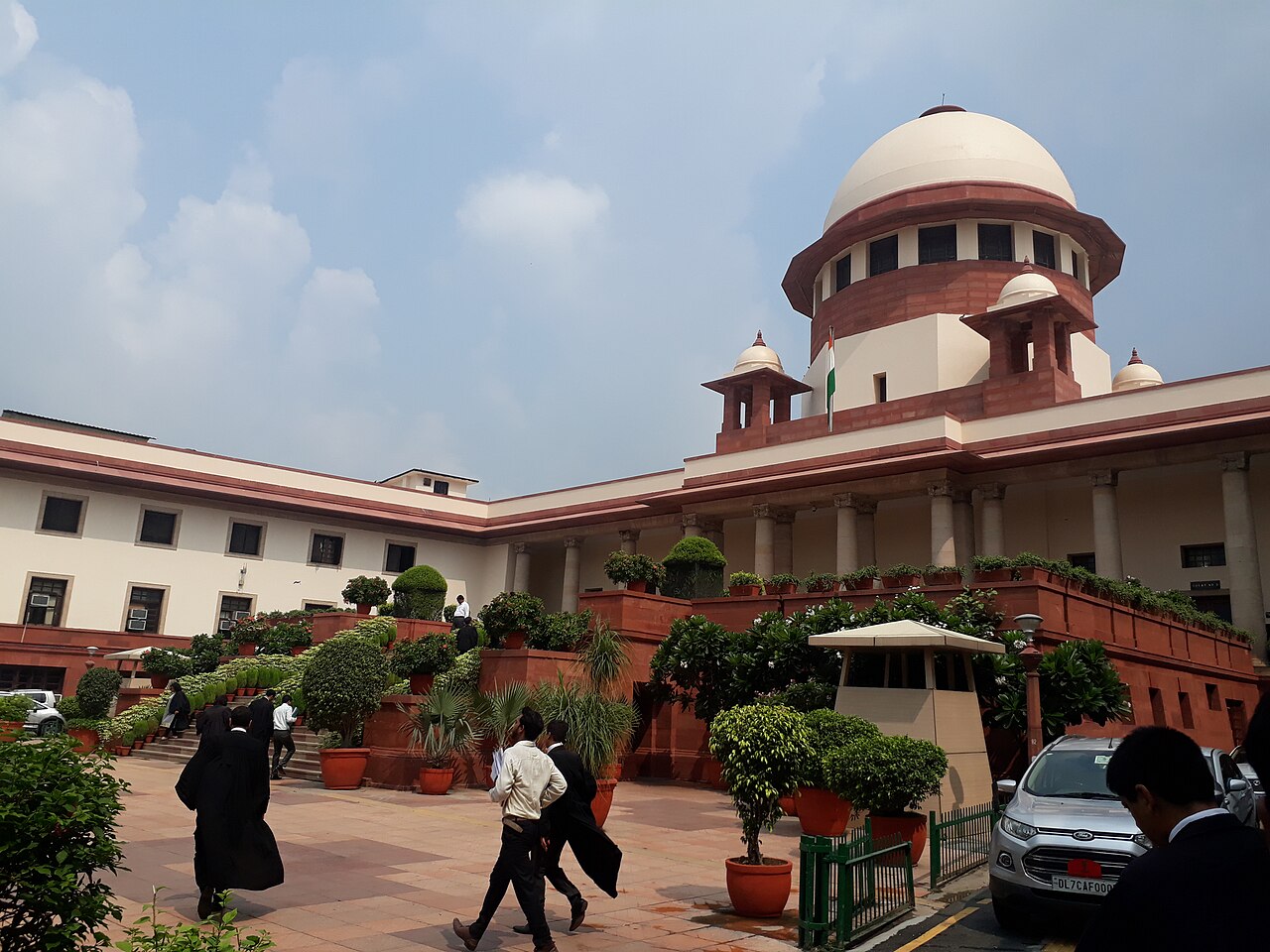
On 6 November 2026, the Supreme Court clarified that its 11 March 2026 judgment on the OBC creamy layer does not require a general revision of past service allocations or seniority. The Bench of Justices P.S. Narasimha and R. Mahadevan said the creamy-layer principle as interpreted in the judgment will govern service allocation of OBC candidates selected through the Civil Services Examination (CSE) 2025, because their services had not yet been allocated.
Summary
- The March 2026 judgment upheld the 1993 Office Memorandum (OM) under which parental salary and agricultural income are excluded from the income/wealth test for deciding non-creamy-layer status.
- The Centre warned that applying it retrospectively could unsettle over 6.69 lakh reserved vacancies, including about 3.7 lakh OBC posts, filled over the past decade.
- The Court said the judgment binds only the parties before it and gives no relief to non-parties. The Centre remains free to frame policy in line with the Constitution.
What is the ‘Creamy Layer’?
- Meaning: The socially and economically advanced members of the Other Backward Classes. They are excluded from OBC reservation so that its benefits reach those who are actually backward.
- Origin: In Indra Sawhney v. Union of India (1992), the Supreme Court upheld 27% OBC reservation in central posts but ordered that the creamy layer be excluded.
- 1993 OM: Following the judgment, the Department of Personnel and Training (DoPT) issued an OM on 8 September 1993 setting out the criteria:
- Holders of constitutional posts, and children of Group A/Class I officers and of Group B officers in specified cases (the status test).
- An income/wealth test for others, under which income from salaries and agricultural land is not counted.
- Income ceiling: The ceiling has been revised over time and has stood at ₹8 lakh per year since 2017.
What was the Dispute?
- Some OBC candidates, including those selected in the CSE, were placed in the creamy layer because their parents’ salaries were added together with other income. This was done under later clarifications, such as a 2004 letter, and in the absence of an equivalence between public sector and government posts.
- The petitioners argued that this went against the 1993 OM, which leaves salary income out of the income/wealth test. In March 2026, the Supreme Court agreed with them.
Key Points of the Clarification
- No reopening of settled matters: The ruling does not require a fresh look at past cadre allocation, seniority or admissions.
- Applies where the process is still open: CSE 2025 results came out on 6 March, but services had not yet been allocated. The ruling therefore governs that allocation.
- Relief only for parties: Only those who approached the Court get individual relief.
- Policy space kept: The executive may revise creamy-layer policy within constitutional limits.
Concerns and Issues
- Unequal treatment: Candidates in similar positions from earlier years who did not go to court get no relief.
- Outdated ceiling: The ₹8 lakh limit has not been revised since 2017, although it was meant to be reviewed every three years.
- No equivalence of posts: There is still no notified equivalence between PSU, bank and private-sector jobs and government posts, which leads to uneven decisions.
- Sub-categorisation: The Rohini Commission (report submitted in 2023) found that benefits are concentrated among a few OBC communities.
Constitutional Provisions
- Article 15(4): Special provisions for socially and educationally backward classes.
- Article 16(4): Reservation in appointments for backward classes that are not adequately represented.
- Article 340: Appointment of a commission to investigate the conditions of backward classes.
- Article 338B: Constitutional status for the National Commission for Backward Classes (102nd Amendment, 2018).
Conclusion
By applying the judgment prospectively, the Court balanced fairness to the petitioners with the need for administrative stability. It also leaves the government to deal with the larger issues: revising the income ceiling, notifying post equivalence and sub-categorising the OBCs.
Frequently Asked Questions (FAQs)
1. In which case was the creamy layer concept laid down for OBCs?
Indra Sawhney v. Union of India (1992).
2. Is salary income counted in the income/wealth test?
Under the 1993 OM, income from salaries and agricultural land is excluded. The March 2026 judgment upheld this.
3. What is the current creamy layer income limit?
₹8 lakh per annum, fixed in 2017.
Practice Question
Mains: Discuss the rationale behind excluding the creamy layer from OBC reservation. Do the current criteria need reform? (150 words)
Sources and further reading
- Pinakpanicommons.wikimedia.org