
Tags: GS Paper 1 – Physical Geography: Oceanography; GS Paper 3 – Environment, Disaster Management
For Prelims: Marine heatwave, INCOIS, Ministry of Earth Sciences, sea surface temperature anomaly, coral bleaching, swell surge, Kallakkadal, Indian Ocean Dipole, El Niño
For Mains: Impact of ocean warming on marine ecosystems and coastal livelihoods, India’s early warning systems for ocean hazards
Why in News?
The Indian National Centre for Ocean Information Services (INCOIS), under the Ministry of Earth Sciences, has issued a marine heatwave warning across the Arabian Sea, Bay of Bengal and Indian Ocean. It has also issued swell surge alerts for the east and west coasts, with waves of one metre or more expected.
Summary
- Most areas are in the ‘watch’ and ‘alert’ categories, with sea surface temperature (SST) anomalies of up to 1°C above normal.
- The service covers six ocean basins, including the Persian Gulf, Red Sea, Southern Indian Ocean and South China Sea.
- The warming could harm coral reefs, marine productivity and coastal biodiversity.
What is a Marine Heatwave?
- A period in which sea surface temperatures stay unusually high, above the 90th percentile of the climate baseline, for at least five days (Hobday et al., 2016).
- Categories: Moderate, Strong, Severe and Extreme, based on how far temperatures exceed the threshold.
- Causes: Long-term ocean warming, El Niño and a positive Indian Ocean Dipole, weak winds, less cloud cover, and slow-moving ocean currents.
- Trend: Studies show marine heatwaves in the tropical Indian Ocean have been increasing sharply and may become almost permanent by the end of the century under high-emission scenarios.
Impacts
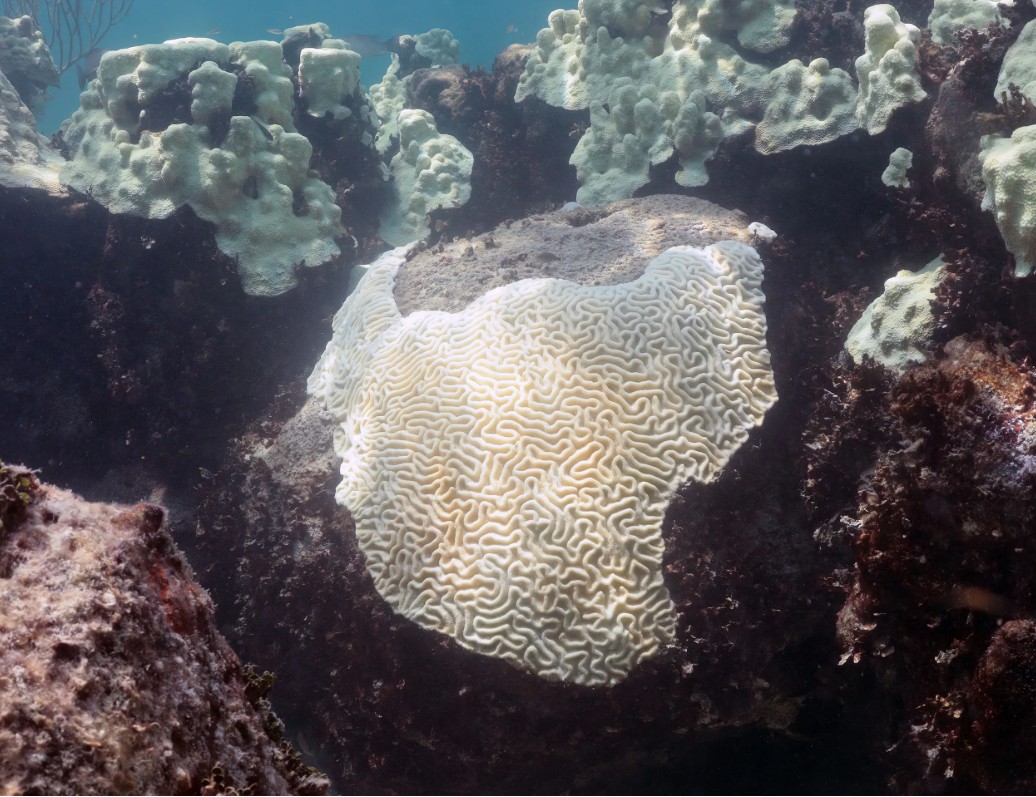
- Coral bleaching: Heat stress makes corals expel their symbiotic algae (zooxanthellae). The Gulf of Mannar, Lakshadweep and Andaman reefs are vulnerable.
- Fisheries: Fish move to cooler waters, and catches of species such as the Indian oil sardine fall.
- Weather: Warmer seas fuel rapid cyclone intensification and change monsoon patterns.
- Ecosystems: Seagrass and kelp die off, and harmful algal blooms increase.
Swell Surge vs Storm Surge
| Swell surge (e.g. Kallakkadal) | Storm surge |
|---|---|
| Caused by distant storms in the Southern Ocean; arrives without warning signs such as local wind | Caused by cyclone winds and low pressure pushing water ashore |
| Waves flood low-lying coasts under clear skies | Occurs during a cyclone landfall |
About INCOIS
- Set up in 1999 in Hyderabad. It is an autonomous body under the MoES.
- It runs the Indian Tsunami Early Warning Centre, which is also a UNESCO-IOC regional tsunami service provider.
- Services: Potential Fishing Zone advisories, Ocean State Forecasts, warnings for high waves, swell surges and marine heatwaves, and coral bleaching alerts.
Way Forward
- Combine marine heatwave alerts with fisheries advisories and plans for coral reef management.
- Expand ocean observation networks such as Argo floats and moored buoys.
- Reduce local stresses on reefs (pollution, overfishing) to make them more resilient.
Frequently Asked Questions (FAQs)
1. Under which ministry does INCOIS function?
The Ministry of Earth Sciences.
2. What causes coral bleaching?
Heat stress makes corals expel their symbiotic algae (zooxanthellae).
3. What is ‘Kallakkadal’?
Swell-surge flooding on the Kerala coast caused by distant Southern Ocean storms.
Practice Question
Mains: Marine heatwaves are emerging as a major threat to India’s coastal ecosystems and economy. Discuss their causes and impacts, and the role of early warning systems. (150 words)
Sources and further reading
- NOAAcommons.wikimedia.org