
Tags: GS Paper 3 – Infrastructure: Energy, Transport; Environment
For Prelims: E100, E85, E20, flex-fuel vehicles (FFV), FFV-SHEV, Central Motor Vehicles Rules 1989, Rule 115, Ethanol Blended Petrol Programme, National Policy on Biofuels
For Mains: Pathway beyond E20, consumer protection and vehicle compatibility, ethanol supply sustainability
Why in News?
The Ministry of Road Transport and Highways (MoRTH) has amended the Central Motor Vehicles Rules, 1989, to allow fuels containing up to 100% ethanol (E100) in vehicles. E100 has been added alongside E85 in several tables under Rule 115, which sets emission standards. This opens the way for flex-fuel vehicles (FFVs).
Key Terms
- E20: 20% ethanol and 80% petrol. This is now the standard petrol in India.
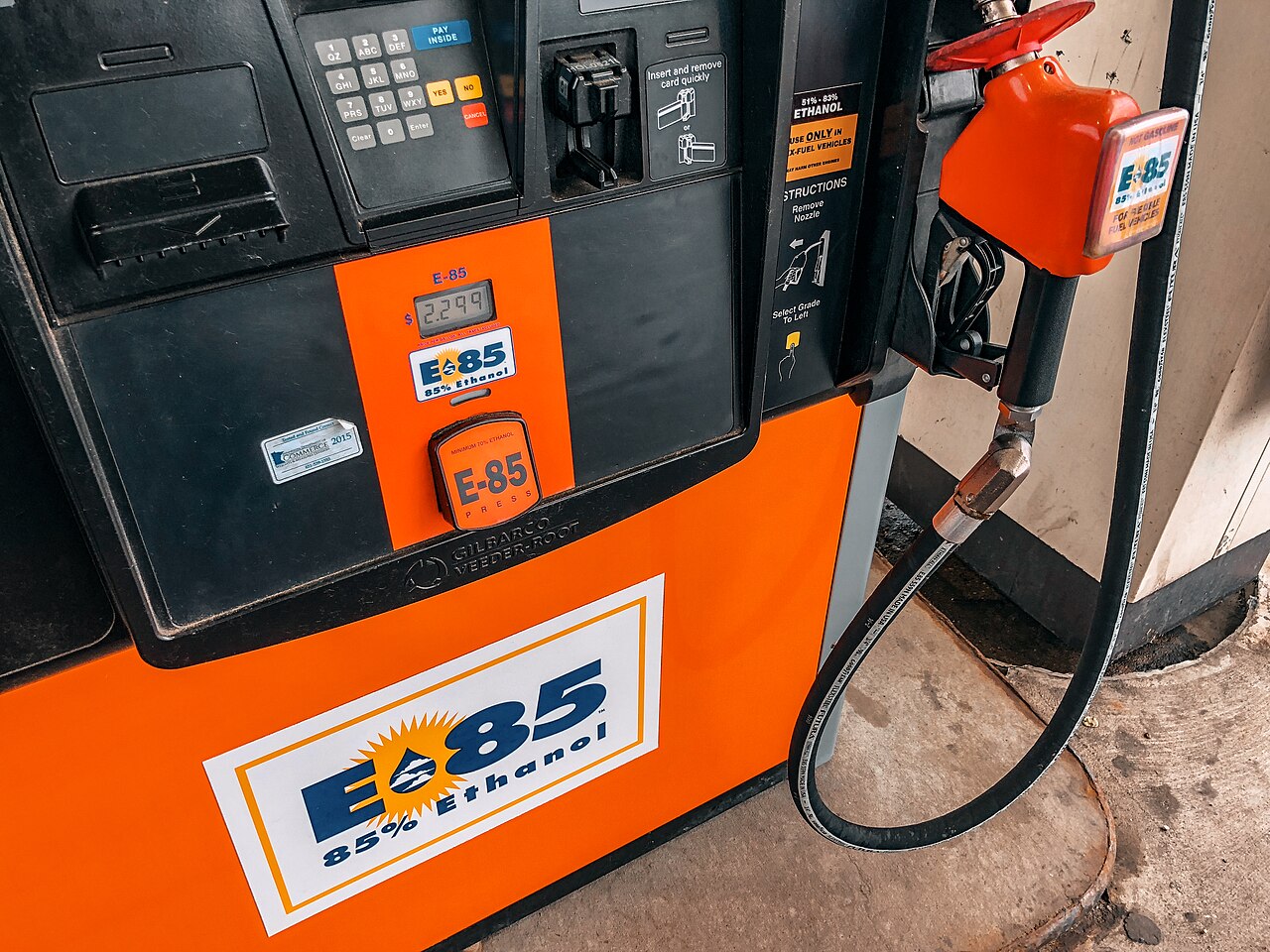
- E85: Up to 85% ethanol. E100: Pure ethanol, used in specially designed engines.
- Flex-fuel vehicle: Has an engine and fuel system that can run on petrol, any blend of ethanol, or pure ethanol. Sensors adjust ignition timing and fuel injection automatically.
- FFV-SHEV: A flex-fuel strong hybrid electric vehicle, combining ethanol flexibility with electric drive.
Should Existing Vehicles Switch to E85 or E100?
- No. Vehicles not built as flex-fuel should not use high blends. Ethanol can corrode rubber and some metal parts, damage fuel lines and affect cold starts.
- Most vehicles sold since April 2023 are certified only for E20.
Benefits
- Lower dependence on crude oil imports (over 85% of India’s crude needs are imported).
- Higher farm incomes and use of surplus grain and sugarcane.
- Lower lifecycle carbon emissions, depending on how the feedstock is produced.
- Brazil’s experience shows FFVs can work at scale, with most of its new cars being flex-fuel.
Concerns
- Mileage: Ethanol has about 30% less energy per litre, so consumers pay more per km unless it is priced lower.
- Food versus fuel and the high water use of sugarcane.
- Infrastructure: Few pumps sell E85 or E100, and storage and logistics need upgrading.
- Consumer choice: Recent complaints of over-blending and the withdrawal of lower-blend petrol from many pumps.
Way Forward
- Price fuel by energy content, display blend percentages at pumps, and keep a low-blend option available.
- Offer incentives such as GST relief for FFVs and FFV-SHEVs.
- Diversify to 2G ethanol from crop residue.
Frequently Asked Questions (FAQs)
1. Which rule under the CMVR was amended to include E100?
Rule 115.
2. What is a flex-fuel vehicle?
A vehicle that can run on petrol, any ethanol blend, or pure ethanol.
3. Can a normal E20 car use E100?
No. Only vehicles designed and certified for it can.
Sources and further reading
- Tony Webster from Minneapolis, Minnesota, United Statescommons.wikimedia.org