
Tags: GS Paper 2 – Elections, Constitutional Bodies, Representation of the People Act
For Prelims: Special Intensive Revision (SIR), Election Commission of India, Article 324, Article 326, Representation of the People Act 1950, Form 6, Form 8, EPIC, ECINET
For Mains: Electoral roll purification versus voter exclusion, procedural fairness in voter deletion, role of the judiciary in safeguarding the right to vote
Why in News?
The Election Commission of India (ECI) has directed the Chief Electoral Officers of Delhi, Maharashtra, Haryana, Andhra Pradesh, Jharkhand, Telangana and Nagaland on the ongoing Special Intensive Revision (SIR). Voters marked ASDD (Absent, Shifted, Dead, Duplicate) can now get back on the rolls by resubmitting the enumeration form. Earlier they had to file Form 6, which is meant for new voters. The move came after the Supreme Court, hearing a petition on deletions in Delhi, asked why deleted voters were being sent to Form 6.
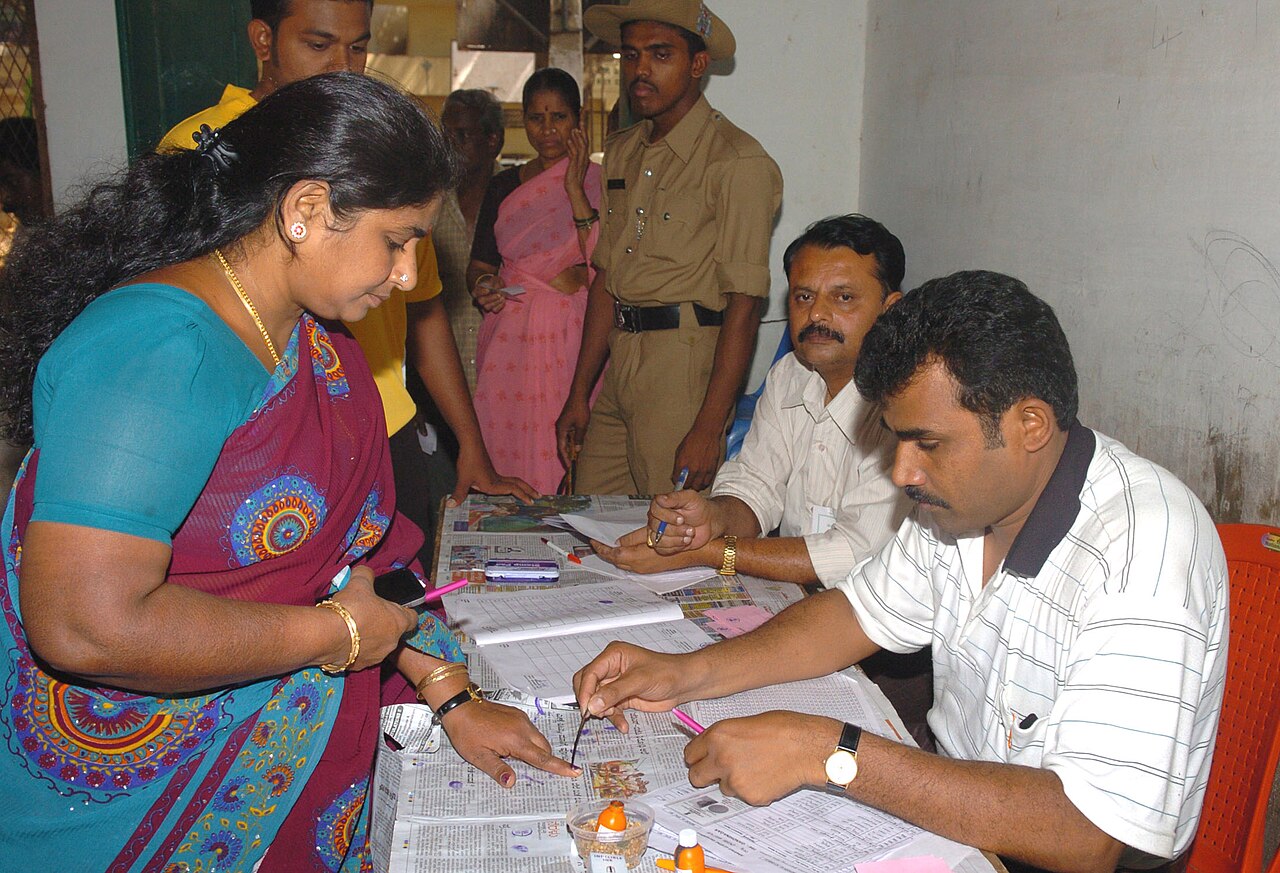
Summary
- Booth-wise lists of ASDD electors, with the likely reasons for exclusion, will be displayed again at polling stations.
- Partially filled enumeration forms for these electors will be generated on the ERO dashboard in ECINET.
- Electors who have not moved can file the form with a statement explaining the delay. Those who moved within the State must give their new address and Assembly Constituency.
- Those who have already filed Form 6 need not file again. Petitioners welcomed the provision to re-assign old EPIC numbers.
What is the Special Intensive Revision (SIR)?
- Meaning: A full, house-to-house preparation of the electoral roll in which every elector must submit a fresh enumeration form. A summary revision, by contrast, only updates the existing roll.
- Legal basis: Article 324 (ECI’s power of superintendence over the preparation of rolls) and Section 21 of the Representation of the People Act, 1950, which allows a special revision at any time for reasons to be recorded. The rules are in the Registration of Electors Rules, 1960.
- Recent rollout: The SIR began in Bihar in 2025 and was then extended in phases to other States and Union Territories.
Key Forms in Electoral Registration
| Form | Purpose |
|---|---|
| Form 6 | Inclusion of a new elector, or shifting from another constituency. Includes a declaration that the applicant is not enrolled elsewhere. |
| Form 6A | Enrolment of overseas (NRI) electors |
| Form 7 | Objection to an inclusion, or deletion of a name |
| Form 8 | Correction of entries, shifting within a constituency, replacement of EPIC, marking as a PwD |
Why was Form 6 a Problem for Deleted Voters?
- It treats an existing voter as a new applicant, which shifts the burden of proof onto the citizen.
- The declaration that the applicant is not registered elsewhere was legally awkward for people whose names had only been marked absent.
- It could mean loss of the old EPIC number and of the voter’s continuous enrolment history.
Concerns About the SIR
- Exclusion risk: Migrant workers, the urban poor, women who moved after marriage and people without documents may be dropped because their forms were not collected.
- Short timelines: A complete re-enumeration within weeks puts pressure on Booth Level Officers (BLOs) and on citizens.
- Documents and citizenship: There is debate over which documents are accepted and whether the exercise effectively verifies citizenship.
- Transparency: Petitioners have asked for reasons for deletion to be published and for a fair hearing before names are removed.
Significance of the ECI’s Directive
- Recognises that a voter marked ‘absent’ is still an existing elector who should be restored, not re-registered from scratch.
- Public display of the lists with reasons supports natural justice and allows people to correct errors.
- Shows the Supreme Court’s continuing role in protecting the right to vote (Article 326).
Way Forward
- Issue a notice and give a hearing before any deletion, and publish the reasons.
- Run special camps for migrants and vulnerable groups, and let people submit forms online with simple verification.
- Have independent audits of the deletion data by constituency.
Conclusion
An accurate electoral roll needs both purity and inclusiveness. The ECI’s correction lowers the cost for wrongly excluded voters. It also shows that a clean-up of the rolls should not come at the cost of the universal adult franchise.
Frequently Asked Questions (FAQs)
1. Which section of the RP Act, 1950 allows a special revision of electoral rolls?
Section 21.
2. What does ASDD stand for?
Absent, Shifted, Dead and Duplicate.
3. Which Article provides for elections on the basis of adult suffrage?
Article 326.
Practice Question
Mains: “Purification of electoral rolls must not come at the cost of disenfranchisement.” Examine this in the context of the Special Intensive Revision. (250 words)
Sources and further reading
- Election Commission of Indiacommons.wikimedia.org