
Tags: GS Paper 3 – Infrastructure: Energy, Conservation, Consumer Protection
For Prelims: Ethanol Blended Petrol (EBP) Programme, E20, National Policy on Biofuels 2018, 1G and 2G ethanol, NABL, Legal Metrology, Bureau of Indian Standards
For Mains: Benefits and trade-offs of ethanol blending, food-versus-fuel debate, consumer rights and transparency in fuel quality
Why in News?
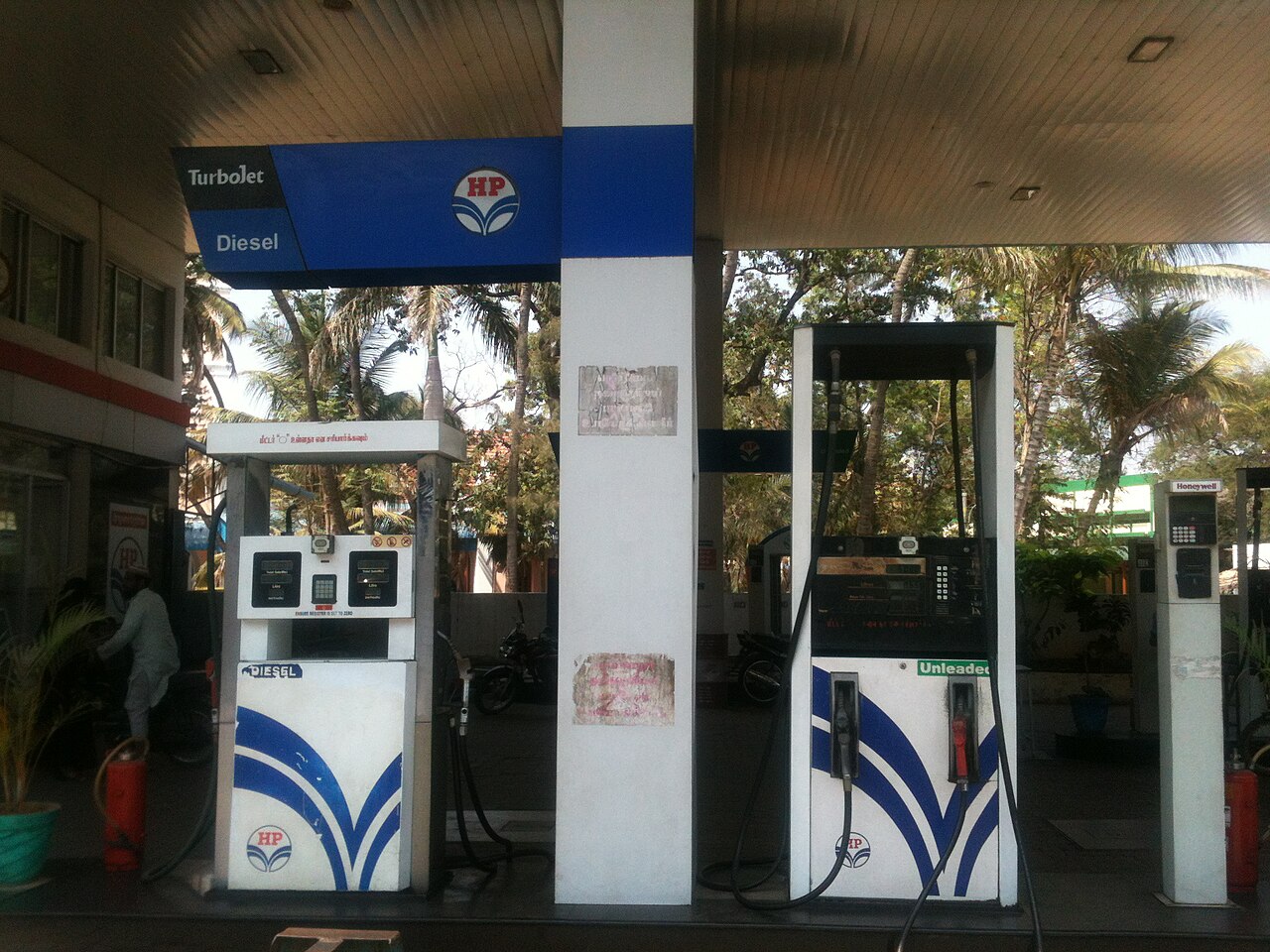
The Karnataka government said that petrol samples from major oil marketing companies (OMCs) contained up to 31.2% ethanol, well above the E20 (20%) standard. The samples were collected by the State’s Department of Legal Metrology from six districts and tested at NABL-accredited laboratories. The OMCs disputed the results, saying the sampling and testing did not follow the prescribed statutory and technical procedures.
Summary
- The highest blend reported was 31.2%. Several other samples showed 25–30%.
- The State said the OMCs’ own laboratory reports did not disclose ethanol content, even though it is a prescribed test parameter.
- Karnataka estimated a hidden loss to consumers of about ₹62,000 crore a year from lower mileage. It demanded penalties for over-blending and mandatory display of the blend percentage at fuel stations.
What is the Ethanol Blended Petrol (EBP) Programme?
- Launch: Started in 2003 as a pilot. It is run by the Ministry of Petroleum and Natural Gas, and OMCs buy ethanol at prices set by the government.
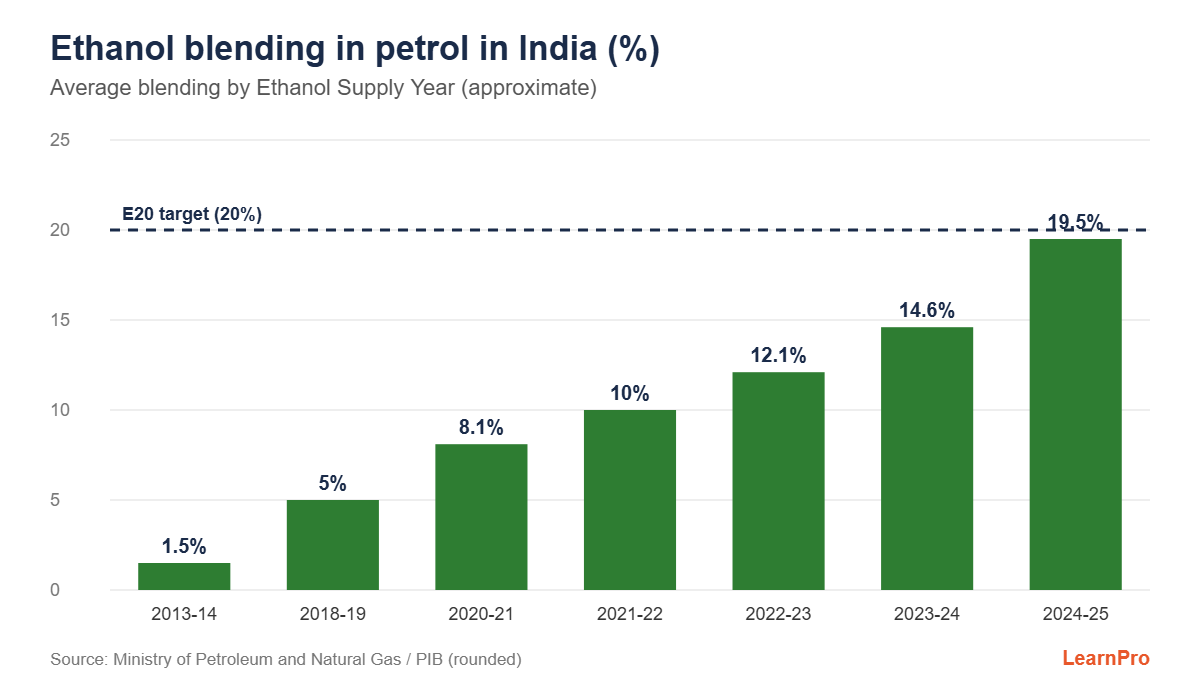
- Policy framework: The National Policy on Biofuels, 2018 (amended in 2022) brought the E20 target forward from 2030 to 2025-26. India began selling E20 in 2023 and achieved about 20% blending in 2025.
- Feedstock: Sugarcane juice, B-heavy and C-heavy molasses, damaged food grains, maize and surplus FCI rice. Second-generation (2G) ethanol is made from crop residue (for example under the PM JI-VAN Yojana).
Benefits of Ethanol Blending
- Energy security: Lowers crude oil imports and saves foreign exchange.
- Farm incomes: Gives an extra market for sugarcane and grain, and helps sugar mills clear dues to cane farmers.
- Emissions: Lower carbon monoxide and hydrocarbon emissions, and some reduction in greenhouse gases.
- Use of surplus: Puts surplus sugar and damaged grain to use.
Concerns Raised
- Vehicle compatibility: Most of India’s vehicle fleet was not built for blends above 20%. Even vehicles sold after April 2023 are certified only up to E20. Ethanol can corrode rubber parts and some metals and attracts moisture.
- Mileage loss: Ethanol has lower energy content than petrol, so fuel efficiency falls.
- Consumer choice: Lower-blend petrol has been withdrawn from many outlets, so consumers cannot choose.
- Transparency: Blend percentages are not displayed and testing is not independent.
- Food versus fuel: Using rice, maize and sugarcane for ethanol puts pressure on food security and water (sugarcane is very water-intensive).
Regulatory Dimensions
- Fuel standards: Fuel specifications are set by the Bureau of Indian Standards. Supply and quality fall under the Motor Spirit and High Speed Diesel (Regulation of Supply, Distribution and Prevention of Malpractices) Order, 2005.
- Consumer protection: Under the Consumer Protection Act, 2019, consumers have the right to be informed about the quality of goods.
- Legal Metrology: State departments enforce standards of weights and measures and quantity at fuel outlets.
Way Forward
- Display the ethanol blend percentage at the pump and keep E10 or low-blend fuel available for older vehicles.
- Have independent third-party audits of fuel quality under a joint Centre–State protocol.
- Require flex-fuel-ready vehicles, and offer support to retrofit older ones.
- Shift feedstock to 2G ethanol from crop residue, which also helps cut stubble burning.
Conclusion
Ethanol blending supports energy security and farm incomes. But a move beyond E20 without clear rules, vehicle readiness and consumer information may weaken public trust in the programme. Transparency at the pump is the minimum requirement.
Frequently Asked Questions (FAQs)
1. What does E20 mean?
Petrol blended with 20% ethanol and 80% petrol.
2. Which policy advanced the E20 target to 2025-26?
The National Policy on Biofuels, 2018, as amended in 2022.
3. What is 2G ethanol?
Ethanol produced from lignocellulosic biomass such as crop residue, rather than food crops.
Practice Question
Mains: India’s ethanol blending programme serves energy security and farm incomes but raises consumer and food security concerns. Discuss. (250 words)
Sources and further reading
- Ask27commons.wikimedia.org