
Tags: GS Paper 1 – Physical Geography: Cyclones; GS Paper 3 – Disaster Management
For Prelims: Cyclone naming, WMO/ESCAP Panel on Tropical Cyclones, RSMC New Delhi, IMD, 13 member countries, Gati, Tej, Murasu, classification of cyclonic disturbances
For Mains: Significance of naming cyclones for disaster communication, cyclone preparedness on India’s east coast
Why in News?
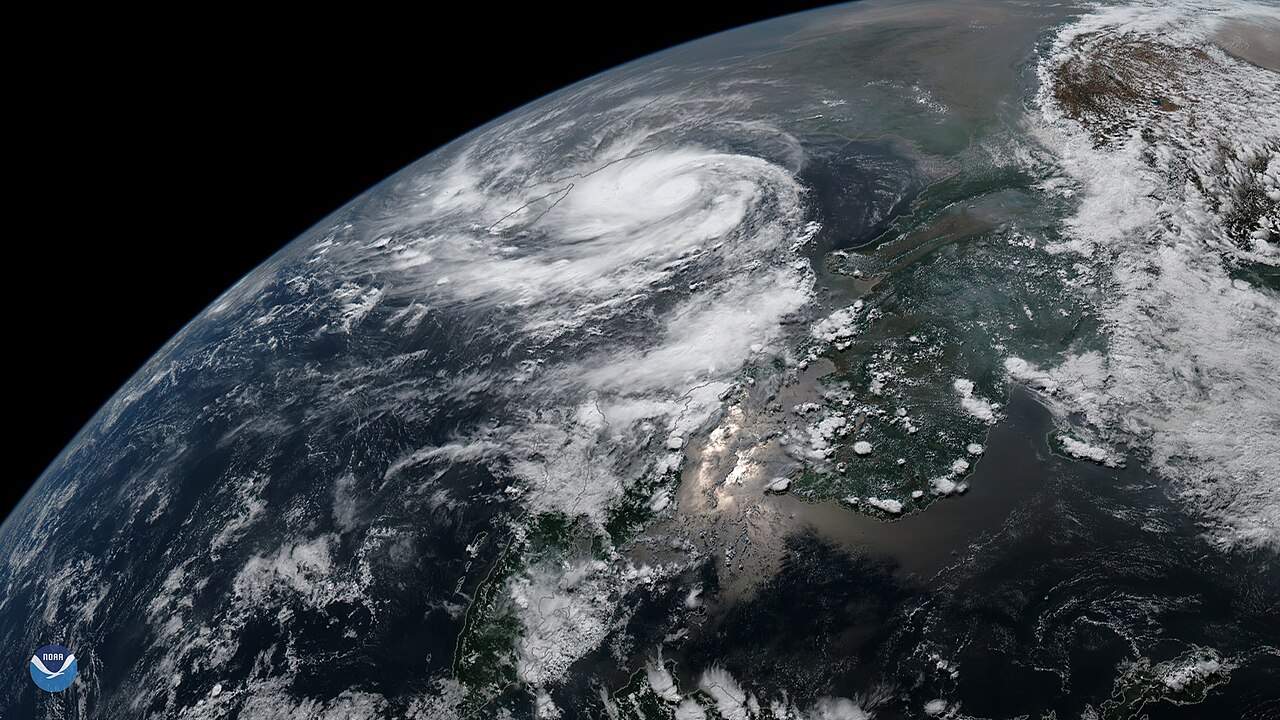
As a severe cyclonic storm approached the Andhra Pradesh coast, it was named ‘Murasu’. This is the first Tamil name given to a tropical cyclone since naming in the North Indian Ocean began in September 2004. Murasu is a traditional Tamil percussion instrument that was used in ancient times to make announcements and warn people of disasters.
How are Cyclones Named?
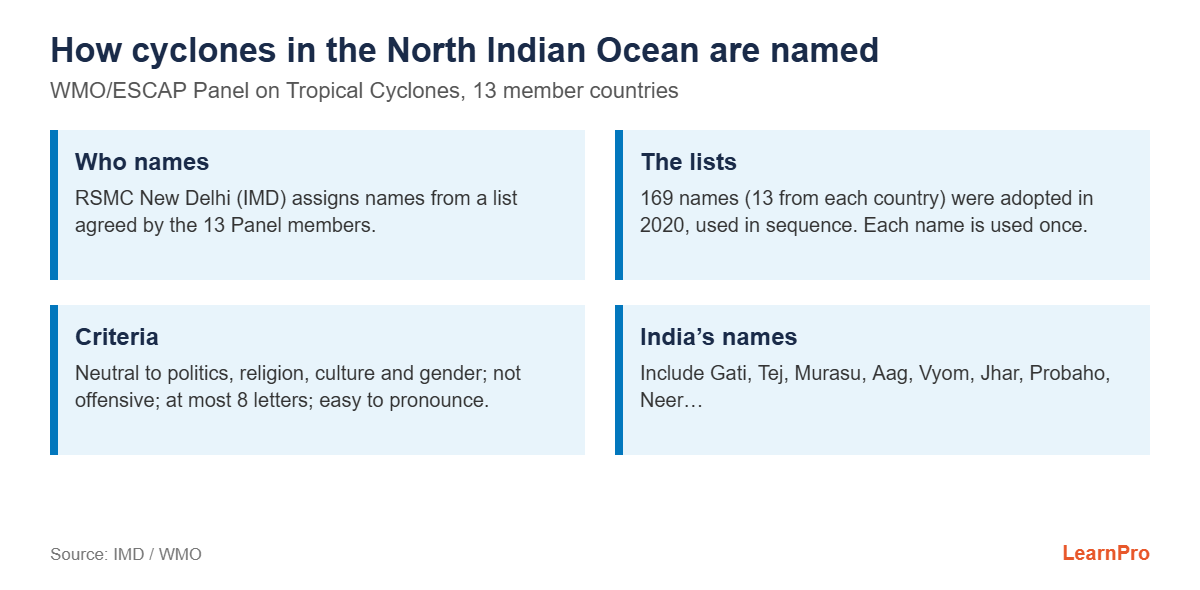
- Who: The Regional Specialised Meteorological Centre (RSMC), New Delhi, run by the IMD, names cyclones over the North Indian Ocean (the Bay of Bengal and the Arabian Sea).
- List: Prepared by the WMO/ESCAP Panel on Tropical Cyclones, which has 13 members: India, Bangladesh, Myanmar, Pakistan, Maldives, Oman, Sri Lanka, Thailand, Iran, Qatar, Saudi Arabia, the UAE and Yemen.
- New list (2020): 169 names, 13 from each member, used one after another in sequence. A name is not reused.
- India’s names: Gati, Tej, Murasu, Aag, Vyom, Jhar, Probaho, Neer, Prabhanjan, Ghurni, Ambud, Jaladhi and Vega. Murasu is the third to be used.
- When named: When a system becomes a cyclonic storm, with sustained winds of 62–88 km/h.
IMD Classification of Cyclonic Disturbances
| Category | Wind speed (km/h) |
|---|---|
| Depression | 31–49 |
| Deep Depression | 50–61 |
| Cyclonic Storm | 62–88 |
| Severe Cyclonic Storm | 89–117 |
| Very Severe Cyclonic Storm | 118–166 |
| Extremely Severe Cyclonic Storm | 167–221 |
| Super Cyclonic Storm | 222 and above |
Why Name Cyclones?
- Short, simple names are easier to remember than numbers, which helps warnings reach people.
- Avoids confusion when two or more systems are active at the same time.
- Makes media coverage and community preparedness easier.
Criteria for Names
- Must be neutral to politics, religion, culture and gender, and must not be offensive.
- At most eight letters, and easy to pronounce.
Frequently Asked Questions (FAQs)
1. Which body names cyclones over the North Indian Ocean?
RSMC New Delhi, run by the IMD.
2. How many countries are members of the WMO/ESCAP Panel?
13.
3. At what stage is a cyclone named?
When it reaches cyclonic storm intensity (62–88 km/h).
Sources and further reading
- NOAAcommons.wikimedia.org