Source: The Hindu, 8 November 2026
For Prelims: Electors Photo Identity Card (EPIC), Aadhaar Act 2016, Election Laws (Amendment) Act 2021, Special Intensive Revision (SIR), Sixteenth Finance Commission, Gram Sabha, Family cards.
For Mains: Identification of beneficiaries, exclusion errors in welfare delivery, right to vote and right to welfare, Centre–State roles in targeting.
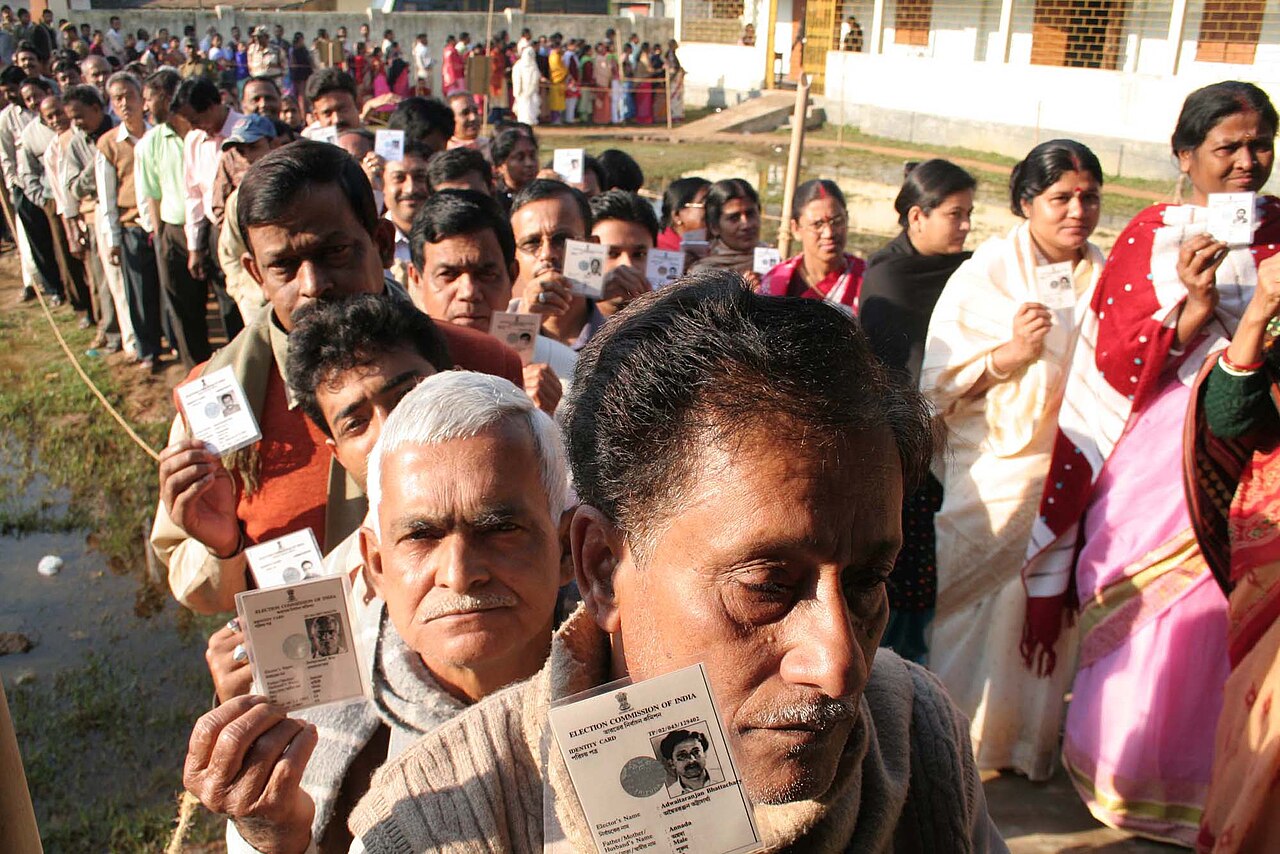
Table of Contents
Why in News?
On 3 November 2026, Union Minister for Panchayati Raj Rajiv Ranjan (Lalan) Singh announced that voter ID cards, along with biometric authentication, would replace Aadhaar as the basis for identifying beneficiaries and processing payments under welfare schemes, arguing that Aadhaar cards can be fraudulently obtained. After pushback from the Opposition, he later clarified that voter IDs would be used along with Aadhaar and that no rightful beneficiary would be left out.
What is the Context?
- Link to SIR: Opposition parties have linked the proposal to the Special Intensive Revision (SIR) of electoral rolls, in which more than 13 crore electors have been removed.
- West Bengal precedent: On 4 June, the West Bengal government’s Food and Supplies Department issued an order linking State-run welfare schemes, including PDS ration cards, to the electoral rolls.
- Role of the Ministry: The Panchayati Raj Ministry does not directly run individual-beneficiary schemes but works through gram sabhas. The Sixteenth Finance Commission (award period 2026-31) has recommended grants of ₹4,35,236 crore for 2.55 lakh panchayats and traditional local bodies.
Aadhaar vs Voter ID: A Comparison
| Feature | Aadhaar | Voter ID (EPIC) |
|---|---|---|
| Issuing authority | Unique Identification Authority of India (UIDAI) | Election Commission of India (ECI) |
| Legal basis | Aadhaar (Targeted Delivery of Financial and Other Subsidies, Benefits and Services) Act, 2016 | Representation of the People Act, 1950 and the Registration of Electors Rules, 1960 |
| Who can get it | Any resident of India, including children | Only citizens aged 18 years and above who are enrolled as electors |
| Biometrics | Fingerprints and iris scan stored | Photograph only; no biometric database |
| Use in welfare | Section 7 allows its use for subsidies and benefits paid from the Consolidated Fund of India (upheld in K.S. Puttaswamy, 2018) | Used as a supporting identity document, e.g., for MGNREGA job cards; not used as the sole document nationally |
| Linkage | Linked to bank accounts for Direct Benefit Transfer | Voluntary linking with Aadhaar permitted by the Election Laws (Amendment) Act, 2021 |
Have Voter IDs been used for Welfare Before?
- Known in Hindi as pehchaan patra, the voter ID has often served as an entry document for other entitlements, such as MGNREGA job cards.
- Some States, such as Delhi, require voter IDs for certain pension schemes.
- However, voter IDs have not so far been used exclusively as the identification document for welfare delivery across the country.
- Ten States, starting with Madhya Pradesh and Rajasthan, have introduced family cards, since many schemes target households rather than individuals.
What are the Concerns?
- Double exclusion: Those deleted from electoral rolls may also lose access to welfare – losing both the right to vote and access to entitlements.
- Exclusion of non-voters: Children, migrants, people below 18 and eligible residents who are not citizens or not enrolled cannot hold a voter ID.
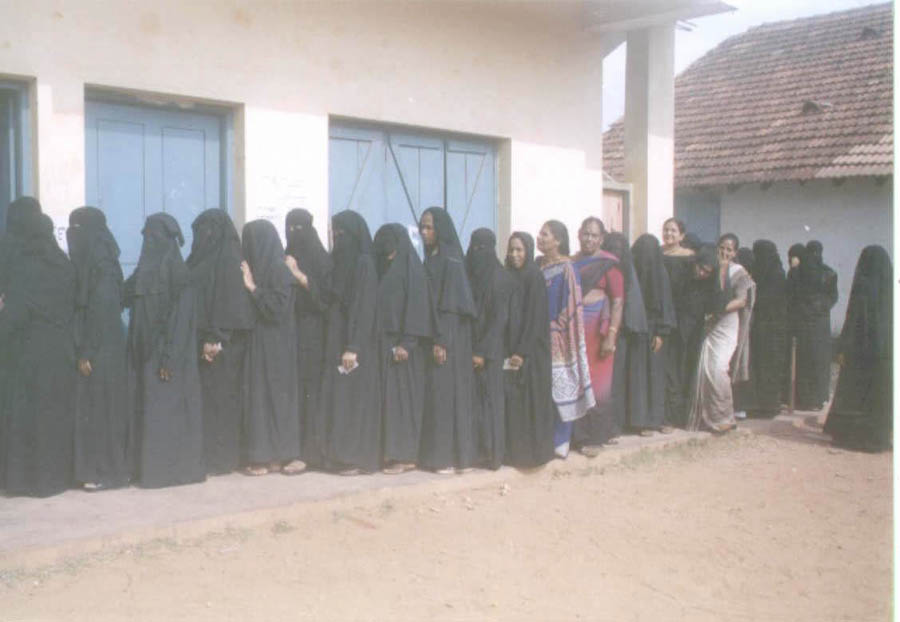
- Pending appeals: In West Bengal, 22 lakh people appealed against their removal from rolls, and about 21 lakh are still awaiting decisions from tribunals.
- Purpose limitation: The voter ID was designed for elections, not for welfare. Using it to determine welfare eligibility mixes electoral and welfare databases.
- Policy inconsistency: Aadhaar was introduced as the single tool to plug leakages and is linked to bank accounts; replacing it raises questions about what the voter ID adds.
- Federal and legal questions: Many welfare schemes are run by States; a change in identification norms needs clear legal backing and consultation.
Way Forward
- Multiple documents: Allow beneficiaries to prove identity using any one of several valid documents, as is the norm under most schemes.
- Clear legal framework: Any new identification norm should be notified with statutory backing, not through announcements.
- Grievance redress: Time-bound disposal of appeals against deletion from rolls and an offline fallback for authentication failures.
- Social audits: Use gram sabhas and social audits to identify fake beneficiaries without excluding genuine ones.
- Data protection: Ensure compliance with the Digital Personal Data Protection Act, 2023 when databases are linked.
Conclusion
Better targeting of welfare is a legitimate goal, but the identification system must not become a tool of exclusion. With large-scale deletions from electoral rolls still under appeal, tying welfare to voter IDs risks penalising the most vulnerable citizens twice. Inclusion, legal clarity and strong grievance redress must guide any reform.
UPSC Previous Year Questions (PYQs)
UPSC Prelims 2018
Q. Consider the following statements: 1. Aadhaar card can be used as a proof of citizenship or domicile. 2. Once issued, Aadhaar number cannot be deactivated or omitted by the Issuing Authority. Which of the statements given above is/are correct?
- 1 only
- 2 only
- Both 1 and 2
- Neither 1 nor 2
Show answer
Answer: (d) — See full explanation
UPSC Prelims 2020
Q. Consider the following statements: 1. Aadhaar metadata cannot be stored for more than three months. 2. State cannot enter into any contract with private corporations for sharing of Aadhaar data. 3. Aadhaar is mandatory for obtaining insurance products. 4. Aadhaar is mandatory for getting benefits funded out of the Consolidated Fund of India. Which of the statements given above is/are correct?
- 1 and 4 only
- 2 and 4 only
- 3 only
- 1, 2 and 3 only
Show answer
Answer: (b) — See full explanation
Prelims Practice Question
Q. With reference to identity documents in India, consider the following statements:
- An Aadhaar number can be issued to any resident of India, including a child.
- The Election Laws (Amendment) Act, 2021 made linking of Aadhaar with electoral rolls mandatory.
- Voter ID cards (EPIC) are issued by the Election Commission of India.
Which of the statements given above is/are correct?
(a) 1 and 2 only
(b) 2 and 3 only
(c) 1 and 3 only
(d) 1, 2 and 3
Answer: (c) — The 2021 Act permits voluntary, not mandatory, linking.
Mains Practice Question
Q. “Using voter IDs to identify welfare beneficiaries risks turning electoral exclusion into welfare exclusion.” Critically examine this statement in light of recent developments. (250 words)
Frequently Asked Questions (FAQs)
What is EPIC?
The Electors Photo Identity Card (voter ID) is issued by the Election Commission of India to citizens aged 18 and above who are registered as voters.
Can welfare benefits be linked to Aadhaar?
Yes. Section 7 of the Aadhaar Act, 2016 allows the government to require Aadhaar for subsidies and benefits paid from the Consolidated Fund of India. The Supreme Court upheld this in K.S. Puttaswamy (2018).
Is linking Aadhaar with voter ID mandatory?
No. The Election Laws (Amendment) Act, 2021 allows voters to link Aadhaar with their electoral roll entry voluntarily.
What are family cards?
Ten States, starting with Madhya Pradesh and Rajasthan, have introduced family cards because many welfare schemes target households rather than individuals.
Related Reads on LearnPro
- Special Intensive Revision (SIR): ECI Lets ASDD Voters Resubmit Forms
- Voter ID for Welfare: Centre Plans EPIC-Based Identification
- SC to ECI: Consider Aadhaar, Voter ID, Ration Cards for Bihar Roll Revision
- Mains practice: To what extent has MGNREGA reduced rural distress?