
 Forest Services
Introduction to the SDGs
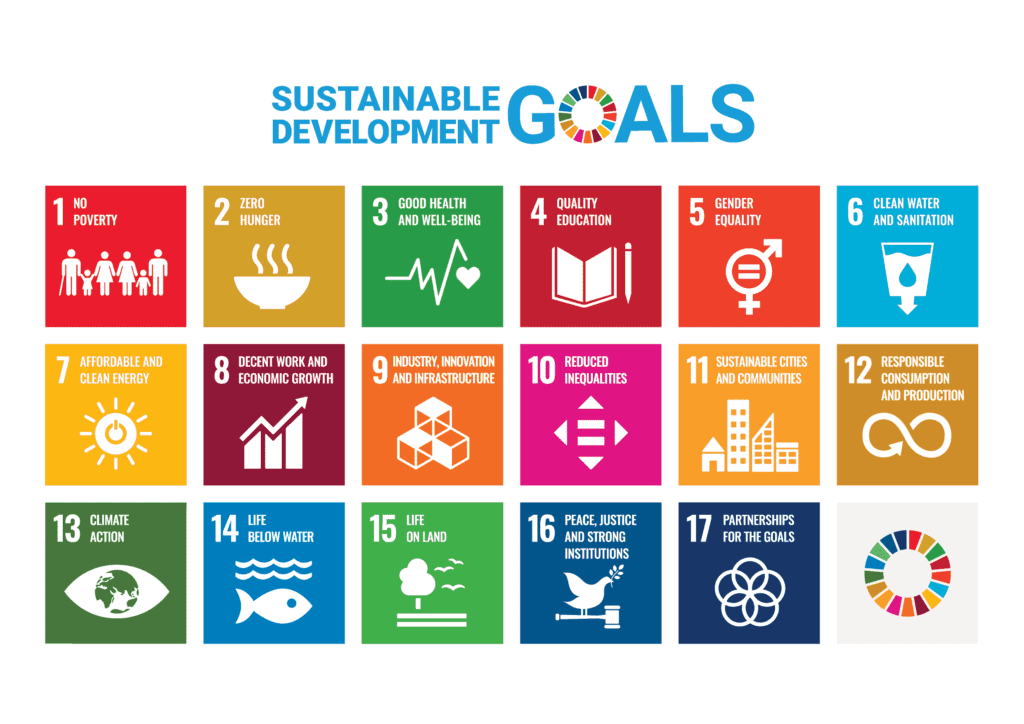
The Sustainable Development Goals (SDGs) are a set of 17 global goals established by the United Nations in 2015 as part of the 2030 Agenda for Sustainable Development. They serve as a universal call to action to eradicate poverty, protect the planet, and ensure peace and prosperity for all by 2030. These goals are interconnected and aim to balance the three dimensions of sustainable development: economic, social, and environmental.
List of the 17 Sustainable Development Goals
| Goal Number | Goal Name | Key Objectives | |
|---|---|---|---|
| 1 | No Poverty | Eradicate extreme poverty and reduce economic inequalities globally. | |
| 2 | Zero Hunger | Achieve food security, improve nutrition, and promote sustainable agriculture. | |
| 3 | Good Health and Well-being | Ensure healthy lives and promote well-being for all ages. | |
| 4 | Quality Education | Ensure inclusive and equitable quality education and promote lifelong learning opportunities for all. | |
| 5 | Gender Equality | Achieve gender equality and empower all women and girls. | |
| 6 | Clean Water and Sanitation | Ensure availability and sustainable management of water and sanitation for all. | |
| 7 | Affordable and Clean Energy | Ensure access to affordable, reliable, sustainable, and modern energy for all. | |
| 8 | Decent Work and Economic Growth | Promote sustained, inclusive, and sustainable economic growth, full and productive employment, and decent work for all. | |
| 9 | Industry, Innovation, and Infrastructure | Build resilient infrastructure, promote inclusive and sustainable industrialization, and foster innovation. | |
| 10 | Reduced Inequalities | Reduce inequality within and among countries. | |
| 11 | Sustainable Cities and Communities | Make cities and human settlements inclusive, safe, resilient, and sustainable. | |
| 12 | Responsible Consumption and Production | Ensure sustainable consumption and production patterns. | |
| 13 | Climate Action | Take urgent action to combat climate change and its impacts. | |
| 14 | Life Below Water | Conserve and sustainably use oceans, seas, and marine resources for sustainable development. | |
| 15 | Life on Land | Protect, restore, and promote sustainable use of terrestrial ecosystems, combat desertification, and halt biodiversity loss. | |
| 16 | Peace, Justice, and Strong Institutions | Promote peaceful and inclusive societies, provide access to justice, and build effective institutions. | |
| 17 | Partnerships for the Goals | Strengthen global partnerships to achieve sustainable development. |
Key Features of the SDGs
- Universal Application:
The SDGs apply to all countries, irrespective of their level of development, ensuring a global commitment. - Interconnectedness:
Each goal is interconnected, meaning progress in one area often impacts others. For instance, improving education (Goal 4) can reduce inequalities (Goal 10) and foster economic growth (Goal 8). - Targets and Indicators:
The 17 goals are broken down into 169 targets and tracked using 231 unique indicators to measure progress comprehensively.
Progress on the SDGs (2023 Update)
Achievements:
- Extreme Poverty Reduction:
Extreme poverty rates fell from 10% in 2015 to 8.4% in 2020, despite challenges posed by global crises. - Access to Electricity:
The percentage of the global population with electricity access increased from 83% in 2010 to 90% in 2022.
Challenges:
- Pandemic Setbacks:
The COVID-19 pandemic reversed progress in areas like health (Goal 3), education (Goal 4), and economic growth (Goal 8). - Climate Action Lagging:
Global emissions are not reducing at the required pace to meet the targets of Goal 13 (Climate Action).
Case Studies: SDG Implementation
1. SDG 6: Clean Water and Sanitation in Kenya
Kenya has implemented community-based water management programs, increasing clean water access from 57% in 2000 to 72% in 2020.
2. SDG 7: Affordable and Clean Energy in India
India's International Solar Alliance and renewable energy projects have provided electricity to over 99% of households, significantly advancing Goal 7.
Role of Partnerships in Achieving the SDGs
Goal 17, Partnerships for the Goals, underscores the importance of collaboration between governments, private sectors, and civil society. Successful partnerships:
- Finance Initiatives: Mobilize resources for infrastructure and innovation (Goal 9).
- Technology Sharing: Promote global access to clean technologies (Goal 7).
- Capacity Building: Strengthen institutional frameworks in developing nations.
The Way Forward
While significant strides have been made, achieving the SDGs by 2030 requires:
- Enhanced Financing:
Mobilizing the estimated $3.5 trillion annually needed to meet all goals. - Stronger Climate Policies:
Accelerating commitments under the Paris Agreement to tackle climate change. - Inclusive Policies:
Addressing inequalities through gender-focused and community-driven programs.
Conclusion
The Sustainable Development Goals represent humanity’s collective commitment to a more equitable, sustainable, and prosperous future. Their success hinges on global cooperation, sustained political will, and innovative solutions to complex challenges. As we approach 2030, the SDGs serve as both a roadmap and a moral imperative for transforming our world.
Practice Questions for UPSC
Prelims Practice Questions
- Statement 1: The SDGs consist of 17 goals established in 2030.
- Statement 2: Goal 3 focuses on ensuring healthy lives for all ages.
- Statement 3: There are 231 unique indicators to measure progress on the SDGs.
Which of the above statements is/are correct?
- Statement 1: SDGs are interconnected, with progress in one goal impacting others.
- Statement 2: SDGs are designed to apply only to developed countries.
- Statement 3: Achieving the SDGs requires collaboration between different sectors.
Which of the above statements is/are correct?
Frequently Asked Questions
What are the three dimensions of sustainable development highlighted by the SDGs?
The SDGs aim to balance three critical dimensions of sustainable development: economic, social, and environmental. This interconnected approach ensures that efforts to achieve one goal reinforce others, fostering holistic development across diverse sectors.
How are the Sustainable Development Goals tracked and measured?
The 17 Sustainable Development Goals are broken down into 169 targets, which are monitored using 231 unique indicators. This comprehensive tracking framework enables stakeholders to measure progress accurately and identify areas for improvement.
What significant challenges have impacted progress towards the SDGs as of 2023?
Key challenges include setbacks caused by the COVID-19 pandemic, which reversed advancements in health, education, and economic growth. Additionally, climate action efforts are lagging, with global emissions failing to decrease at the necessary rate to meet established targets.
What role do partnerships play in achieving the SDGs?
Partnerships, underscored by Goal 17, are vital for mobilizing resources and knowledge sharing to enhance sustainable development efforts. Collaboration between governments, the private sector, and civil society strengthens institutional frameworks and promotes innovation, which is essential for achieving SDGs.
What progress has been made toward the SDGs regarding poverty reduction?
As of 2020, extreme poverty rates have decreased from 10% in 2015 to 8.4%, demonstrating significant progress despite various global crises. This reduction reflects the efficacy of targeted interventions and policies aimed at eradicating poverty on a global scale.
Source: LearnPro Editorial | Environmental Ecology | Published: 5 December 2024 | Last updated: 10 March 2026
About LearnPro Editorial Standards
LearnPro editorial content is researched and reviewed by subject matter experts with backgrounds in civil services preparation. Our articles draw from official government sources, NCERT textbooks, standard reference materials, and reputed publications including The Hindu, Indian Express, and PIB.
Content is regularly updated to reflect the latest syllabus changes, exam patterns, and current developments. For corrections or feedback, contact us at admin@learnpro.in.