Introduction to Mangrove Ecosystems
The mangrove ecosystem is one of the most vital coastal ecosystems, offering a unique blend of terrestrial and marine biodiversity. Found in tropical and subtropical regions, mangroves serve as natural buffers against coastal erosion, sequester carbon, and provide livelihoods for millions of people. Despite covering only 0.4% of the global forest area, mangroves play an outsized role in climate regulation, coastal protection, and biodiversity conservation.
- The definition and types of wetlands
- Their importance for biodiversity, climate, and economy
- The ecosystem services they provide
- The threats they face
- Conservation measures to protect them
More Useful Links:
Wetland ecosystem and Conservation
Convention on Biological Diversity
Globally, mangroves are spread across 123 countries, covering an estimated 150,000 square kilometers, with one-third of this coverage in Southeast Asia. The mangrove ecosystem is a crucial component of the blue economy, supporting fisheries, tourism, and climate resilience. However, it is under increasing threat due to deforestation, urbanization, and climate change.
Characteristics and Adaptations of Mangroves
The mangrove ecosystem consists of trees and shrubs that grow in intertidal zones along coastlines, river mouths, and estuaries. These forests thrive in saline environments and have evolved unique adaptations, such as:
- Salt filtration systems to tolerate high salinity.
- Aerial roots (pneumatophores) that help in oxygen intake.
- Prop roots that stabilize trees in muddy, waterlogged soils.
- Vivipary reproduction, where seeds germinate while still attached to the parent tree, ensuring survival in harsh environments.
These adaptations allow the mangrove ecosystem to support a diverse range of plant and animal species while providing essential ecosystem services.

Mangrove Ecosystem
Importance of Mangrove Ecosystems
Coastal Protection and Erosion Control
Mangroves act as natural barriers against coastal erosion, storm surges, and tidal waves. The dense root systems help in:
- Stabilizing coastlines, preventing land loss.
- Absorbing wave energy, reducing storm impact.
- Preventing saltwater intrusion, which protects freshwater resources and agricultural land.
The mangrove ecosystem plays a crucial role in disaster risk reduction, particularly in regions vulnerable to tropical storms and cyclones.

Mangrove Coastal Protection and Erosion Control
Carbon Sequestration and Climate Regulation
Mangroves are among the most carbon-rich forests, accounting for 3% of carbon sequestration in tropical forests. They store carbon in both biomass and soil, absorbing four to five times more carbon than terrestrial tropical forests.
Additionally, the mangrove ecosystem helps in:
- Reducing greenhouse gas emissions by trapping carbon for centuries.
- Acting as a buffer against ocean acidification, improving marine health.
- Serving as a natural sink for microplastics, reducing ocean pollution.

Mangrove Carbon Sequestration and Climate Regulation
Biodiversity Hotspots
The mangrove ecosystem is home to a rich diversity of flora and fauna. These forests serve as:
- Nursery grounds for marine life, supporting fish, shrimp, and crab populations.
- Habitat for endangered species, such as estuarine crocodiles, sea turtles, and various bird species.
- Feeding and breeding grounds for migratory birds.
By maintaining the mangrove ecosystem, we ensure the survival of numerous species that are essential for ecological balance.
Economic Benefits and Livelihoods
The mangrove ecosystem supports millions of people through:
- Fisheries and aquaculture, ensuring food security and income.
- Timber and fuelwood industries, providing essential resources.
- Tourism and ecotourism, generating economic revenue.
- Honey collection and medicinal plant harvesting, supporting traditional livelihoods.
Sustaining the mangrove ecosystem is essential for the long-term success of the blue economy in tropical and coastal regions.
Disaster Risk Reduction
Mangroves act as the first line of defense against climate-related disasters. They play a critical role in:
- Mitigating the effects of rising sea levels by trapping sediments.
- Protecting coastal communities from cyclones, storm surges, and tsunamis.
- Reducing the frequency and impact of flooding.
With increasing climate change threats, the mangrove ecosystem remains one of the most effective nature-based solutions.

Ecosystem Services by mangroves
Mangrove Cover in India
Overview of Indian Mangroves
- The total mangrove cover in India is 4,992 square kilometers (as per the Forest Survey Report 2021).
- India accounts for 3.3% of the world’s mangrove vegetation.
- India contributes 45.8% of the total mangrove cover in South Asia.

Mangrove Cover in Coastal Area
Major Mangrove Ecosystems in India
India has significant mangrove ecosystems along its coastline, with the most prominent being:
Sundarbans Mangroves
- Largest mangrove forest in the world, spanning India (West Bengal) and Bangladesh.
- Formed at the confluence of the Ganges, Brahmaputra, and Meghna rivers.
- Home to the Royal Bengal Tiger, Ganges & Irrawaddy dolphins, estuarine crocodiles, and fishing cats.
Bhitarkanika Mangroves
- Located in Odisha, playing a crucial role in coastal erosion control.
- Major breeding ground for the Olive Ridley turtles.

Major mangrove Areas in India
Godavari-Krishna Mangroves
- Important for fisheries and biodiversity conservation.
- Supports estuarine and marine species, providing economic benefits to local communities.
Other notable mangrove ecosystems in India include the Pichavaram Mangroves (Tamil Nadu), Bhitarkanika Mangroves (Odisha), and Gulf of Kutch Mangroves (Gujarat).
Threats to Mangrove Ecosystems
Despite their ecological and economic importance, mangrove ecosystems are under severe threat from human activities and climate change.
Deforestation and Land Conversion
- Mangroves are cleared for urbanization, ports, and industrial projects.
- Agricultural expansion and aquaculture farms lead to land conversion.
Pollution and Contamination
- Industrial and plastic waste degrades mangrove water quality.
- Oil spills and chemical contamination affect marine biodiversity.
Climate Change Impacts
- Rising sea levels submerge mangrove habitats, reducing forest area.
- Increasing cyclone frequency causes physical damage to mangrove roots.
Unsustainable Resource Exploitation
- Unsustainable fishing and logging deplete mangrove resources.
- Illegal timber harvesting weakens ecosystem resilience.
If left unchecked, these threats could lead to the permanent loss of the mangrove ecosystem, endangering both biodiversity and human communities.

mangrove Cover In States
Conservation Measures and Initiatives
Legal and Policy Frameworks
- The Environment (Protection) Act, 1986 provides legal backing for mangrove conservation.
- Mangrove Action Plans (MAPs) are implemented by State Governments.
- The National Coastal Zone Management Authority (NCZMA) regulates coastal development.
Restoration and Afforestation Programs
- Afforestation programs focus on replanting degraded mangrove areas.
- Community-driven mangrove restoration has been successful in regions like Maharashtra and Tamil Nadu.
Sustainable Livelihood Practices
- Promoting ecotourism in mangrove regions generates revenue while ensuring conservation.
- Strengthening the fisheries sector with sustainable practices.
International Cooperation
- Ramsar Convention includes mangrove wetlands under its conservation framework.
- United Nations Environment Programme (UNEP) supports mangrove protection in developing nations.
The mangrove ecosystem is a critical natural asset that offers climate resilience, coastal protection, and economic benefits. Conservation efforts must focus on sustainable management, legal protection, and community participation to prevent further degradation. Strengthening conservation programs and integrating the mangrove ecosystem into climate policies will ensure long-term ecological and economic sustainability.
Global and National Mangrove Initiatives
Recognizing the importance of mangroves in mitigating climate change and supporting the blue economy, several global and national initiatives have been launched to enhance mangrove conservation, restoration, and sustainable management. Among them, the Mangrove Alliance for Climate (MAC) and Mangrove Initiative for Shoreline Habitats & Tangible Incomes (MISHTI) are key efforts.
Mangrove Alliance for Climate (MAC)
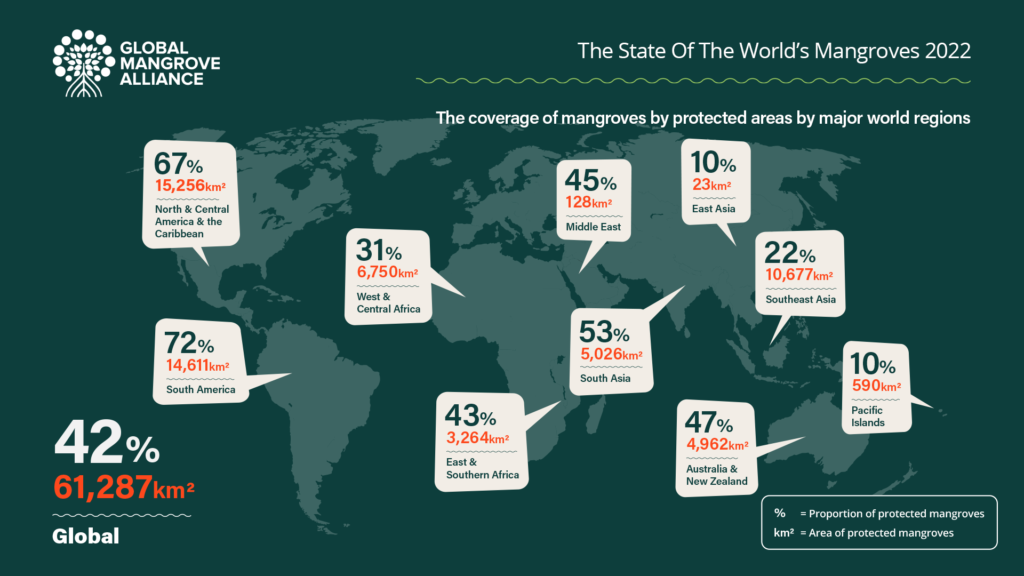
The Mangrove Alliance for Climate (MAC) is a global initiative launched at COP 27 of the UNFCCC to advance mangrove conservation efforts worldwide. The alliance brings together nations that recognize the significance of mangroves in addressing climate change.
MAC Membership
The Mangrove Alliance for Climate includes:
- Founding Members: UAE, Indonesia, India, Sri Lanka, Australia, Japan, and Spain.
- Additional Members: Bahrain, Costa Rica, Kuwait, and Pakistan.
These countries collaborate to promote mangrove restoration, conservation policies, and scientific research.
Objectives of MAC
The MAC initiative aims to:
- Encourage global cooperation in mangrove conservation and restoration.
- Share scientific knowledge
Challenges to Mangrove Ecosystems
Despite their immense value, mangrove ecosystems worldwide face numerous threats, primarily driven by human activities and climate change.
Anthropogenic Pressures
- Deforestation and Land Conversion: Mangroves are cleared for aquaculture (especially shrimp farming), agriculture, urban development, infrastructure projects (ports, roads), and industrial expansion.
- Pollution: Industrial effluents, agricultural runoff (pesticides, fertilizers), domestic sewage, plastic waste, and oil spills severely degrade mangrove health and biodiversity.
- Over-exploitation: Unsustainable harvesting of timber, fuelwood, fish, crabs, and other non-timber forest products can deplete resources and damage the ecosystem structure.
- Hydrological Alterations: Construction of dams, dikes, and canals can alter freshwater flow and sediment supply, impacting the delicate balance of salinity and nutrient availability essential for mangroves.
Climate Change Impacts
- Sea-Level Rise: As sea levels rise, mangroves may be inundated for longer periods, leading to stress, reduced growth, and eventual mortality if they cannot migrate inland.
- Increased Frequency and Intensity of Extreme Weather Events: Cyclones, hurricanes, and tsunamis can cause physical damage to mangrove forests, leading to widespread destruction.
- Ocean Acidification: While direct impacts on mangroves are still being researched, ocean acidification can affect associated marine life, disrupting the food web and ecosystem services.
- Changes in Temperature and Precipitation: Altered climatic patterns can affect mangrove distribution, growth rates, and reproductive cycles.
Conservation Strategies and Solutions
Effective conservation of mangrove ecosystems requires a multi-faceted approach involving local communities, national governments, and international cooperation.
- Protection and Restoration:
- Establishment of Protected Areas: Designating mangroves as National Parks, Wildlife Sanctuaries, and Biosphere Reserves provides legal protection.
- Afforestation and Reforestation: Large-scale planting programs, often involving local communities, to restore degraded areas (e.g., India’s MISHTI scheme).
- Community-Based Conservation: Engaging local communities in management, monitoring, and sustainable use of mangrove resources.
- Policy and Governance:
- Strict Enforcement of Laws: Implementing and enforcing environmental regulations to prevent illegal logging, pollution, and encroachment.
- Integrated Coastal Zone Management (ICZM): Developing comprehensive plans that balance development with conservation needs across coastal areas.
- International Cooperation: Initiatives like the Mangrove Alliance for Climate (MAC) foster global collaboration, knowledge sharing, and resource mobilization.
- Sustainable Livelihoods:
- Promoting Eco-tourism: Developing responsible tourism that generates income for local communities while raising awareness about mangrove conservation.
- Sustainable Aquaculture: Encouraging environmentally friendly aquaculture practices that do not involve mangrove destruction.
- Alternative Income Generation: Supporting communities in developing alternative livelihoods to reduce pressure on mangrove resources.
- Research and Monitoring:
- Scientific Studies: Conducting research on mangrove ecology, resilience, restoration techniques, and climate change impacts.
- Remote Sensing and GIS: Utilizing satellite imagery and geographic information systems for mapping, monitoring, and assessing mangrove health and extent.
- Capacity Building: Training local communities, forest officials, and researchers in mangrove management and conservation techniques.
Conclusion
Mangrove ecosystems are indispensable natural assets, providing a myriad of ecological, economic, and social benefits. From acting as natural barriers against coastal erosion and storm surges to serving as critical carbon sinks and biodiversity hotspots, their importance cannot be overstated. However, they face severe threats from human activities and the escalating impacts of climate change. Concerted efforts involving robust conservation policies, active community participation, scientific research, and international collaboration are crucial for their survival. Protecting and restoring mangroves is not just an environmental imperative but a strategic investment in the resilience and sustainability of coastal communities and the planet as a whole.
Frequently Asked Questions (FAQs)
What are mangroves?
Mangroves are unique trees and shrubs that grow in saline coastal habitats in the tropics and subtropics. They are adapted to live in harsh conditions, including high salinity, low oxygen soils, and regular tidal inundation.
Why are mangroves important?
Mangroves provide numerous benefits, including coastal protection from storms and erosion, carbon sequestration, habitat for diverse marine and terrestrial species, nurseries for fish and shellfish, and livelihoods for coastal communities through fisheries and eco-tourism.
What are the main threats to mangrove ecosystems?
Major threats include deforestation for aquaculture and urban development, pollution (industrial, agricultural, plastic), over-exploitation of resources, and the impacts of climate change such as sea-level rise and increased frequency of extreme weather events.
How can we conserve mangroves?
Conservation efforts involve establishing protected areas, implementing restoration projects (like afforestation), enforcing environmental laws, promoting sustainable livelihoods for local communities, conducting scientific research, and fostering international cooperation (e.g., through initiatives like MAC and MISHTI).
What is the Mangrove Alliance for Climate (MAC)?
The Mangrove Alliance for Climate (MAC) is a global initiative launched at COP 27 by the UAE and Indonesia, with India as a founding member. It aims to advance mangrove conservation and restoration worldwide by encouraging cooperation, sharing knowledge, and raising awareness about their role in climate change mitigation and adaptation.
Multiple Choice Questions (MCQs)
Which of the following is NOT a primary benefit provided by mangrove ecosystems?
- Coastal protection against storms and erosion.
- Significant source of freshwater for inland agriculture.
- Effective carbon sequestration and storage.
- Critical habitat and nursery grounds for marine biodiversity.
Answer: b) Significant source of freshwater for inland agriculture.
The Mangrove Alliance for Climate (MAC) was launched at which major international climate conference?
- COP 21 in Paris
- COP 26 in Glasgow
- COP 27 in Sharm El Sheikh
- COP 28 in Dubai
Answer: c) COP 27 in Sharm El Sheikh.
UPSC Mains Question
Discuss the ecological and economic significance of mangrove ecosystems in India. What are the major threats they face, and what measures are being taken for their conservation? (250 words)