
 Forest Services
Environmental Impact Assessment (EIA) Explained: UPSC 2025
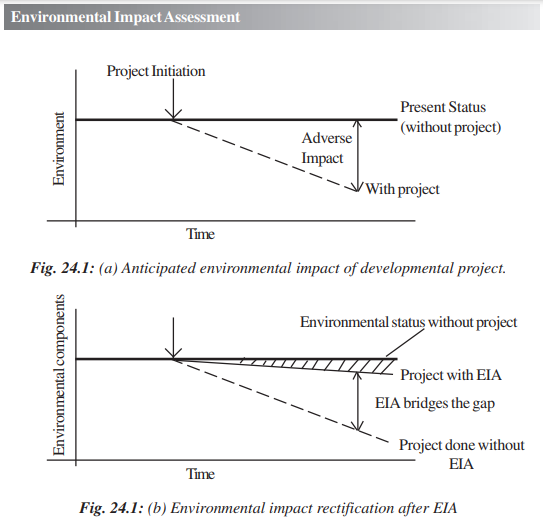
Environmental Impact Assessment (EIA) is a systematic and formal process designed to evaluate the potential environmental, social, and health-related impacts of proposed projects or activities before they are implemented. The primary objective is to ensure that development is sustainable and does not cause irreversible harm to the environment or human well-being.
Definition of EIA
EIA is defined as:
- A formal process for identifying:
- The likely effects of activities or projects on the environment, as well as their impact on human health and welfare.
- The means and measures required to mitigate (reduce negative impacts) and monitor these impacts over time.
This means EIA is not only about spotting potential environmental risks but also about setting up strategies to reduce harm and continuously monitor the project’s effects throughout its life cycle.
Broad Interpretation of the Environment in EIA
In EIA, the environment is interpreted in a broad sense, covering physical, biological, and social aspects:
- Physical Environment:
- Water: Assessing impacts on water bodies, groundwater contamination, and water availability.
- Air: Monitoring air quality, emissions, and pollution from industrial or construction activities.
- Soil: Evaluating soil degradation, erosion, or contamination due to project activities.
- Biological Environment:
- Flora and Fauna: Identifying the effects on plant and animal species, particularly endangered ones.
- Ecosystems: Assessing potential disruptions to ecosystems and biodiversity.
- Social Environment:
- Human Health and Welfare: Understanding how projects might affect the health and safety of local communities.
- Culture and Religion: Evaluating if projects interfere with cultural heritage sites, religious practices, or traditions.
- Local Values: Considering the impacts on community dynamics, livelihoods, and traditional ways of life.
By including these diverse aspects, EIA ensures a comprehensive assessment of how a project may affect not just the natural world, but also the people and societies that depend on it.
Understanding Impacts and Baseline Situations in EIA
What is an Impact?
An impact refers to a deviation or change from the baseline situation caused by a specific activity or project. In the context of Environmental Impact Assessment (EIA), understanding what constitutes an impact is critical for assessing how a project may affect the surrounding environment and society.
- Definition:
An impact is any alteration in the existing environmental, social, or health conditions due to a particular activity. This change could be positive (e.g., job creation, improved infrastructure) or negative (e.g., pollution, habitat destruction). - Importance of Baseline Situation:
To accurately measure the extent of an impact, it’s essential to first establish the baseline situation—this represents the current state of the environment before the project begins. Without knowing this baseline, it becomes impossible to determine how much a project has altered the environment.
What is Baseline Situation?
The baseline situation is the pre-existing environmental condition before any activity or development project takes place. It serves as a reference point for evaluating the extent of impacts caused by the project.
- Definition:
The baseline situation includes the current status of natural resources, ecological health, and social conditions in an area where a project is proposed. It represents what the environment would be like in the absence of the activity. - Why It’s Important in EIA:
The baseline situation is a key concept in EIA because it allows for a comparison between pre-project conditions and the changes observed after the project. This comparison helps in identifying both positive and negative impacts.
Components of the Baseline Situation
When characterizing the baseline situation, several environmental components are assessed to understand the potential impact areas. These components include:
- Water:
- Evaluated in terms of quantity, quality, reliability, and accessibility.
- Changes could include water pollution, reduced groundwater levels, or improved water infrastructure.
- Soils:
- Focuses on erosion rates, crop productivity, salinity levels, and nutrient concentrations.
- Impacts might result in soil degradation, reduced agricultural productivity, or contamination.
- Fauna:
- Assesses populations and habitats of wildlife species.
- Impacts could include habitat destruction, displacement of species, or reduction in biodiversity.
- Environmental Health:
- Involves monitoring for disease vectors (like mosquitoes) and pathogens that may affect human populations.
- Activities that lead to pollution can increase health risks in surrounding communities.
- Flora:
- Analyzes the composition and density of natural vegetation, including key species and their productivity.
- Deforestation or land clearing for projects can drastically affect local flora.
- Special Ecosystems:
- Focuses on key species or unique habitats that may require extra protection, such as coral reefs, wetlands, or rainforests.
Defining Impact Assessment and its Characteristics
Defining Impact Assessment
Environmental Impact Assessment (EIA) is described as a critical planning tool that plays an essential role in ensuring sound decision-making for development projects. It is recognized for its ability to predict environmental consequences and guide project approvals with a balanced perspective.
Key Characteristics of Environmental Impact Assessment (EIA)
- EIA as a Planning Tool:
At its core, EIA is a systematic method that integrates environmental considerations into project planning. It serves as both an information-gathering and decision-making tool. This dual function allows decision-makers to have a comprehensive, objective basis when deciding whether to approve, modify, or reject a proposed project. - Information Gathering and Decision Making:
EIA involves collecting detailed data about the environmental, social, and economic conditions that a project may affect. This information-gathering phase is followed by the decision-making phase, where potential impacts are evaluated, and mitigation strategies are developed. - Predicting and Addressing Potential Problems Early:
EIA ensures that potential problems associated with a project are identified and addressed at an early stage. By forecasting negative environmental impacts before a project begins, planners can incorporate mitigation measures into the project’s design and implementation, reducing harm to the environment. - Objective Basis for Development Approvals:
EIA provides an objective framework that guides authorities in granting or denying project approvals. It ensures that decisions are made based on scientific evidence, rather than solely on economic or political considerations.
Quotations Highlighting the Importance of EIA
- Justice La Forest (1991):
“As a planning tool, it has both an information gathering and decision making component, which provides the decision maker with an objective basis for granting or denying approval for a proposed development.”
This emphasizes EIA’s dual role in collecting data and guiding decisions based on objective criteria. - Manu and Anshu:
“EIA may be defined as a formal process used to predict the environmental consequences of any development project. EIA thus ensures that potential problems are foreseen and addressed at an early stage in the project’s planning and design.”
This highlights the proactive nature of EIA in identifying environmental risks before they manifest.
Evolution of Environmental Impact Assessment (EIA)
The Environmental Impact Assessment (EIA) has undergone significant transformation since its inception, adapting to the evolving understanding of environmental issues and the need for sustainable development. Here's a chronological overview of the evolution of EIA:
1. Early 1970s – Initial Development
- The concept of EIA was introduced in the early 1970s, marking the beginning of formal environmental assessments.
- It started as a regulatory requirement in the United States with the National Environmental Policy Act (NEPA) of 1969, which made it mandatory to evaluate the environmental impacts of federally funded projects.
- Initially, EIA was focused on identifying direct environmental impacts of specific projects.
2. 1970s to 1980s – Trend to Integration
- During this period, EIA processes began to expand and integrate into the policy-making and project planning stages globally.
- More countries adopted EIA as part of their legal frameworks, recognizing its importance in guiding development projects.
- There was a shift from treating EIA as an afterthought to making it an integral part of project planning.
- This era emphasized the inclusion of environmental considerations alongside economic and technical aspects of development.
3. Mid to Late 1980s – Cumulative Effects and Policy Integration
- By the mid to late 1980s, the focus shifted to understanding the cumulative effects of multiple projects on the environment.
- Cumulative effects refer to the combined environmental impacts of several projects over time, which might not be signifi
4. 1990s – Towards Strategic Environmental Assessment (SEA) and Sustainability
- The 1990s marked a significant evolution with the formal emergence and increasing adoption of Strategic Environmental Assessment (SEA).
- SEA aimed to address the limitations of project-level EIA by evaluating environmental impacts at the policy, plan, and programme level, promoting sustainability from the outset.
- Emphasis shifted towards sustainability, integrating environmental, social, and economic considerations into development planning.
- Increased focus on public participation and stakeholder engagement, recognizing the importance of involving affected communities in the decision-making process.
- International cooperation and conventions, such as the Convention on Biological Diversity (CBD), further influenced the scope and application of EIA.
5. 2000s Onwards – Globalisation, Climate Change, and Adaptive Management
- The new millennium brought new challenges and complexities, including the impacts of globalisation and the urgent need to address climate change.
- EIA processes began to incorporate climate change considerations, such as greenhouse gas emissions and climate resilience, into project assessments.
- The concept of adaptive management gained prominence, advocating for flexible and iterative EIA processes that can respond to new information and changing conditions.
- Increased focus on post-project monitoring and auditing to ensure compliance and evaluate the actual environmental performance against predictions.
- Integration of social impact assessment (SIA) and health impact assessment (HIA) to provide a more holistic understanding of project impacts.
Frequently Asked Questions (FAQs)
Q1. What is the primary objective of Environmental Impact Assessment (EIA)?
The primary objective of EIA is to identify, predict, evaluate, and mitigate the environmental, social, and economic impacts of a proposed project prior to decision-making. It aims to ensure environmentally sound and sustainable development by integrating environmental considerations into the planning process.
Q2. What is the difference between EIA and SEA?
EIA (Environmental Impact Assessment) focuses on assessing the environmental impacts of specific projects (e.g., a dam, a factory). SEA (Strategic Environmental Assessment) applies similar principles but at a higher, more strategic level, evaluating the environmental implications of policies, plans, and programmes (e.g., national energy policy, regional development plan). SEA is proactive and aims to integrate environmental concerns earlier in the decision-making hierarchy.
Q3. Is EIA mandatory in India?
Yes, EIA is mandatory for certain categories of developmental projects in India as per the Environment (Protection) Act, 1986, and subsequent EIA Notifications (most notably the 2006 Notification and its amendments). Projects are categorized based on their potential impact, and those falling under specified categories require prior environmental clearance.
Practice Questions for UPSC
1. Which of the following is NOT a primary objective of Environmental Impact Assessment (EIA)?
- To identify and predict potential environmental impacts of a project.
- To provide a mechanism for public participation in project decision-making.
- To ensure that all proposed projects are immediately approved without delay.
- To suggest mitigation measures for adverse environmental impacts.
Correct Answer: c) To ensure that all proposed projects are immediately approved without delay.
Explanation: EIA is a tool for informed decision-making, not for automatic approval. It aims to assess impacts and guide projects towards sustainability, which may sometimes lead to modifications or even rejection.
2. Strategic Environmental Assessment (SEA) differs from Environmental Impact Assessment (EIA) primarily in its:
- Focus on post-project monitoring and auditing.
- Application to individual projects rather than policies or plans.
- Integration of social and health impact assessments.
- Application at a higher, more strategic level of decision-making.
Correct Answer: d) Application at a higher, more strategic level of decision-making.
Explanation: SEA evaluates the environmental implications of policies, plans, and programmes, while EIA focuses on specific projects. This allows for earlier integration of environmental considerations.
स्रोत: LearnPro Editorial | Environmental Ecology | प्रकाशित: 9 February 2025 | अंतिम अपडेट: 12 March 2026
लर्नप्रो संपादकीय मानकों के बारे में
लर्नप्रो की संपादकीय सामग्री सिविल सेवा तैयारी में अनुभवी विषय विशेषज्ञों द्वारा शोधित और समीक्षित है। हमारे लेख सरकारी स्रोतों, NCERT पाठ्यपुस्तकों, मानक संदर्भ सामग्री और प्रतिष्ठित प्रकाशनों जैसे द हिंदू, इंडियन एक्सप्रेस और PIB से लिए गए हैं।
सामग्री को नवीनतम पाठ्यक्रम परिवर्तनों, परीक्षा पैटर्न और वर्तमान घटनाक्रमों के अनुसार नियमित रूप से अपडेट किया जाता है। सुधार या प्रतिक्रिया के लिए admin@learnpro.in पर संपर्क करें।