
Brief Context
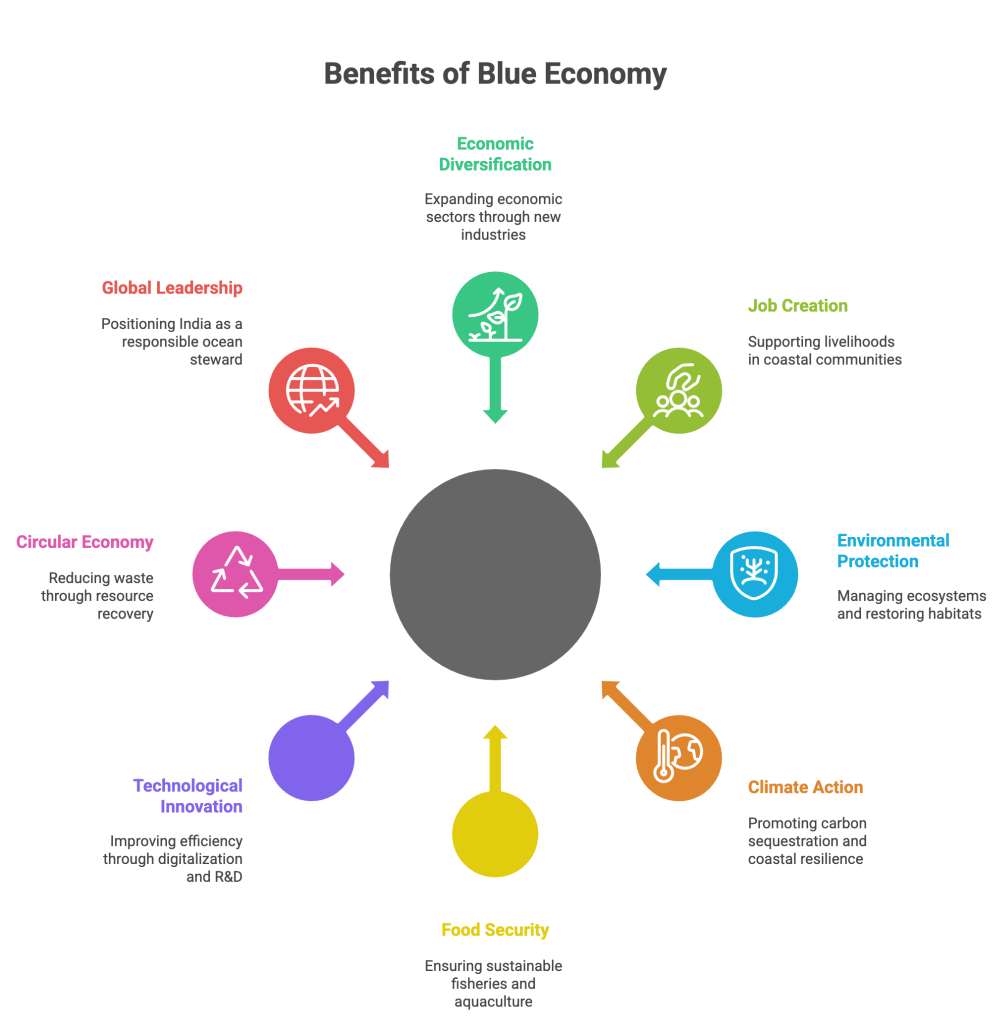
In Context The white paper, “Transforming India’s Blue Economy”, lays out a strategic vision for unlocking the potential of Indias vast marine resources as a pivotal contributor to national development by 2035. What is the Blue Economy? The Blue Economy refers to the sustainable use of ocean resources for economic growth, improved livelihoods, and jobs while preserving the health of ocean ecosystems.
Source Content
Syllabus: GS3/ Environment
In Context
- The white paper, “Transforming India’s Blue Economy”, lays out a strategic vision for unlocking the potential of India’s vast marine resources as a pivotal contributor to national development by 2035.
What is the Blue Economy?
- The Blue Economy refers to the sustainable use of ocean resources for economic growth, improved livelihoods, and jobs while preserving the health of ocean ecosystems.
- It encompasses a range of ocean-linked activities—fisheries, aquaculture, shipping, ports, marine biotechnology etc.
Models of Blue Economy
- Community-led Seaweed Cultivation (Odisha): Seaweed farming diversifies coastal livelihoods, provides supplementary income, absorbs dissolved CO₂ (mitigating climate change), and improves water quality for over 10,000 households.
- Smart Port Transformation (Kochi): Introduction of digital twin technology increases operational efficiency, reduces vessel wait times, optimizes resources, and enhances sustainability through precise environmental monitoring.
- Green Ship Recycling (Alang, Gujarat): Upgrades to international standards (Hong Kong Convention) for shipbreaking recover steel and metals efficiently and ensure safe, environmentally sound hazardous waste management.
Key Initiatives of India’s Blue Economy
- Deep Ocean Mission (DOM): Explore polymetallic nodules, deep sea bioresources, and develop human submersibles for mapping and sustainable extraction within India’s exclusive economic zone.
- Sagarmala Programme: Modernize ports, improve logistics, and develop new coastal economic zones.
- Blue Economy 2.0: Restoring coastal ecosystems (mangroves, coral reefs), climate-proofing coastlines, and promoting sustainable aquaculture and mariculture, notably seaweed farming.
- Pradhan Mantri Matsya Sampada Yojana (PMMSY): Modernizes fisheries, encourages sustainable practices, and supports millions of fishers.
Source: PIB