
Brief Context
Context Susumu Kitagawa, Richard Robson and Omar Yaghi are awarded the Nobel Prize in Chemistry 2025. About It was awarded for discovering and creating a class of materials, called metal-organic frameworks (MOF). Metal Organic Frameworks: MOFs are crystalline structures in which metal ions serve as nodes and organic molecules as connectors.
Source Content
Syllabus: GS3/Science and Technology
Context
- Susumu Kitagawa, Richard Robson and Omar Yaghi are awarded the Nobel Prize in Chemistry 2025.
About
- It was awarded for discovering and creating a class of materials, called metal-organic frameworks (MOF).
- Metal Organic Frameworks: MOFs are crystalline structures in which metal ions serve as nodes and organic molecules as connectors.
- The resulting structure can have enormous internal surface areas — thousands of square metres per gram — and their pores can be customised to attract or hold specific molecules.
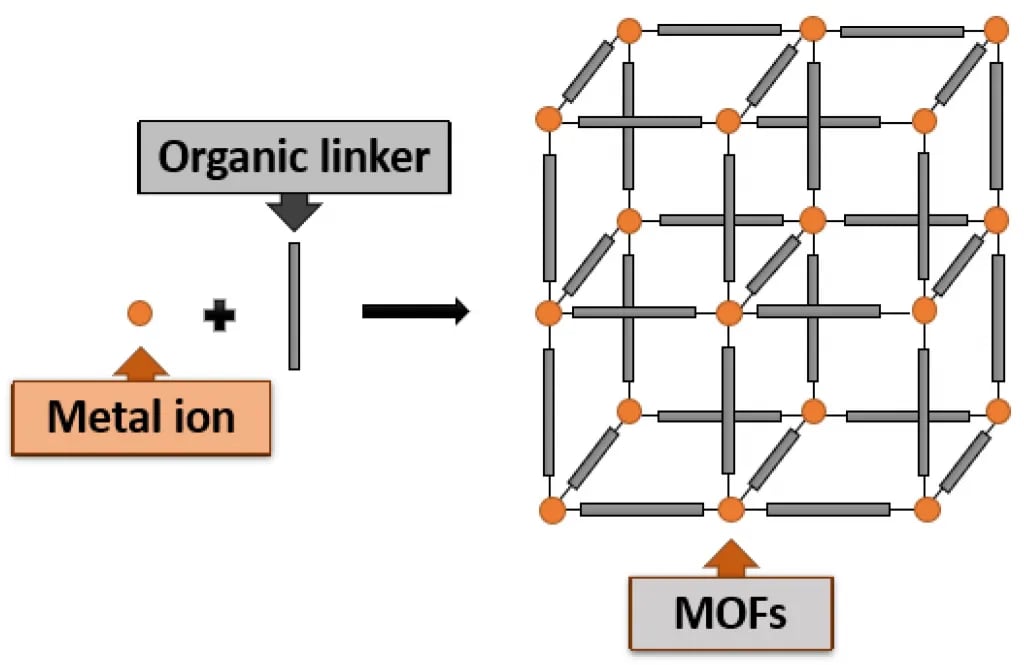
- MOFs form a three-dimensional network with large, porous cavities; this design allows gases and liquids to flow through, making MOFs highly adaptable for various applications.
- By carefully choosing the building blocks, researchers can control the size and shape of the cavities and the chemical environment within.
- As a result, MOFs are among the most versatile materials ever created.
The unique properties of MOFs have led to their application in various fields:
- Water harvesting: MOFs can extract water from dry air, offering a potential solution for water-scarce regions.
- Pollutant Removal: They can filter out harmful substances like PFAS from water, addressing environmental contamination.
- Carbon capture: MOFs are effective in capturing carbon dioxide, aiding in efforts to mitigate climate change.
- Hydrogen storage: Their porous nature allows for the safe storage of hydrogen, crucial for clean energy applications.
Source: TH