
Brief Context
Context A novel study has revealed important insights into developing strong immunity against DENV, which is otherwise quite complex. About Researchers from the US and Philippines have identified specific antibodies, known as envelope dimer epitope (EDE)-like antibodies, as the key for building broad, cross-serotype immunity following natural infection or vaccination. The findings represent a significant step forward in understanding dengue immunity and could lead to more effective therapeutics.
Source Content
Syllabus: GS2/Health
Context
- A novel study has revealed important insights into developing strong immunity against DENV, which is otherwise quite complex.
About
- Researchers from the US and Philippines have identified specific antibodies, known as envelope dimer epitope (EDE)-like antibodies, as the key for building broad, cross-serotype immunity following natural infection or vaccination.
- The findings represent a significant step forward in understanding dengue immunity and could lead to more effective therapeutics.
About Dengue
- Dengue is a mosquito-borne viral disease caused by the Dengue virus (DENV), which has four serotypes (DENV-1, DENV-2, DENV-3, and DENV-4).
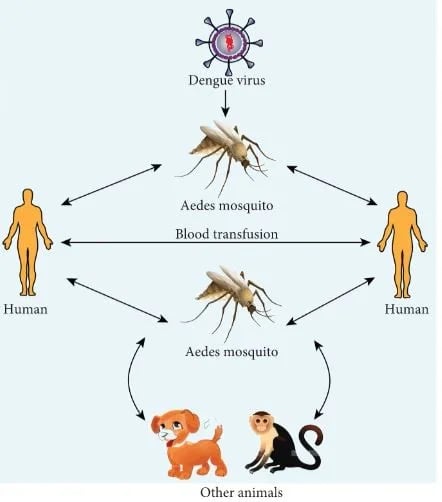
- It is transmitted primarily by the Aedes aegypti mosquito.
- Spread: The virus does notspread person-to-person directly.
- A mosquito becomes infected by biting a person already infected with the virus, and then can transmit the virus to another person through a subsequent bite.
- Symptoms: Fever, severe headache, muscle and joint pains, nausea and vomiting, pain behind the eyes, and rashes.
- In severe cases, the infection can lead to internal bleeding, and if not managed properly, even death.
- Treatment: There is no specific treatment for dengue. Early detection of disease progression with proper medical care lowers fatality rates of severe dengue to below 1%.
- Vaccine: Dengvaxia (CYD-TDV) – approved in some countries, recommended for individuals aged 9-16 with a history of dengue infection.
Dengue & Vaccine Challenges
- Global burden: It is the most common vector-borne viral disease; half the world’s population is at risk, especially in Southeast Asia, Africa, Americas.
- Dengue fever is one of the top 10 threats to global health, according to the World Health Organisation (WHO).
- Dengue in India: India accounts for a large fraction of global dengue cases; 2.3 lakh cases and 297 deaths were reported in 2024.
- Vaccine challenge: Primary immunity after first infection can worsen disease on second infection with different serotypes.
- Severe dengue cases (requiring hospitalization) occur after second infections.
- True protection (secondary immunity) develops only after infection with ≥2 serotypes.
Significance of Study
- EDE-like antibodies could be a biomarker for protective immunity.
- Future vaccines may aim to specifically induce high EDE-like antibody levels.
- Could improve vaccine safety and cross-serotype protection.
Source: TH