
Brief Context
Context As the world moves towards sustainable transportation, Hydrogen Fuel Cell Electric Vehicles (FCEVs) present an alternative to the battery electric vehicles (BEVs) currently dominating the market. Battery Electric Vehicles (BEVs) BEVs are powered by electricity stored in rechargeable batteries. They require regular charging from external power sources, typically through the electric grid.
Source Content
Syllabus: GS3/ Energy
Context
- As the world moves towards sustainable transportation, Hydrogen Fuel Cell Electric Vehicles (FCEVs) present an alternative to the battery electric vehicles (BEVs) currently dominating the market.
Battery Electric Vehicles (BEVs)
- BEVs are powered by electricity stored in rechargeable batteries.
- They require regular charging from external power sources, typically through the electric grid.
Fuel Cell Electric Vehicles (FCEVs)
- FCEVs use hydrogen gas to generate electricity through a chemical process in fuel cells.
- They emit only water vapor as a byproduct, making them environmentally friendly.
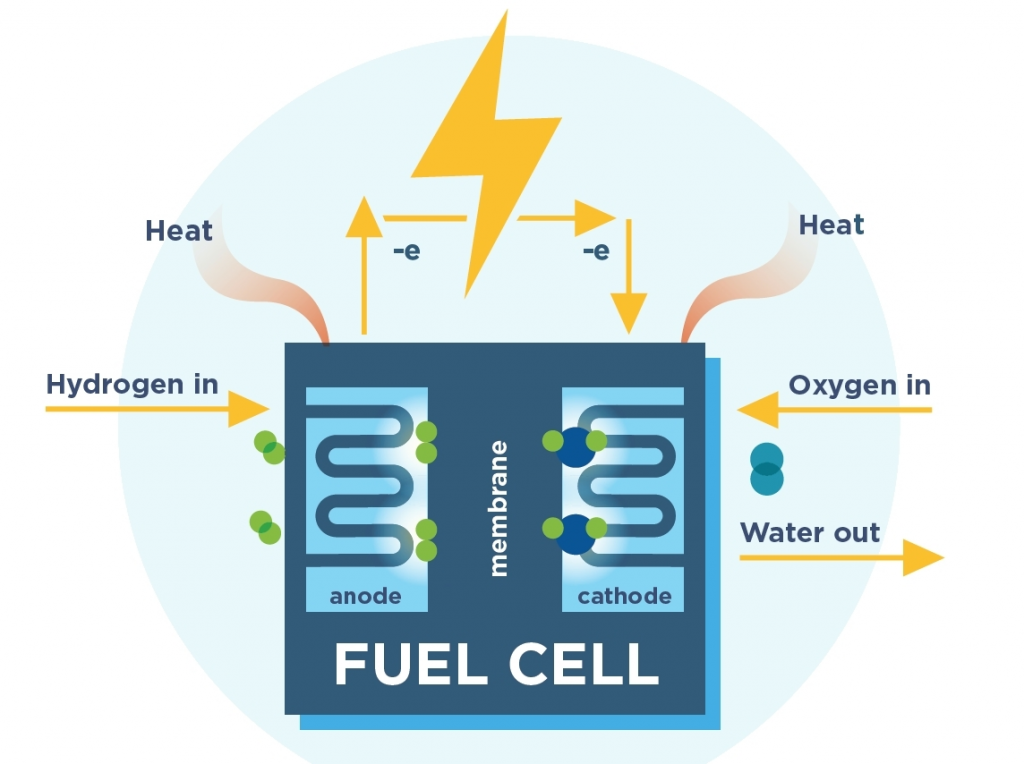
Hydrogen Versus Battery as Fuel Source
| Feature | Battery Electric Vehicles | Hydrogen Fuel Cell Vehicles |
|---|---|---|
| Refuelling Time | Hours (depending on charger) | 5–15 minutes |
| Range | Moderate | Long |
| Weight | Heavier (due to batteries) | Lighter |
| Terrain Suitability | Limited for off-road | Suitable for rugged conditions |
| Cold Climate Suitability | Performance drops | Performs better |
India’s Electric Vehicle Landscape
- EVs accounted for 5% of total vehicle sales in 2023.
- Electric 3-Wheelers: India became the world’s largest market for electric three-wheelers in 2023, overtaking China.
- India contributes to 60% of global sales in this segment.
- Electric 2-Wheelers: India is the second-largest global market with 0.88 million units sold in 2023. China remains far ahead with 6 million units sold.
- India, China, and ASEAN nations lead in this domain; other regions make up less than 5% of the global two- and three-wheeler market.
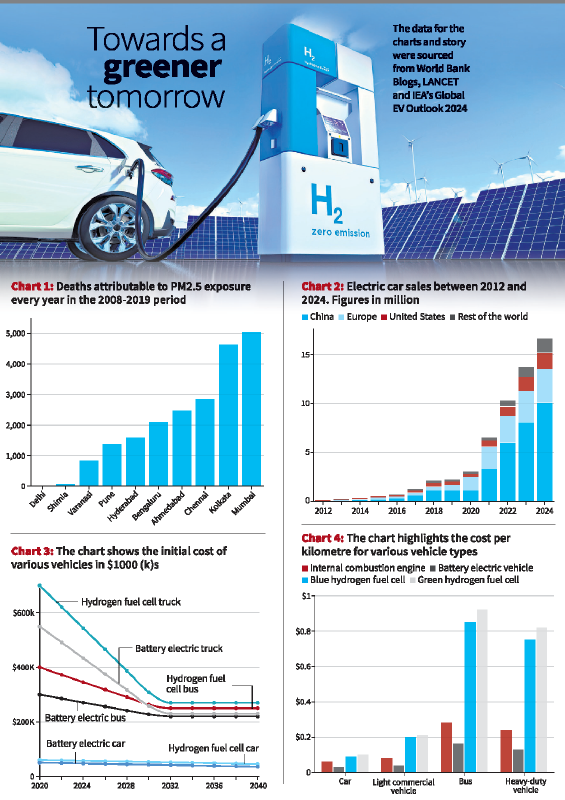
Source: TH