
Brief Context
Context Union Minister Jitendra Singh highlighted that the world is undergoing a paradigm shift towards a circular economy, where waste is increasingly treated as a resource, at the Global Symposium on Resource Efficiency and Circular Economy held in New Delhi. What is Circular Economy? The circular economy (CE) is a model of production that prioritises waste reduction or elimination at all stages of the product life cycle, from raw materials extraction and manufacturing to disposal and reuse.
Source Content
Syllabus: GS3/ Economy
Context
- Union Minister Jitendra Singh highlighted that the world is undergoing a paradigm shift towards a circular economy, where waste is increasingly treated as a resource, at the Global Symposium on Resource Efficiency and Circular Economy held in New Delhi.
What is Circular Economy?
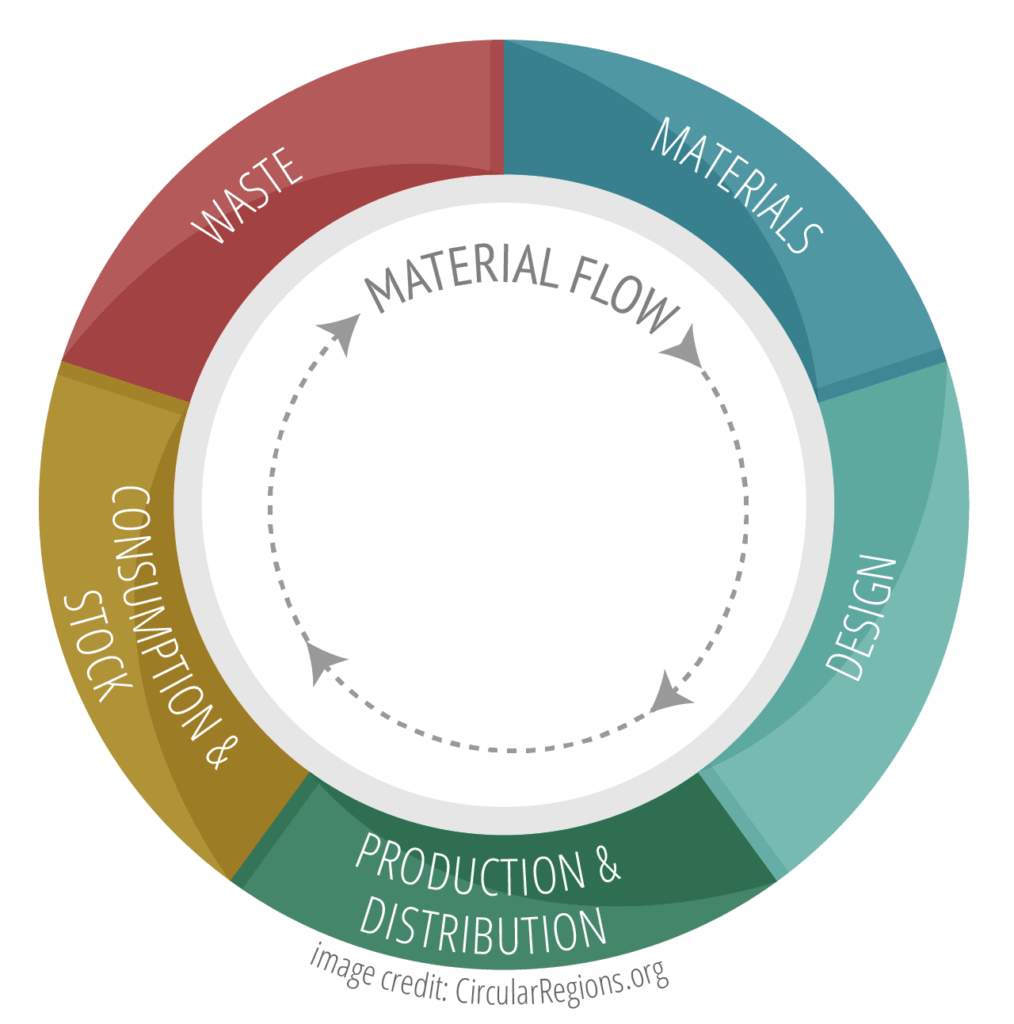
- The circular economy (CE) is a model of production that prioritises waste reduction or elimination at all stages of the product life cycle, from raw materials extraction and manufacturing to disposal and reuse.
- India’s circular economy is expected to have a market value of $2 trillion and create 10 million jobs by the year 2050.
Significance of Circular Economy
- Economic Opportunities: The UNDP estimates that a global switch to circular economy models could generate $4.5 trillion in economic benefits by 2030, while also reducing emissions and creating stable green jobs.
- Job Creation: Expands employment opportunities in recycling, refurbishment, remanufacturing, and sustainable product design.
- Competitive Advantage: Businesses adopting circular models gain a market edge as consumers increasingly prefer sustainable products.
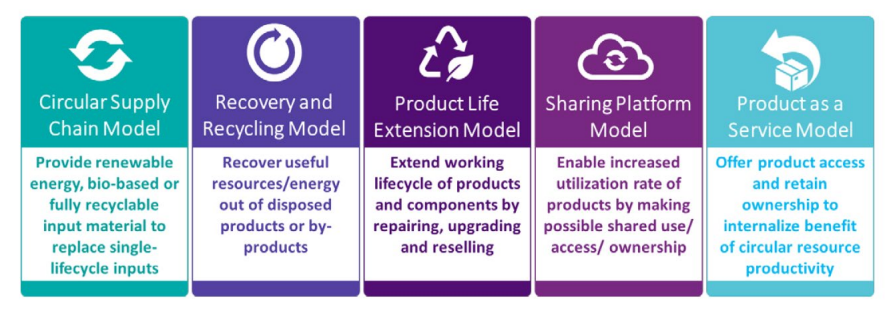
Case Studies in Circular Economy Transition
- Sweden’s Waste-to-Energy Model: Sweden is a global leader in the circular economy, with less than 1% of household waste sent to landfills.
- Approximately 50% of waste is recycled, while the other 50% is converted into energy through advanced waste-to-energy (WTE) incineration plants, providing district heating to ~1 million homes and electricity to 250,000 homes.
- Indore’s “Waste-to-Wealth” Model: Indore hosts Asia’s largest municipal solid waste-based Bio-CNG plant, processing 550 TPD of organic waste to generate ~17,000 kg Bio-CNG and 100 tonnes of manure daily, thereby creating a closed-loop waste-to-energy system.
- The city’s 100% segregation, zero-landfill model, PPP financing, and carbon credit monetisation demonstrate a scalable urban circular economy that integrates waste management with energy security and revenue generation.
India’s Leadership in Circular Economy
- Swachh Bharat Mission (SBM-U): Strengthening urban waste management with 3R ( Reduce, Reuse, and Recycle) principles.
- GOBAR-Dhan Scheme: Promoting waste-to-wealth initiatives through biogas and organic waste processing.
- This scheme currently covers 67.8% of the total number of districts in India, with 1008 biogas plants being fully operational as of February 2025.
- E-Waste Management Rules (2022): Strengthening circular economy practices in electronic waste disposal.
- Extended Producer Responsibility (EPR) for Plastic: Encouraging industries to take accountability for plastic waste.
- India banned single use plastic in 2022.
- The 12th Regional 3R and Circular Economy Forum in Asia and the Pacific was held in Jaipur, India, in March 2025, marking a significant milestone in regional cooperation for sustainable waste management and circular economy initiatives.
Challenges in Implementing Circular Economy
- Technical expertise: Many businesses, municipalities, and citizens are unfamiliar with circular economy principles and lack the technical knowledge to implement them effectively.
- High initial investment costs: Setting up circular systems, such as recycling infrastructure or sustainable product design, requires significant upfront capital.
- Uneven corporate Adoption: SMEs, which form a large part of India’s economy, are largely not onboard, making the transition non-uniform across sectors.
- Insufficient enforcement policy: While policies exist, weak enforcement and limited incentives slow down adoption.
Way Ahead
- There is a need for a trickle-down effect where circular economy concepts reach all levels of industry, beyond large corporations.
- Promote repair and reuse of products to extend their lifecycle and reduce resource consumption.
- Improve recycling processes to prevent accumulation and environmental pollution through Extended Producer Responsibility (EPR) initiatives.
Source: AIR