
Brief Context
Context The manufacturing sector is undergoing a paradigm shift, powered not by steam or steel, but by smart algorithms and intelligent systems. AI in Manufacturing AI is used to create a virtual replica of processes, production lines, factories and supply chains that are used to simulate, analyze and predict performance in real time. AI is transforming operations from legacy facilities to state-of-the-art plants.
Source Content
Syllabus: GS3/Role of IT
Context
- The manufacturing sector is undergoing a paradigm shift, powered not by steam or steel, but by smart algorithms and intelligent systems.
AI in Manufacturing
- AI is used to create a virtual replica of processes, production lines, factories and supply chains that are used to simulate, analyze and predict performance in real time.
- AI is transforming operations from legacy facilities to state-of-the-art plants.
- It enables higher output, lower waste, real-time adaptability, and smarter design.
Current Status & Projection
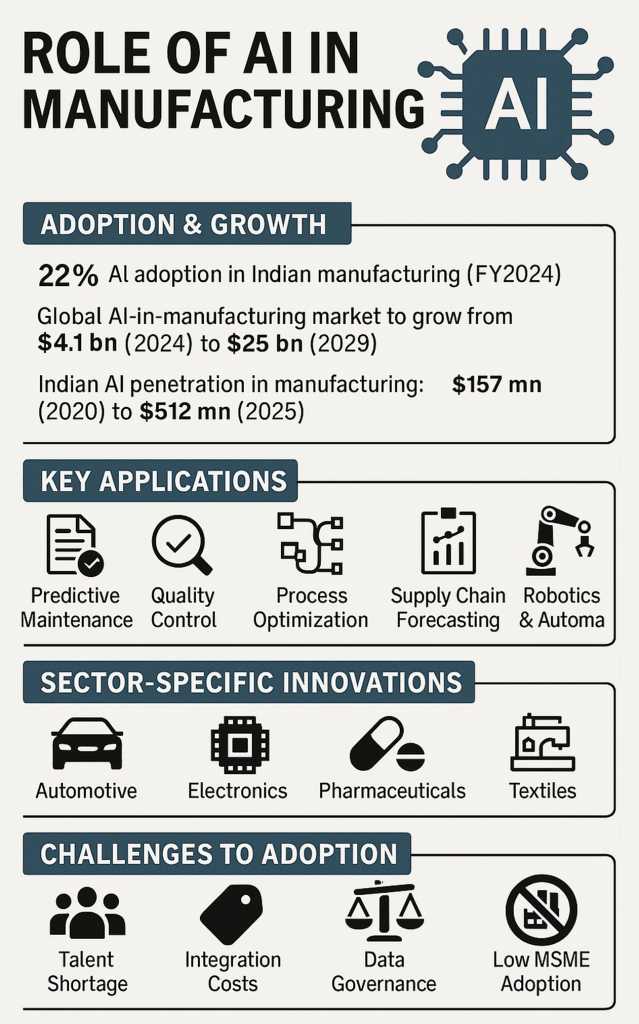
- Globally, the AI-in-manufacturing market is poised to grow from $4.1 billion in 2024 to more than $25 billion by 2029.
- In India, AI adoption in manufacturing jumped from 8% to 22% in just one year (FY2024).
- Data and AI could add $450-$500 Bn to India’s GDP by 2025.
Key Applications of AI in Manufacturing
- Predictive Maintenance: Reduces downtime by up to 30% using sensor data and machine learning (McKinsey).
- Quality Control: AI vision systems detect micro-defects in real time.
- Process Optimization: AI adjusts workflows dynamically to reduce waste and boost efficiency.
- Supply Chain Forecasting: Enhances agility and responsiveness by over 20% (IBM).
- Robotics & Automation: Cobots assist workers in repetitive or high-risk tasks, improving safety and productivity.
- Sector-Specific Innovations:
- Automotive: AI-powered robotics streamline assembly and inspection.
- Electronics: Machine vision ensures precision in component assembly.
- Pharmaceuticals: AI monitors large-scale production and ensures regulatory compliance.
- Textiles: CAD/CAM systems optimize cutting, stitching, and inspection.
Challenges to Adoption
- Talent Shortage: Need for upskilling in AI and machine learning.
- Integration Costs: High initial investment slows adoption among MSMEs.
- Data Governance: Concerns over transparency and explainability of AI models.
- Reliable connectivity and cloud access remain uneven, especially in tier-2 and tier-3 cities.
- Low MSME Adoption: Only about 15% of SMEs currently use AI in manufacturing.
- Cautious Optimism: About 44% of manufacturing leaders hesitate to scale generative AI due to concerns about explainability and accuracy.
Government Initiatives
- National Program on AI (MeitY): It promotes responsible AI use across sectors including manufacturing.
- Samarth Udyog Bharat 4.0: Supports smart factory development and Industry 4.0 adoption.
- IndiaAI Mission: ₹10,300 crore allocated to build AI infrastructure and indigenous models.
- Centres of Excellence (CoEs): Focused on AI in healthcare, agriculture, education, and sustainable cities.