
Brief Context
In News The Ministry of Home Affairs extended the Armed Forces (Special Powers) Act in parts of Manipur, Arunachal Pradesh, and Nagaland for another six months. Criticisms Alleged human rights violations including cases of extrajudicial killings, torture, and disappearances. Considered against democratic ethos, limiting fundamental rights such as life and liberty (Article 21).
Source Content
Syllabus: GS3/ Internal Security
In News
- The Ministry of Home Affairs extended the Armed Forces (Special Powers) Act in parts of Manipur, Arunachal Pradesh, and Nagaland for another six months.
What is AFSPA?
- About:
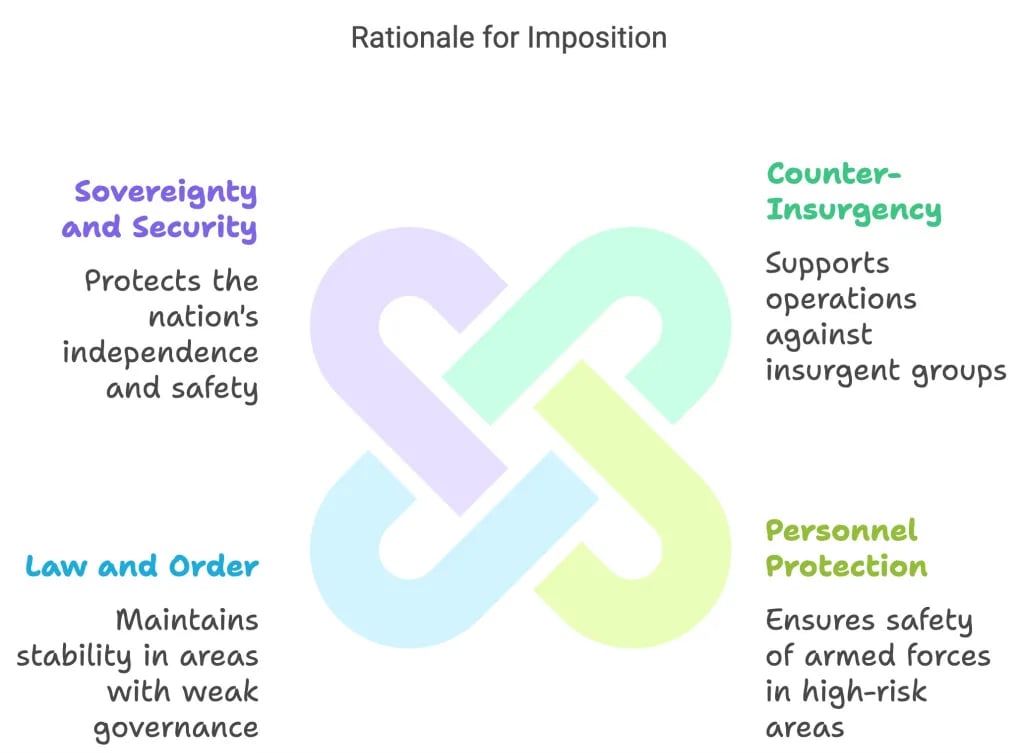
- The Armed Forces (Special Powers) Act, 1958 (AFSPA) is a powerful law enacted to empower the armed forces in counter-insurgency operations.
- Important Provisions
- Section 3: The Governor of a State or UT can declare the whole or part of the territory as a “disturbed area”.
- Section 4: Empowers armed forces to search premises, arrest individuals without warrants, and use force (even to the extent of causing death) against those violating prohibitions.
- Section 6: Arrested persons and seized property must be handed over to the local police promptly.
- Section 7: Provides immunity to armed forces—prosecution or legal proceedings can begin only with prior sanction of the Central Government.
Criticisms
- Alleged human rights violations including cases of extrajudicial killings, torture, and disappearances.
- Considered against democratic ethos, limiting fundamental rights such as life and liberty (Article 21).
- Limited success in addressing insurgency, often seen as fuelling resentment among local populations.
Committee Recommendations
- Justice Jeevan Reddy Committee (2005): Recommended repeal of AFSPA, suggesting incorporation of essential provisions into the Unlawful Activities (Prevention) Act (UAPA).
- Santosh Hegde Commission (2013): Reported misuse of AFSPA in Manipur, stating many “encounters” were fake.
Way Forward
- Enhance transparency and accountability by amending vague provisions.
- Ensure checks on human rights violations through independent oversight.
- Focus on socio-economic development of Northeastern states to address root causes of insurgency.
- Establish a balanced framework between security imperatives and protection of citizens’ rights.
Source: TH