
Tags: GS Paper 1 – Geography: Distribution of Crops; GS Paper 3 – Agriculture
For Prelims: Crocus sativus, Kashmir Saffron GI tag (2020), Pampore, karewa soils, crocin, picrocrocin, safranal, National Saffron Mission, India International Kashmir Saffron Trading Centre
For Mains: Challenges of niche high-value crops, role of GI tags in rural livelihoods
Why in News?
The saffron harvest in Kashmir (late October to November) has brought attention to Kashmir Saffron, prized for its deep crimson colour, strong aroma and high quality.
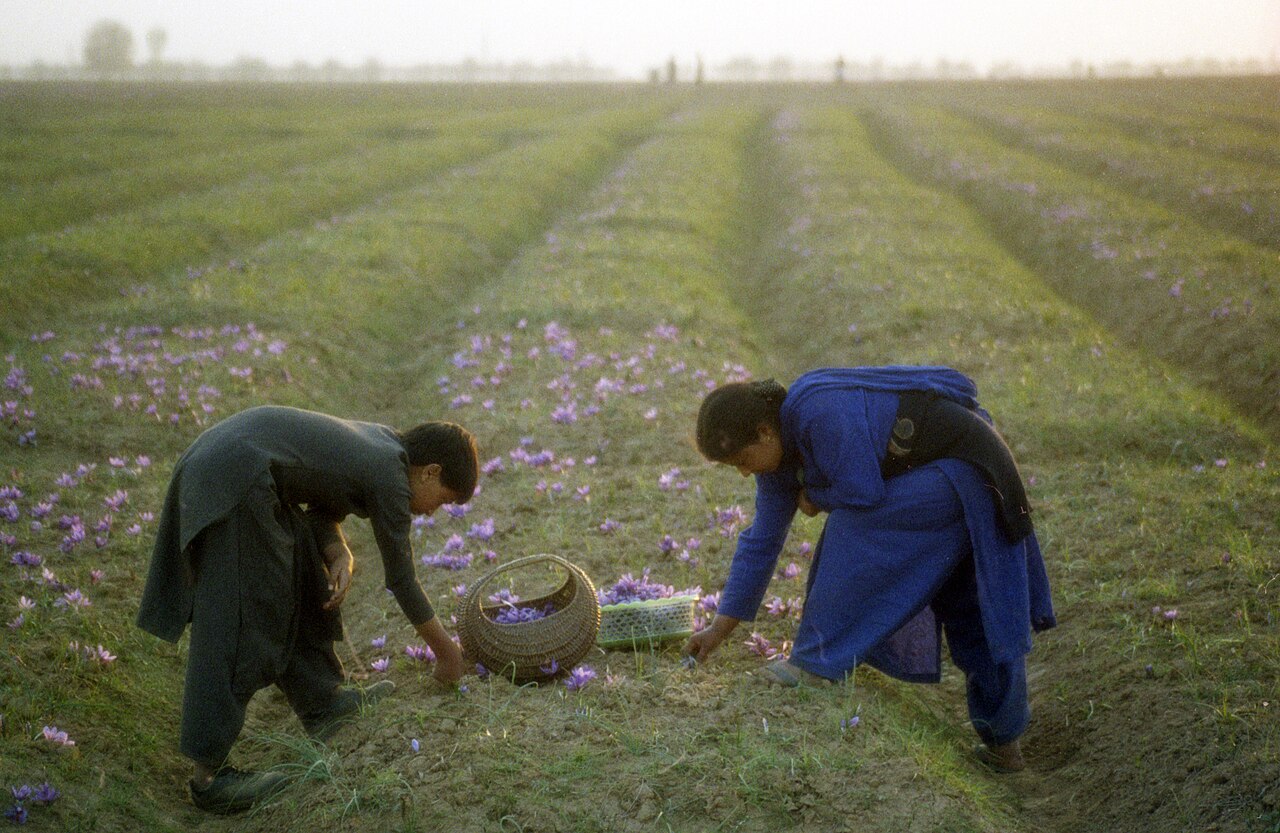
About Saffron
- Obtained from the dried stigmas of the flower of Crocus sativus, a perennial that grows from corms. Each flower has only three stigmas, which are picked by hand. It is the world’s most expensive spice.
- Key compounds: Crocin (colour), picrocrocin (taste) and safranal (aroma).
- Major producers: Iran (by far the largest), followed by India, Spain, Greece and others.
Kashmir Saffron
- Area: Grown mainly on the karewa (lacustrine plateau) lands of Pampore (Pulwama), as well as Budgam, Srinagar and Kishtwar. Pampore is often called the ‘Saffron Town of Kashmir’.
- Conditions: Altitude of about 1,600–1,800 m, well-drained soils, dry summers and cold winters.
- GI tag (2020): Recognises varieties such as Lachha, Mongra and Guchhi. Kashmir saffron has higher crocin content than many other varieties.
Government Support
- National Saffron Mission (2010): Supports replanting with quality corms, sprinkler irrigation, bore wells and better farming practices.
- India International Kashmir Saffron Trading Centre at Pampore offers testing, grading and e-auction facilities.
- Saffron cultivation is also being tried in Sikkim, Arunachal Pradesh and Meghalaya, and in controlled environments.
Challenges
- Falling output: Production has dropped sharply since the late 1990s because of erratic rainfall, drought and diseases such as corm rot.
- Land use change: Karewa land is being converted for construction and other purposes.
- Adulteration and fakes: Cheaper imported saffron is passed off as Kashmiri.
- Labour-intensive harvesting and low mechanisation.
Frequently Asked Questions (FAQs)
1. Which part of the saffron flower is used as the spice?
The stigma.
2. Which town is known as the saffron town of Kashmir?
Pampore.
3. When did Kashmir Saffron get a GI tag?
In 2020.
Sources and further reading
- Salix Oculuscommons.wikimedia.org