
 Forest Services
Agricultural Challenges and Opportunities in India
Agriculture is a vital sector in India, supporting rural livelihoods, ensuring food security, and contributing significantly to the country's economy. Employing over 42% of the workforce and contributing around 18% to the GDP, the sector is a pillar of economic development. However, rapid population growth, climate change, and resource mismanagement pose significant challenges. Simultaneously, opportunities in modernization, diversification, and sustainable practices offer a path to transform agriculture into a resilient and prosperous sector.
Historical Context of Indian Agriculture
Pre-Independence Era
- Agriculture was characterized by subsistence farming, with low productivity and exploitative land tenure systems like the Zamindari system.
- Cash crops such as cotton, indigo, and opium were cultivated to meet colonial export demands, leading to food shortages.
Post-Independence Reforms
- Land Reforms: Abolished intermediaries, distributed land to tenants, and introduced tenancy regulations.
- Green Revolution (1960s): Boosted production through high-yield varieties (HYVs), chemical fertilizers, and irrigation, especially in Punjab, Haryana, and Uttar Pradesh.
- Economic Reforms (1991): Liberalized agricultural trade and introduced private sector participation.
Major Challenges in Indian Agriculture
Land and Soil Related Challenges
- Fragmented Landholdings: The average farm size is 1.08 hectares, making mechanization and economies of scale difficult.
- Soil Degradation: Overuse of chemical fertilizers and pesticides has reduced soil health.
Water Scarcity and Management
- Agriculture consumes nearly 80% of India’s freshwater resources, often through inefficient irrigation methods like flood irrigation.
- Groundwater Depletion: Over-extraction in states like Punjab and Haryana has led to declining water tables.
Climate Change Impacts
- Erratic rainfall, rising temperatures, and extreme weather events such as droughts and floods have reduced agricultural yields.
- Crop losses due to unseasonal rains and cyclones have become increasingly frequent.
Market Access and Infrastructure
- Farmers face challenges in accessing competitive markets due to fragmented supply chains and middlemen exploitation.
- Poor infrastructure, such as lack of storage facilities, leads to 20-30% post-harvest losses annually.
Credit and Indebtedness
- Many farmers rely on informal credit sources with high-interest rates, leading to a debt trap.
- Institutional credit through banks often remains inaccessible due to bureaucratic hurdles.
Technological Adoption Gap
- Despite advancements, the adoption of modern technologies like precision farming, AI, and IoT remains limited to certain regions.
Cropping Patterns and Monoculture
- The focus on staples like rice and wheat has led to monoculture, neglecting high-value crops such as fruits, vegetables, and pulses.
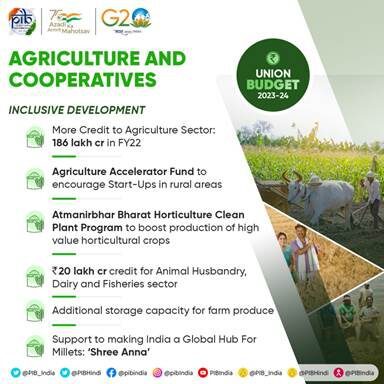
Opportunities for Growth and Modernization
Technological Advancements
- Precision Farming: Use of GPS, drones, and IoT for monitoring crop health and optimizing resource use.
- AI and Big Data: Predictive analytics for weather patterns, pest outbreaks, and market trends.
Crop Diversification and Value Addition
- Encouraging farmers to cultivate high-value crops such as spices, fruits, and vegetables can increase incomes.
- Promotion of organic farming and niche products for export markets.
Agro-Processing and Food Industry
- Investment in agro-processing industries can reduce post-harvest losses and create employment.
- Examples include turning fruits into jams and juices or wheat into packaged flour.
Sustainable Farming Practices
- Promoting natural farming techniques to reduce chemical dependency and restore soil health.
- Adoption of water-saving irrigation methods like drip and sprinkler systems.
Export Potential
- India is a leading exporter of rice, spices, and tea. Expanding trade agreements can boost agricultural exports.
- High-value products like organic spices and basmati rice have growing demand globally.
Government Initiatives and Schemes
- Pradhan Mantri Fasal Bima Yojana (PMFBY): Crop insurance to protect farmers against yield losses.
- e-NAM: National Agriculture Market for better price discovery and reduced middlemen interference.
- PM Kisan Samman Nidhi: Direct income support to farmers.
Specific Programs
- Focuses on promoting sustainable farming practices and increasing productivity in rainfed areas.
- Emphasizes diversification, better price realization, and reducing production costs.
- Provides detailed soil analysis to farmers, helping them optimize fertilizer use.
- Allocates funds for state-specific agricultural projects, including infrastructure development.
- Aims to improve the transportation of perishable goods like fruits, vegetables, and meat through air cargo.
Success Stories and Case Studies
Amul Cooperative Movement
- Cooperative model in Gujarat transformed India into the largest milk producer globally.
Green Revolution
- Green Revolution practices led to food self-sufficiency in the 1970s, reducing dependency on imports.
Sikkim's Organic Farming
- Sikkim became the first fully organic state, boosting export potential and reducing environmental impact.
Horticulture in Himachal Pradesh
- Expansion of apple orchards improved rural incomes and employment opportunities.
Climate Change and Future Trends
Impact on Cropping Patterns
- Rising temperatures have led to a reduction in the cultivation of water-intensive crops like paddy.
- Certain regions are shifting to drought-resistant crops like millets and pulses.
Pest and Disease Outbreaks
- Warmer temperatures create favorable conditions for pests like locusts, threatening food security.
Water Resources
- Himalayan glaciers feeding rivers like Ganga and Yamuna are melting, affecting irrigation in northern India.
Emerging Technologies in Agriculture
Drones and Remote Sensing
- Real-time monitoring of soil moisture and crop health.
- Efficient spraying of fertilizers and pesticides over large areas.
Artificial Intelligence (AI)
- Crop yield predictions and personalized farming recommendations for smallholders.
Blockchain
- Ensures transparency in supply chains, connecting farmers directly with buyers.
Vertical Farming
- Cultivation in stacked layers reduces space usage and water consumption, ideal for urban agriculture.
Global Best Practices and Lessons for India
Israel's Water Management
- Drip irrigation and desalination techniques ensure efficient water use.
Netherlands' High-Tech Agriculture
- Investments in mechanization and rural e-commerce connect farmers to markets.
Singapore's Urban Farming
- Controlled environments for high-yield crop production serve as a model for India’s urban areas.
Policy Gaps and Implementation Challenges
Distortions in Market Dynamics
- Loan waivers and free power subsidies can distort market dynamics.
Infrastructure Deficiencies
- Lack of rural roads, cold storage facilities, and warehouses leads to wastage.
Coordination Issues
- Multiple ministries and schemes often lead to duplication and inefficiencies.
Recommendations for a Resilient Agricultural Sector
Enhancing Productivity
- Increasing yields on existing farmland through efficient use of resources.
Strengthening Farmer Collectives
- Farmer producer organizations (FPOs) can strengthen bargaining power and market access.
Promoting Agroforestry
- Integrating trees with crops enhances biodiversity and soil health.
Fostering Innovation
- Encouraging innovations in logistics, storage, and marketing.
International Collaboration
- Learning from global best practices in irrigation, storage, and technology adoption.
Agriculture remains a critical sector for India’s growth, rural development, and food security. By addressing challenges such as climate change, low productivity, and market inefficiencies, and leveraging opportunities in technology, diversification, and policy reforms, Indian agriculture can transition into a modern, sustainable, and globally competitive sector.
Useful Links >>
UPSC Mains Syllabus – General Studies-I: This post provides a detailed breakdown of the General Studies-I syllabus, covering Indian Heritage and Culture, History, and Geography of the World and Society.
Complete Notes of History for UPSC: A comprehensive collection of history notes tailored for UPSC aspirants, encompassing ancient, medieval, and modern Indian history.
UPSC CSE Exam 2025: An Insight: Gain insights into the UPSC Civil Services Examination for 2025, including important dates, exam patterns, and preparation strategies.
Important Books for UPSC Exams: A curated list of essential books recommended for various subjects in the UPSC examination, aiding in effective study planning.
UPSC Prelims Syllabus: An in-depth overview of the UPSC Preliminary Examination syllabus, helping candidates understand the topics to focus on during their preparation.
Practice Questions for UPSC
Prelims Practice Questions
- Fragmented landholdings can limit mechanization and economies of scale.
- Flood irrigation is cited as an efficient method that reduces freshwater consumption in agriculture.
- Poor storage infrastructure contributes to significant post-harvest losses annually.
Which of the above statements is/are correct?
- Promoting drip and sprinkler irrigation is presented as a water-saving approach.
- Encouraging diversification into high-value crops is suggested to improve farmer incomes and reduce the risks of monoculture.
- Expanding trade agreements is suggested as a way to boost agricultural exports where India has strengths in some commodities.
Which of the above statements is/are correct?
Frequently Asked Questions
How do fragmented landholdings constrain agricultural modernization in India?
With an average farm size of 1.08 hectares, farms become too small to justify machinery costs and coordinated operations. This reduces economies of scale and makes it harder to adopt modern inputs and practices efficiently, keeping productivity low.
Why is water scarcity both a productivity issue and a sustainability risk for Indian agriculture?
Agriculture uses nearly 80% of India’s freshwater, often through inefficient flood irrigation, which raises wastage and lowers water-use efficiency. Over-extraction, especially in Punjab and Haryana, depletes groundwater and threatens long-term irrigation security.
In what ways is climate change affecting farm output and risk in India?
Erratic rainfall, rising temperatures, and more extreme events like droughts and floods are reducing yields and increasing uncertainty in cropping decisions. The article also notes increasingly frequent crop losses from unseasonal rains and cyclones, intensifying farm risk.
How do market access constraints translate into income loss for farmers?
Fragmented supply chains and middlemen reduce farmers’ bargaining power and limit access to competitive markets. Poor storage infrastructure contributes to 20–30% post-harvest losses annually, directly cutting marketable surplus and realized income.
What opportunities do technology and value addition create for transforming Indian agriculture?
Precision farming using GPS, drones, and IoT can optimize inputs by monitoring crop health and resource use, while AI and big data can improve decisions on weather, pests, and markets. Agro-processing and value addition can reduce post-harvest losses and create rural employment by converting produce into higher-value products.
Source: LearnPro Editorial | Environmental Ecology | Published: 20 November 2024 | Last updated: 10 March 2026
About LearnPro Editorial Standards
LearnPro editorial content is researched and reviewed by subject matter experts with backgrounds in civil services preparation. Our articles draw from official government sources, NCERT textbooks, standard reference materials, and reputed publications including The Hindu, Indian Express, and PIB.
Content is regularly updated to reflect the latest syllabus changes, exam patterns, and current developments. For corrections or feedback, contact us at admin@learnpro.in.