
Brief Context
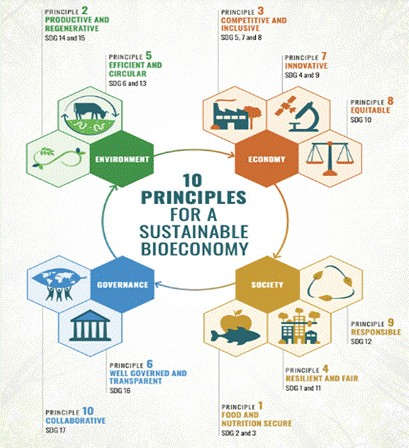
Context Biotechnology has emerged as a transformative force in agriculture, aquaculture, and animal sciences. What is Bioeconomy? The bioeconomy is the use of renewable biological resources to produce food, energy and industrial goods, which supports sustainability and economic growth.
Source Content
Syllabus: GS3/Biotechnology
Context
- Biotechnology has emerged as a transformative force in agriculture, aquaculture, and animal sciences.
What is Bioeconomy?
- The bioeconomy is the use of renewable biological resources to produce food, energy and industrial goods, which supports sustainability and economic growth.
- Innovations like gene editing and bioprinting are driving progress, while integration across sectors strengthens long-term impact.
- By aligning biotechnology with digital tools and circular economy principles, the bioeconomy offers sustainable solutions to environmental challenges and promotes overall societal well-being.
India’s Bioeconomy
- India is among the Top 12 destinations for biotechnology worldwide and 3rd largest destination for biotechnology in Asia Pacific.
- India’s bioeconomy has grown sixteen-fold from $10 billion in 2014 to an impressive $165.7 billion in 2024.
- Contributing 4.25% to the national GDP, the sector has demonstrated a robust compound annual growth rate (CAGR) of 17.9% over the past four years.
- India’s Biotechnology sector is categorised into Biopharmaceuticals, Bio agriculture, Bio IT and Bio Services.
- Future Goals: Target of achieving a $300 billion bioeconomy by 2030.
- India also seeks to lead globally in bio-pharma, including vaccines, diagnostics, and therapeutics.
Concerns
- Fragmentation of Infrastructure: India hosts over 70 incubators, but few have end-to-end facilities such as pilot-scale purification systems, fill-and-finish suites, regulatory affairs support.
- This forces entrepreneurs to operate across cities, duplicating costs and processes.
- Regulatory Complexities: Outdated frameworks for clinical trials, patent laws and product approval.
- Lag behind modern demands (AI, biologics, genomics), delaying market entry and deterring investment.
Use Biotechnology in Agriculture
- The Department of Biotechnology’s Agriculture Biotechnology programme supports innovative biotechnological research for achieving sustainable agriculture by leveraging the latest advances in technologies.
- The main achievements include:
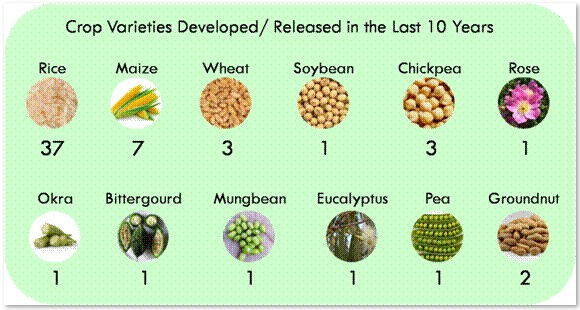
- Climate-Smart Crops: A New Superior Climate Smart Drought Tolerant High-Yielding Chickpea Variety “SAATVIK (NC 9)” with enhanced yield under drought stress was notified recently.
- Genome-Edited Crops: Genome editing was employed to generate loss of function mutations in several rice genes that negatively regulate crop productivity.
- Amaranth Genetic Resources: The department of biotechnology has developed an Amaranth Genomic Resource Database, Near Infrared Spectroscopy (NIRS) techniques for screening nutritional qualities of amaranth grain, and a 64K SNP chip.
- Amaranth accessions screened using the above resources have been shown to counteract high fat diet induced obesity.
- Fungal Biocontrol: A stable fungal enzyme nano-formulation from Myrothecium verrucaria has been developed for eco-friendly biocontrol of powdery mildew in tomato and grape.
- Kisan-Kavach: It is an anti-pesticide suit designed to combat the pervasive threat of pesticide-induced toxicity in agricultural settings.
Animal Biotechnology
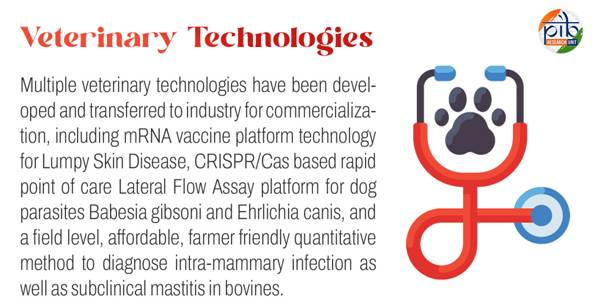
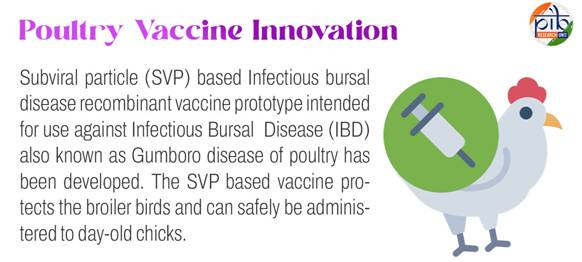
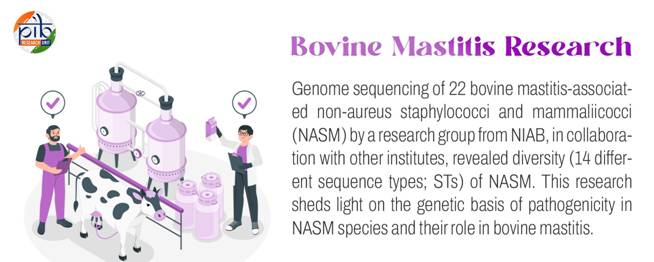
- India is the largest animal husbandry sector in the world with the largest livestock population to support the livelihoods of more than two-thirds of the rural population.
Aquaculture and Marine Biotechnology
- The Aquaculture and Marine Biotechnology program has been implemented with the goal of enhancing both aquaculture production and productivity.
- Shrimp Diet: Due to its high cost and sustainability issues, replacement of fish meal is an important area of research in aquaculture nutrition.
- CIFA-Brood-Vac: A novel vaccine has been developed to prevent mortality in fish spawn, securing aquaculture stock health.
- A user-friendly software, Interactive Fish Feed Designer (IFFD) version 2, has been developed for the formulation of cost-effective fish feed with non-conventional ingredients.
Conclusion
- The integration of biotechnology into agriculture, aquaculture, and animal sciences is fostering sustainable food production, disease resistance, and enhanced productivity.
- These innovations, backed by research and commercialization efforts, are paving the way for a resilient and efficient agricultural ecosystem.
Source: TH