
Brief Context
In News The Government of India has notified new Deep-Sea Fishing Rules, 2025, aimed at realizing the vision of a prosperous and inclusive Blue Economy and unlocking the vast potential of India’s 11,099 km coastline and Exclusive Economic Zone (EEZ). Key Highlight of the Rules Empowering Fishermen and Cooperatives: Exclusive priority is given to Fishermen Cooperative Societies and Fish Farmer Producer Organisations (FFPOs) for deep-sea fishing licenses using advanced vessels. Ban on Foreign Vess
Source Content
Syllabus: GS3/ Environment
In News
- The Government of India has notified new Deep-Sea Fishing Rules, 2025, aimed at realizing the vision of a prosperous and inclusive Blue Economy and unlocking the vast potential of India’s 11,099 km coastline and Exclusive Economic Zone (EEZ).
Key Highlight of the Rules
- Empowering Fishermen and Cooperatives: Exclusive priority is given to Fishermen Cooperative Societies and Fish Farmer Producer Organisations (FFPOs) for deep-sea fishing licenses using advanced vessels.
- Ban on Foreign Vessels: Foreign fishing vessels are completely prohibited from operating within India’s EEZ to protect resource sovereignty and small-scale fishers.
- Mother-and-Child Vessel Model: Introduced to enable mid-sea transshipment under Reserve Bank of India regulations, this model uses large “mother” vessels supporting smaller “child” boats to reduce shore congestion, extend fishing operations, and improve efficiency.
- Prohibition of Harmful Fishing Practices: Fishing methods such as LED light fishing, pair trawling, and bull trawling are banned to protect marine ecosystems.
- Fisheries Management and Legal Measures: Minimum legal sizes for fish species will be prescribed, and Fisheries Management Plans developed in consultation with state governments and stakeholders to ensure sustainable exploitation.
- Digital Access and Monitoring: Mechanized and large motorized vessels require free access passes through the online ReALCRaft portal, which is integrated with the Marine Products Export Development Authority and Export Inspection Council.
Significance
- Boost deep-sea fishing revenue and reduce dependence on near-shore fisheries.
- Empower coastal communities through cooperative governance.
- Promote sustainable resource use and prevent over-exploitation.
- Strengthen India’s strategic presence and maritime security in the EEZ.
- Enhance global trade competitiveness of Indian seafood under the “Indian origin” label.
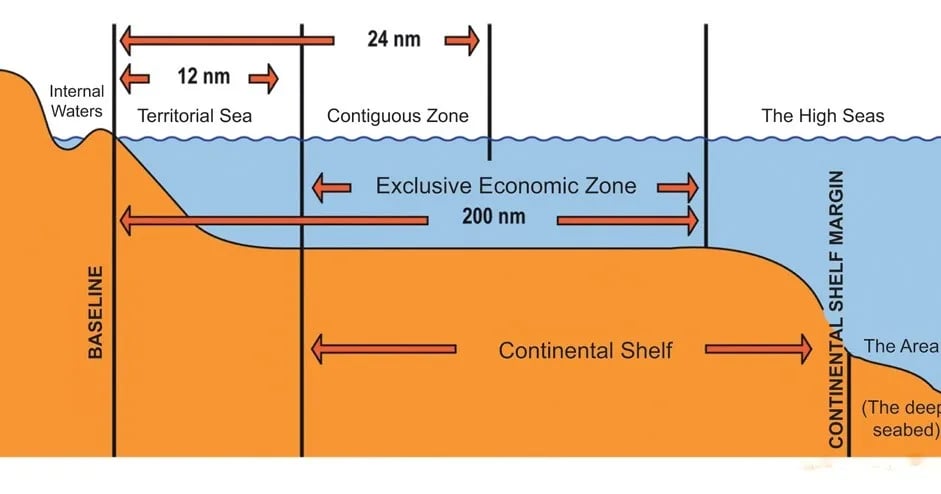
| About Exclusive Economic Zone (EEZ) – Legal Basis: Established under the 1982 United Nations Convention on the Law of the Sea (UNCLOS). – Extent: Extends up to 200 nautical miles from the baseline of a country’s coastline. – Rights: A nation has sovereign rights for exploration, exploitation, conservation, and management of natural resources (living and non-living) in its EEZ. – Significance: The EEZ is critical for securing marine resources, promoting food security, and ensuring strategic maritime interests.
|
Source: TH