
Brief Context
Context A remarkable fossil of jawbone discovery off the coast of Taiwan has provided new insights into the geographic reach of Denisovans, an enigmatic group of archaic humans. About Ancient Denisovans They are an extinct group of archaic humans, known primarily through limited fossil evidence, including a jawbone, teeth, and a finger bone. Origins and Discovery: Denisovans were first identified in 2010 from DNA extracted from a finger bone found in the Denisova Cave in Siberia.
Source Content
Syllabus: GS1/Geography; GS3/Science
Context
- A remarkable fossil of jawbone discovery off the coast of Taiwan has provided new insights into the geographic reach of Denisovans, an enigmatic group of archaic humans.
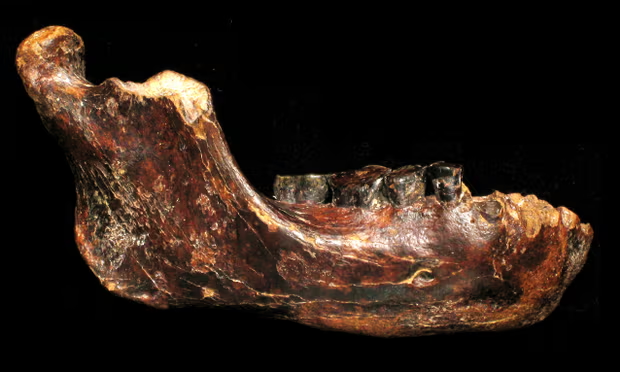
- The jawbone (known as Penghu 1) was recovered from the Penghu Channel, near Taiwan, during commercial fishing operations.
About Ancient Denisovans
- They are an extinct group of archaic humans, known primarily through limited fossil evidence, including a jawbone, teeth, and a finger bone.
- Origins and Discovery: Denisovans were first identified in 2010 from DNA extracted from a finger bone found in the Denisova Cave in Siberia.
- Genetic analysis revealed that they were a distinct lineage, closely related to Neanderthals and modern humans.
- Physical Characteristics: Reconstructions based on DNA Methylation patterns suggest Denisovans had a wider skull and a longer dental arch compared to Neanderthals and Homo sapiens.
Significance of the Findings
- Geographic Range and Adaptability: The discovery of the Penghu 1 jawbone highlights their adaptability to diverse environments, from cold highlands to subtropical coastlines. Key Geographical Range:
- Taiwan (Penghu Channel): Recent Discovery
- Russia (Denisova Cave): Teeth and a small finger bone fragment.
- China’s Gansu Province (Baishiya Karst Cave, Tibetan Plateau): A mandible and rib fragment.
- Laos (Cobra Cave): A molar (believed to be from a Denisovan based on its shape).
- Genetic Legacy: Denisovans interbred with Neanderthals and Homo sapiens, contributing genetic material to modern populations in Asia and Oceania.
- Their genetic influence is evident in traits such as high-altitude adaptation in Tibetan populations.
Challenges and Future Research
- Dating the Fossil: The exact age of Penghu 1 remains uncertain due to the absence of traditional dating methods.
- Estimates range from 10,000 to 190,000 years, based on associated animal fossils.
- Expanding Knowledge: The discovery highlights the need for further exploration of submerged landmasses and other potential Denisovan habitats.
- Advanced techniques like paleoproteomics (analysis of ancient proteins) could help identify more Denisovan fossils and refine our understanding of their distribution.
- Nobel Prize for Physiology or Medicine (2022): It has been awarded to Swedish geneticist Svante Pääbo for his research in the field of genomes of extinct hominins and human evolution.