
Brief Context
Context The first State and Union Territory Engagement Workshop under National One Health Mission (NOHM) was conducted, charting a collaborative path forward for strengthening Indias integrated One Health approach. What is the One Health Approach? One Health is an integrated, unifying approach that aims to sustainably balance and optimize the health of people, animals and ecosystems.
Source Content
Syllabus: GS2/ Health, Governance
Context
- The first State and Union Territory Engagement Workshop under National One Health Mission (NOHM) was conducted, charting a collaborative path forward for strengthening India’s integrated One Health approach.
About
- The workshop was chaired by the Principal Scientific Adviser (PSA) bringing together a diverse array of stakeholders.
- Key Highlights:
- The workshop underscored syndromic surveillance and mock drills like Vishanu Yuddh Abhyaas for preparedness.
- Gujarat and Kerala, nominated to the mission’s governance committee, presented their progress in building One Health infrastructure.
- The launch of a Youth Engagement Program to harness the energy and innovation of the country’s youth through hackathons and digital campaigns.
- One Health Dashboard: A central dashboard was launched to monitor and map state and central initiatives.
What is the One Health Approach?
- One Health is an integrated, unifying approach that aims to sustainably balance and optimize the health of people, animals and ecosystems.
- It recognizes that the health of humans, domestic and wild animals, plants, and the wider environment (including ecosystems) are closely linked and interdependent.
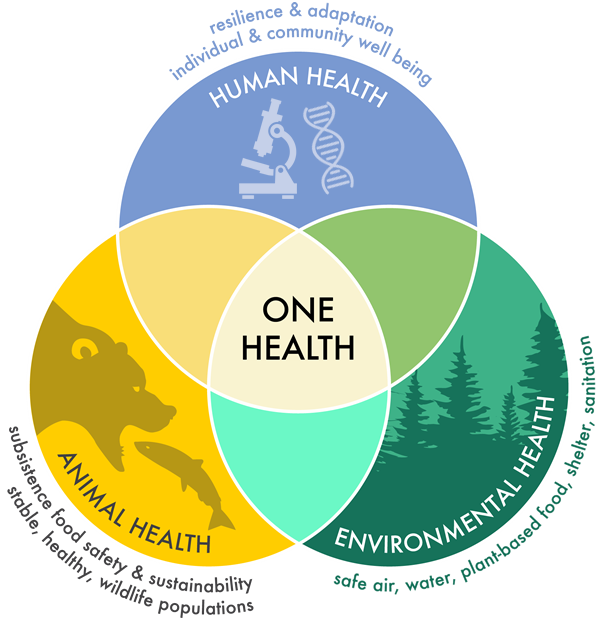
National One Health Mission
- The National One Health Mission (NOHM) exemplifies the Government of India’s commitment to leveraging cutting-edge science in real-world settings to anticipate and mitigate public health risks.
- The key pillars of the NOHM are:
- Technology enabled integrated surveillance across sectors.
- National network of Biosafety Level 3 (BSL-3) laboratories (for testing high-risk or unknown pathogens).
- Collaborative and integrated R&D for medical countermeasures including vaccines, diagnostics, and therapeutics for human-animal-wildlife-livestock health.
- Data integration across sectors.
- Training and capacity building in all spheres related to One Health.
Challenges in Operationalizing One Health
- Intersectoral Coordination: Fragmented institutional silos between human, animal, and environmental health bodies.
- Lack of Trained Workforce: Shortage of epidemiologists, zoonotic disease experts, and data scientists at the district level.
- Infrastructural Disparities: States vary in surveillance capabilities and digital health integration.
- Data Privacy & Sharing: Ensuring secure and effective real-time data flow between sectors remains a concern.
Way Ahead
- Decentralised Planning: States should localize the One Health model based on regional risks (e.g., zoonotic hotspots).
- Institutional Mechanisms: Permanent state-level One Health Cells and convergence with existing bodies like State Disaster Management Authorities (SDMAs).
- Public Awareness: Leverage campaigns and youth engagement to increase awareness of One Health.
- The states/UT’s should consider creating their own One Health dashboards and websites and link it with the central dashboard/website.
Source: PIB