
Brief Context
In Context The MSME sector is a cornerstone of India’s economy, contributing nearly 29% to GDP, 40% to exports, and employing over 60% of the workforce. However, its overwhelmingly skewed in favour of micro enterprises: Challenges Faced by Medium Enterprises Access to Finance is Limited: Only 37% of medium enterprises can access formal loans. Collateral-heavy procedures, poor risk assessment, and lack of dedicated credit lines are barriers.
Source Content
Syllabus: GS3/ Economy
In Context
- The MSME sector is a cornerstone of India’s economy, contributing nearly 29% to GDP, 40% to exports, and employing over 60% of the workforce. However, it’s overwhelmingly skewed in favour of micro enterprises:
- Micro units form 97% of registered MSMEs.
- Small enterprises account for 2.7%.
- Medium enterprises make up just 0.3%, yet medium enterprises account for nearly 40% of MSME exports, showcasing their potential and strategic importance.
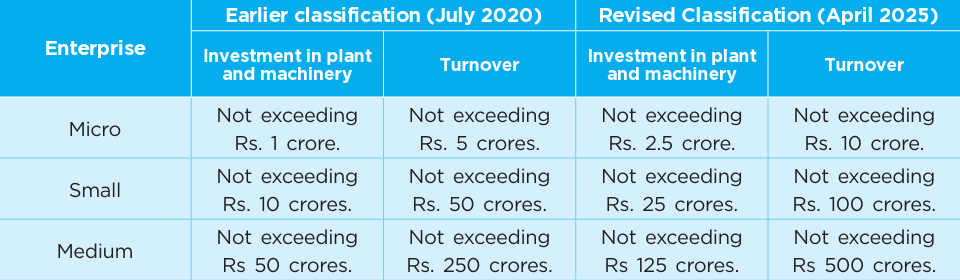
Why Such Tilt Towards Micro Enterprises?
- Overdependence on informal and subsistence-level micro firms.
- A gross under-leveraging of medium enterprises, which are better positioned to scale, adopt innovation, and integrate with global supply chains.
Challenges Faced by Medium Enterprises
- Access to Finance is Limited: Only 37% of medium enterprises can access formal loans. Collateral-heavy procedures, poor risk assessment, and lack of dedicated credit lines are barriers.
- Technology Gap: A whopping 82% of Medium Enterprises don’t use advanced tech like AI, IoT, or digital automation — hindering their productivity and global competitiveness.
- Skill Mismatch: About 88% of medium enterprises don’t benefit from any government skill or training program. Training modules are either outdated or inaccessible.
- Low Scheme Awareness: Over 90% are unaware of key government portals or schemes like RAMP, ZED, or GeM. Even when aware, bureaucratic complexity hampers usage.
- Heavy Compliance Burden: Multiple inspections from labour, health, and safety departments increase transaction costs and reduce ease of doing business.
Why Do Medium Enterprises Matter?
- High Forex Yield: Each medium enterprise generates ₹39.95 crore in forex income, compared to ₹8.3 crore by small and just ₹1.39 crore by micro units.
- Innovation Leaders: Medium enterprises contribute 81% of total MSME R&D expenditure, investing in automation, AI, and process improvements.
- Employment Generators: With an average of 89 employees per unit, medium firms create far more jobs than micro (5.7) and small (19.1) units.
- Profitability and Scale: These firms benefit from economies of scale, better infrastructure, and investment capabilities, ensuring higher return on capital and sustained competitiveness.
Policy Recommendations
- Tailored Finance Instruments: Launch a working capital scheme tied to enterprise turnover, with fast-track approvals.
- Introduce a ₹5 crore ME credit card at market rates with minimal collateral.
- Technology Upgradation through Competence Centres: Convert existing tech centres into India ME 4.0 hubs, offering access to Industry 4.0 tools for sectors like ESDM, pharma, and sports.
- Focused R&D Ecosystem: Establish a 3-tier funding mechanism (Expert Committee → Proposal Solicitation → Monitoring).
- Use Self-Reliant India Fund (SRI) to finance sector-specific innovation projects.
- Cluster-Based Testing and Certification: Expand MSE-CDP to include medium enterprises.
- Set up testing labs in regional ME clusters to ensure quality compliance, especially in exports.
- Customized Skill Development: Design export-oriented, sector-specific training curricula.
- Integrate ME modules into existing ESDP programs with help from the Ministry of Skill Development.
- Centralized Digital Support Portal: Develop a dedicated ME sub-portal under Udyam with scheme discovery, compliance tracking, and market intelligence modules.
Source: PIB