
Tags: GS Paper 2 – Government Schemes; GS Paper 3 – Infrastructure: Energy
For Prelims: PM Surya Ghar Muft Bijli Yojana, rooftop solar, Central Financial Assistance, net metering, Model Solar Village, MNRE, RESCO model
For Mains: Distributed renewable energy and energy access, role of households in energy transition, discom finances
Why in News?
Union Minister for New and Renewable Energy Pralhad Joshi said the PM Surya Ghar Muft Bijli Yojana is adding one lakh rooftop solar installations every six days, and the pace is expected to rise to one lakh every 4–5 days. He was confident the scheme would meet its target of one crore rooftop systems by 31 March 2027.
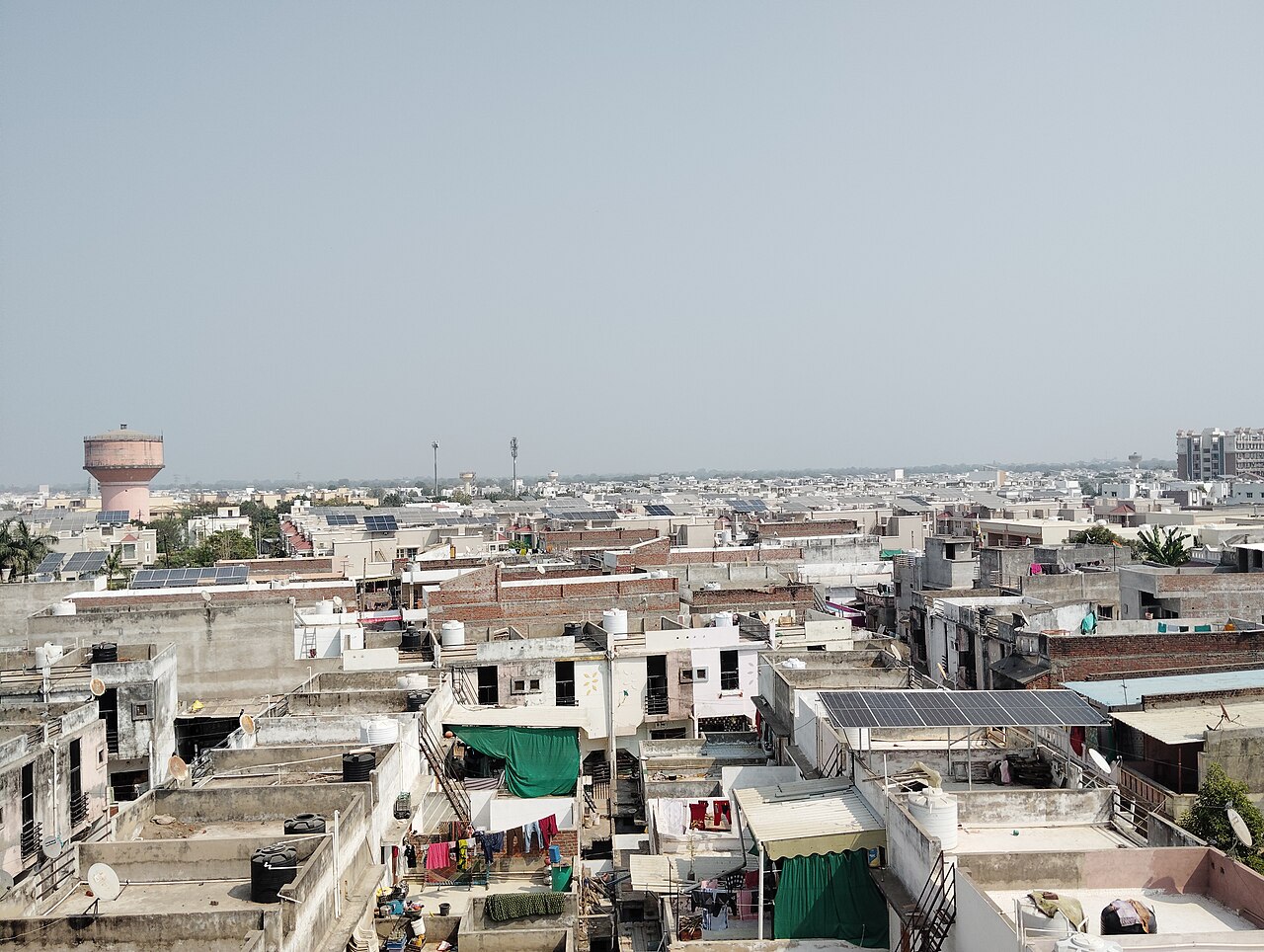
About PM Surya Ghar Muft Bijli Yojana
- Launched: February 2024 by the Ministry of New and Renewable Energy (MNRE), with an outlay of about ₹75,021 crore.
- Target: Rooftop solar on 1 crore households, giving up to 300 units of free electricity a month.
- Central Financial Assistance (CFA): ₹30,000 per kW for up to 2 kW, ₹18,000 for the additional third kW, with a maximum of ₹78,000 for systems of 3 kW and above.
- Finance: Collateral-free, low-interest loans for systems up to 3 kW, applied for through the national portal.
- Model Solar Villages: One per district, to show how a solar-powered village can work.
- Local bodies: Incentives to urban local bodies and panchayats for promoting rooftop solar.
Benefits
- Household savings on electricity bills, and income from selling surplus power through net metering.
- Clean energy: Expected to add about 30 GW of rooftop solar capacity and cut CO2 emissions over the systems’ lifetime.
- Jobs in manufacturing, installation and maintenance, and support for domestic module manufacturing under ALMM rules.
- Grid: Lower transmission losses and less peak daytime demand.
Challenges
- Discom resistance: Revenue losses from high-paying consumers, and difficulties managing grids with distributed power.
- Slow net-meter supply and inspection in some States.
- Affordability for low-income households, even with subsidy; many rented homes have no roof access.
- Uneven quality of installations, and a lack of after-sales service.
Way Forward
- Use the RESCO and utility-led aggregation models, in which a developer owns the system and the household pays per unit.
- Pair rooftop solar with battery storage and smart meters.
- Offer community or virtual net metering for apartments and rented homes.
Frequently Asked Questions (FAQs)
1. How much free electricity does the scheme aim to provide?
Up to 300 units per month per household.
2. What is the maximum central subsidy?
₹78,000 for systems of 3 kW and above.
3. Which ministry runs the scheme?
The Ministry of New and Renewable Energy.
Practice Question
Mains: Rooftop solar can turn consumers into ‘prosumers’. Discuss the potential and challenges of PM Surya Ghar Muft Bijli Yojana. (150 words)
Sources and further reading
- Nizil Shahcommons.wikimedia.org