The tribes of Jharkhand should be studied through four separate lenses: the notified Scheduled Tribe list, census population, regional and cultural diversity, and constitutional safeguards. These are related, but one cannot substitute for another. A Scheduled Tribe entry is a legal classification; a language, religious practice or traditional occupation is not a complete definition of a community.
Census 2011 recorded 8,645,042 Scheduled Tribe persons in Jharkhand, or 26.21% of the state’s population. These are dated census figures, not a population estimate for the present year. The Santhal, Oraon, Munda and Ho are among the major communities studied for JPSC.
How many Scheduled Tribes are listed in Jharkhand?
Older state profiles commonly list 32 main entries. The 2022 amendment added Puran as entry 33 to Jharkhand’s Scheduled Tribe list. Therefore, reproducing “32 tribes” as an unqualified current answer misses the amendment. Entry counts must also be distinguished from the number of names and synonyms appearing within those entries.
The amendment notified on 8 April 2022 also removed Bhogta from the Scheduled Caste list and included it, with other specified names, under the Kharwar entry in the ST list. Tamaria/Tamadia was included as a synonym under Munda. Adding these names does not mean that each became a separate new numbered entry.
Main community names for revision
The following is an alphabetical study list of the main names, rather than a reproduction of every legal synonym: Asur, Baiga, Banjara, Bathudi, Bedia, Bhumij, Binjhia, Birhor, Birjia, Chero, Chik Baraik, Gond, Gorait, Ho, Kanwar, Karmali, Kharia, Kharwar, Khond, Kisan, Kol, Kora, Korwa, Lohra, Mahli, Mal Paharia, Munda, Oraon, Parhaiya, Puran, Santhal, Sauria Paharia and Savar.
For a question on recognition or eligibility, use the exact notified state entry and its amendments. A community’s presence in a state and its notified Scheduled Tribe status in that state are different questions.
Major communities: geography, language and institutions
| Community | Important regional association | Study connection |
|---|---|---|
| Santhal / Santal | Santhal Pargana and other parts of Jharkhand. | Santali language, Ol Chiki script, Baha and Sohrai traditions, and the Santhal Hul. |
| Oraon | Central and western Chotanagpur, including Gumla and Lohardaga. | Kurukh language and institutions such as the Dhumkuriya. |
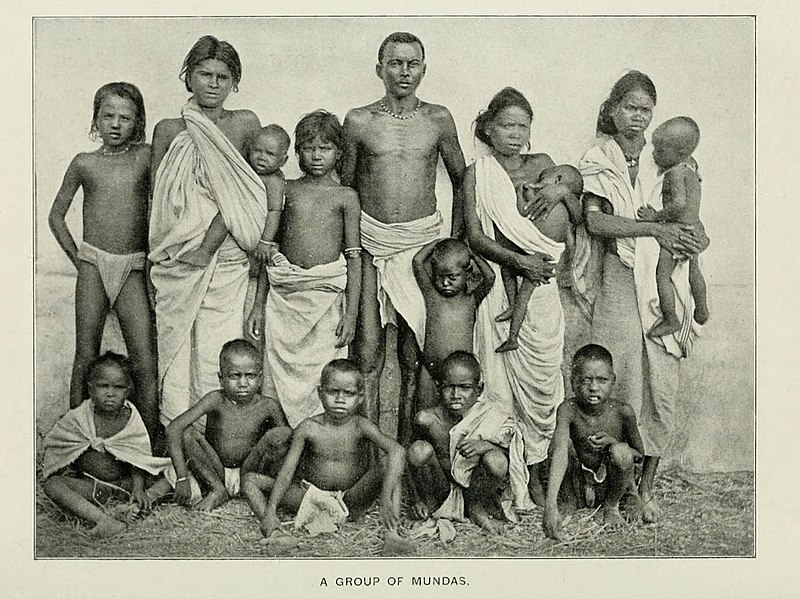
| Munda | Ranchi–Khunti and adjoining Chotanagpur areas. | Mundari language, khuntkatti land relations and Birsa Munda’s movement. |
| Ho | Kolhan, particularly West Singhbhum. | Ho language and the Manki–Munda system of traditional administration. |
| Kharia | Southwestern Jharkhand, including Gumla and Simdega. | Distinguish Hill, Dhelki and Dudh Kharia rather than assigning one livelihood to everyone. |
| Bhumij | Singhbhum and adjoining areas. | Bhumij language and the region’s agrarian and cultural history. |
| Asur and Birhor | Communities in western and other parts of Jharkhand. | Asur iron-smelting knowledge and Birhor forest-based skills; present livelihoods are diverse. |
These are useful geographical associations, not exclusive territorial boundaries. Migration, urban residence and multilingualism mean that members of a community also live outside its commonly associated region. Connect this table with the district and division guide before memorising a map.



| S.No | Tribe Name | Occupation | Language | Religious Practices |
|---|---|---|---|---|
| 1 | Asur | Iron smelters, blacksmiths | Asur, Mundari | Animism, Sarna worship |
| 2 | Baiga | Shifting cultivators, forest gatherers | Baiga dialect | Animism, Hindu influences |
| 3 | Banjara | Nomadic traders, transporters | Lamani | Hinduism, Tribal traditions |
| 4 | Bathudi | Agriculture | Odia, Mundari | Hinduism, Indigenous beliefs |
| 5 | Bedia | Agriculture, folk performers | Bedia dialect | Hinduism, Animism |
| 6 | Bhumij | Agriculture, Artisans | Bhumij, Santali, Mundari | Sarnaism, Singbonga worship |
| 7 | Binjhia | Agriculture, Artisans | Binjhia, Hindi | Animism, Hindu influences |
| 8 | Birhor | Nomadic hunting-gathering | Birhor dialect | Nature worship |
| 9 | Birjia | Hunting, forest gathering | Nagpuri, Sadri | Animism, Ancestral worship |
| 10 | Chero | Farmers, Landowners | Chero, Hindi | Hinduism, Sarna worship |
| 11 | Chik Baraik | Weaving, Textile work | Mundari | Hinduism, Tribal faith |
| 12 | Gond | Agriculture, Artists | Gondi | Nature worship, Phul Mata |
| 13 | Gorait | Agriculture, Animal husbandry | Ho, Sadri | Hinduism, Sarna |
| 14 | Ho | Agriculture, Metalwork | Ho, Mundari | Sarna, Hinduism |
| 15 | Kanwar | Farming, Animal husbandry | Sadri | Hinduism, Tribal practices |
| 16 | Karmali | Iron tool making | Karmali, Hindi | Hinduism, Sarna |
| 17 | Kharia | Agricultural laborers, Forest gatherers | Kharia, Mundari | Sarna, Christianity |
| 18 | Kharwar | Farmers, Warriors | Kharwari, Hindi | Hinduism, Tribal customs |
| 19 | Khond | Agriculture, Forest protection | Khond dialect | Nature worship, Animism |
| 20 | Kisan | Agriculture, Livestock farming | Sadri, Kurukh, Nagpuri | Hinduism, Sarna worship |
| 21 | Kora | Agriculture, Laborers | Kora, Santali | Hinduism, Animism |
| 22 | Kol | Agriculture, Artisans | Kol dialect | Hinduism, Sarna worship |
| 23 | Korwa | Shifting agriculture, Hunting | Korwa dialect | Sarna, Animism |
| 24 | Lohra | Blacksmiths, Tool makers | Hindi, Sadri | Hinduism, Sarna |
| 25 | Mahli | Bamboo handicrafts, Basket weaving | Mahli dialect | Sarna, Hinduism |
| 26 | Mal Paharia | Shifting agriculture, Forest dwellers | Mal Paharia dialect | Animism, Hinduism |
| 27 | Munda | Agriculture, Rebels | Mundari | Sarna, Christianity |
| 28 | Oraon | Farming, Folk artists | Kurukh, Sadri | Sarna, Christianity |
| 29 | Parhaiya | Agriculture, Forest-based livelihoods | Parhaiya dialect | Animism, Hinduism |
| 30 | Santhal | Agriculture, Warriors | Santali | Sarna, Hinduism |
| 31 | Sauria Paharia | Shifting cultivators, Gatherers | Paharia dialect | Animism, Nature worship |
| 32 | Savar | Hunting, Gathering | Savar dialect | Nature worship, Animism |
| District | % of Total District Population (STs) | Major Tribes |
|---|---|---|
| Gumla | 68.94% | Oraon, Munda, Kharia |
| West Singhbhum | 67.31% | Ho, Munda, Santhal |
| Lohardaga | 56.89% | Oraon, Munda |
| Pakur | 42.1% | Santhal, Paharia |
| Ranchi | 35.76% | Oraon, Munda, Kharia |
| District | % of Total District Population (STs) |
|---|---|
| Koderma | 0.96% |
| Chatra | 4.37% |
Language families: avoid confusing language and script
Santali, Mundari, Ho and Kharia belong to the Munda branch of the Austroasiatic language family. Kurukh, associated with the Oraon, is Dravidian. Malto is also Dravidian and is important in studying Paharia communities. Community names and language names do not always form a simple one-to-one relationship.
Santali is included in the Eighth Schedule of the Constitution. Ol Chiki is a script used to write Santali; it is not the language separately listed in that Schedule. A person can speak several languages, and a language can be written in more than one script. These distinctions are more reliable than assigning a single language or religion rigidly to every member of a tribe.
Particularly Vulnerable Tribal Groups in Jharkhand
The nine PVTGs commonly identified in Jharkhand are Asur, Birhor, Birjia, Hill Kharia, Korwa, Mal Paharia, Parhaiya, Sauria Paharia and Savar. Spellings such as Sabar/Savar vary across records. Hill Kharia is the relevant PVTG name; the whole Kharia population should not automatically be treated as one undifferentiated PVTG.
PVTG identification is intended to focus support on communities facing particular demographic, educational and livelihood vulnerabilities. It is not a judgment about cultural worth. Historical administrative criteria must not be turned into an assumption that every household today has the same occupation, literacy level or material condition.
In an answer on PVTG development, explain the practical problem and the response: difficult access to settlements and local outreach; nutrition insecurity and reliable food delivery; language barriers and suitable teaching; livelihood insecurity and resource rights. Evaluate delivery with community participation instead of simply listing schemes.
How to use Census 2011 data correctly
| Statistic | Correct interpretation | Common error |
|---|---|---|
| 8,645,042 ST persons | Jharkhand’s Scheduled Tribe population recorded in Census 2011. | Calling it the population of one tribe or a current projection. |
| 26.21% | ST population divided by the state’s total population in that census. | Confusing it with Jharkhand’s share of India’s ST population. |
| A tribe’s share within ST population | The denominator is all ST persons in the state. | Presenting that percentage as a share of the entire state population. |
| A district’s ST percentage | The denominator is the total population of that district for that census and boundary. | Mixing percentages from 2001 with a heading saying 2011. |
Khunti was separated from Ranchi after Census 2001. Comparing an older undivided Ranchi figure directly with the later Ranchi district can therefore produce a misleading trend. Always record the census year, geographical boundary and denominator. A lower percentage does not by itself show that the absolute population fell.
Culture and livelihoods: use specific examples
Festivals such as Sarhul, Karam, Sohrai and Baha connect community life with seasonal cycles, agriculture, social relationships and beliefs. Their forms and participation vary across places. Avoid presenting all four as an identical festival calendar for every community.
Likewise, iron smelting, weaving, bamboo work, cultivation and forest-product collection are useful historical associations, but they are not permanent occupational labels. Contemporary tribal livelihoods also include wage work, education, professional employment and urban enterprise. The Jharkhand culture notes connect language, festivals and material culture without reducing communities to a single trait.
Constitutional and administrative distinctions
- Article 342: concerns specification of Scheduled Tribes in relation to a state or Union territory; Parliament can amend the list by law.
- Article 46: directs the State to promote the educational and economic interests of weaker sections, particularly SCs and STs, and protect them from exploitation.
- Fifth Schedule: concerns the administration and control of Scheduled Areas and Scheduled Tribes. Scheduled Areas are notified geographical areas, not a synonym for every place where an ST person lives.
- Sixth Schedule: provides a different arrangement for specified tribal areas in Assam, Meghalaya, Tripura and Mizoram. It should not be presented as Jharkhand’s constitutional framework.
- PESA, 1996: extends Panchayat provisions to Scheduled Areas with modifications and recognises important roles for the Gram Sabha.
- Forest Rights Act, 2006: addresses recognition of specified forest rights for eligible forest-dwelling STs and other traditional forest dwellers. ST status alone is not an automatic title to any forest land.
Use the Jharkhand polity notes to separate the legal framework, institution responsible and implementation issue. A list of constitutional provisions is incomplete unless the answer explains their relevance to land, participation or service delivery.
Building a balanced JPSC mains answer
For a question on development and tribal communities, begin with the actual context: a mining-affected settlement, forest-dependent livelihood or remote school. Explain the mechanism of disadvantage, such as loss of productive land, inaccessible services or a mismatch between teaching language and home language. Then connect the response to rights, public services, participation and measurable outcomes.
A rehabilitation package, for example, should be examined for livelihood restoration, access to common resources, service continuity and the concerns of women and vulnerable households. Monetary compensation is one component; it does not automatically replace a whole social and economic network. Keep the discussion grounded in the relevant project or region instead of describing all tribal communities as identical.
Frequently asked questions
1. Why do some notes say 32 tribes and others 33?
The 2022 amendment added Puran as entry 33. Older profiles showing 32 main entries do not incorporate that change. Synonyms within an entry should not be counted as separate new entries.
2. Which is the largest tribal community in Jharkhand?
The Santhal is the largest in Census 2011. Any exact percentage must state whether it is calculated against the state’s ST population or its total population.
3. What percentage of Jharkhand’s population is Scheduled Tribe?
Census 2011 recorded 26.21%. State the year when using the figure.
4. Is Ol Chiki a language in the Eighth Schedule?
No. Santali is the scheduled language; Ol Chiki is a script used to write it.
5. Are Scheduled Tribes, PVTGs and Scheduled Areas identical?
No. ST is a notified community classification; PVTGs are identified groups within the broader ST framework; Scheduled Areas are notified geographical areas.
Original practice question
This is an original practice question, not a previous-year examination question.
Which statement is correct? (a) Ol Chiki and Santali are two scheduled languages. (b) Every ST settlement is automatically a Scheduled Area. (c) The 2022 amendment added Puran to Jharkhand’s ST list. (d) Census percentages can be compared without considering district boundaries.
Answer: (c). The other statements confuse language with script, community status with area notification, or statistics from different geographies.