
India’s 2036 Olympics bid is more than a proposal to build stadiums. The International Olympic Committee’s host-selection process examines whether an interested party can deliver athlete-centred Games with credible governance, clean sport, sustainable finances and a lasting public benefit. During India’s engagement with the IOC in 2025, reports highlighted concerns about internal governance in the Indian Olympic Association (IOA) and India’s doping record.
India later remained in the IOC’s Continuous Dialogue phase. This is an exploratory, non-binding stage; it is not the same as being selected as a preferred host or awarded the Games. The correct policy question is therefore: what structural reforms would make Indian sport stronger even if the bid outcome changes?
What is the status of India’s 2036 Olympics bid?
The IOA submitted a letter of intent to the IOC and entered Continuous Dialogue with the Future Host Commission. Under the IOC’s flexible host-election model, interested parties discuss feasibility, venue concepts, funding, sustainability and legacy before any possible move to a more advanced stage.
| Expression | Meaning | What it does not mean |
|---|---|---|
| Continuous Dialogue | Non-committal exchange with interested parties | No guarantee of a formal candidature or award |
| Targeted Dialogue | Deeper work with one or more preferred hosts for a specific edition | Still subject to IOC decision-making |
| Host election | Final selection by the IOC Session under the applicable process | Not completed merely by submitting a letter of intent |
The process was also reviewed under IOC President Kirsty Coventry’s broader “Pause and Reflect” exercise. This reinforces an important point: the timetable and selection procedure are controlled by the IOC, while India controls the quality of its domestic preparation.
Why did structural concerns matter?
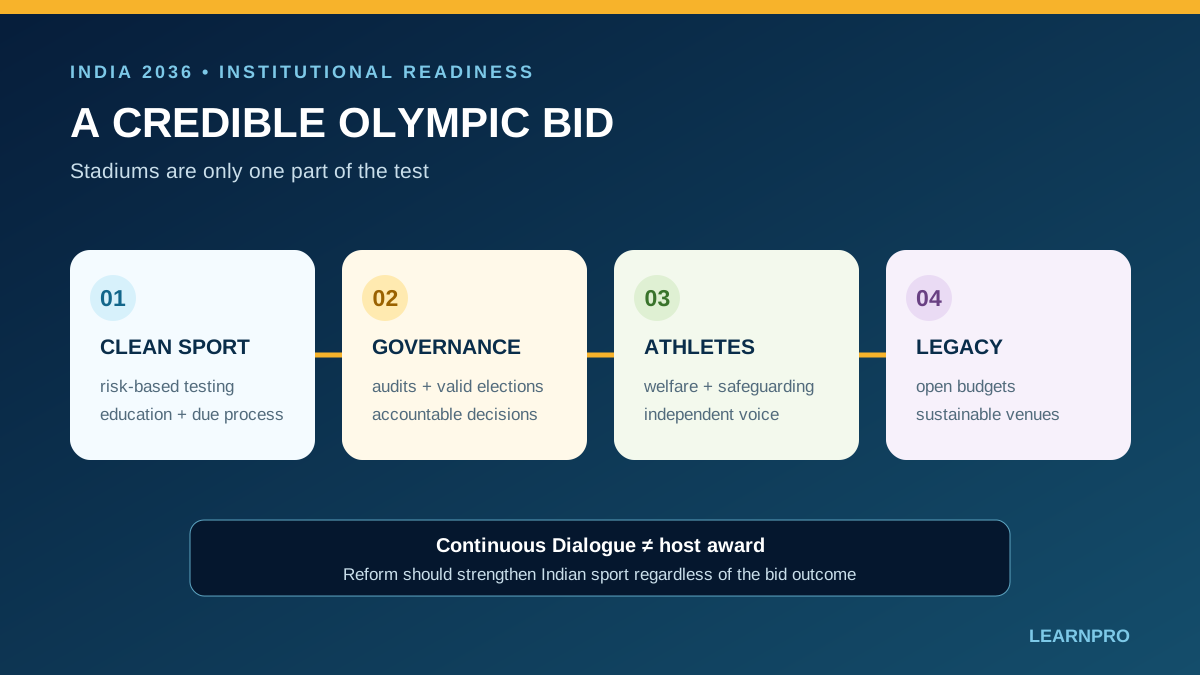
A mega-event concentrates public money, construction contracts, sports administration and international scrutiny. Weaknesses that appear manageable in ordinary years can become large delivery risks when deadlines are fixed. The concerns associated with India’s bid can be grouped into four areas.
1. Governance within the IOA and sports federations
Publicly reported disputes within the IOA included decision-making, executive coordination and the appointment of its chief executive. Such conflict can delay financial approvals, sponsorship, athlete support and long-term planning. The IOC expects a National Olympic Committee to remain autonomous while following its own constitution, the Olympic Charter and basic principles of good governance.
India enacted the National Sports Governance Act, 2025, which provides a statutory framework for recognised sports bodies, governance standards, athlete welfare and dispute resolution. India Code records its enforcement from 1 January 2026. Effective rules, independent oversight and timely implementation matter more than the existence of legislation alone.
2. Doping and the credibility of clean sport
High numbers or rates of adverse findings raise questions about deterrence, testing strategy, supplement awareness, coaching practices and access to prohibited substances. Doping harms clean athletes and can damage the credibility of a prospective host.
The response cannot rely only on more event-time tests. It needs:
- intelligence-led and out-of-competition testing;
- athlete biological passports and dependable laboratory capacity;
- education for athletes, coaches, doctors and support personnel;
- fast, fair and independent results management;
- control of contaminated or falsely labelled supplements; and
- transparent publication of testing and case-disposal data.
For a connected update, see LearnPro’s report on anti-doping enforcement and India’s Olympic credibility.
3. Athlete performance and development systems
Hosting capacity and medal performance are different tests, but a credible sports nation needs a broad participation base, scientific coaching, injury management and stable pathways from school sport to elite competition. A host bid should not divert resources from athletes into prestige construction.
Programmes such as Khelo India and Target Olympic Podium Scheme can support talent and elite preparation, but results depend on coach quality, sports science, transparent selection and continuity across Olympic cycles. The National Sports Policy 2025 should be assessed through measurable outcomes rather than announcements.
4. Cost, infrastructure and urban legacy
Olympic bids can create transport, housing and public-space benefits, but they can also produce cost overruns, underused venues and displacement. A sound concept should prioritise existing or temporary venues, publish a realistic operating and capital budget, disclose risk allocation and integrate facilities into long-term city plans.
What should India demonstrate to the IOC?
| Readiness pillar | Evidence required | Public-interest test |
|---|---|---|
| Governance | Audited accounts, valid elections, conflict-of-interest rules, functioning executive bodies | Can decisions be reviewed and responsibility fixed? |
| Clean sport | Risk-based tests, education, laboratory quality, timely cases | Are clean athletes protected? |
| Athlete welfare | Safeguarding, grievance redress, medical and mental-health support | Do athletes have an independent voice? |
| Finance | Open budgets, procurement rules, contingency planning | Who bears an overrun? |
| Legacy | Post-Games use, accessibility and maintenance plans | Will citizens benefit after 2036? |
| Environment | Climate-risk, water, transport and emissions plans | Is the delivery model consistent with sustainability? |
Potential benefits of hosting the Olympics
- Urban infrastructure: public transport and accessibility can improve if projects match existing city needs.
- Sports participation: a well-designed legacy programme can expand community facilities and coaching.
- Economic activity: tourism, services and construction may receive a temporary boost.
- Soft power: competent delivery can strengthen international visibility.
- Institutional reform: bid scrutiny can accelerate governance and safeguarding improvements.
Risks that must be managed
The largest risk is confusing a successful event with successful sports policy. Large venues do not automatically create athletes, and headline investment does not guarantee a public return. Land acquisition, security costs, maintenance and construction inflation should be independently examined. Contracts and beneficial ownership should be disclosed, while affected communities need genuine consultation and remedy.
Anti-doping enforcement must also protect due process. Testing and sanctions require scientific reliability, privacy, a fair hearing and proportionate penalties. Institutional credibility depends on both tough enforcement and procedural fairness.
A practical reform roadmap
- make IOA and federation decisions, audited accounts and selection rules publicly accessible;
- implement the National Sports Governance Act through independent and professionally staffed institutions;
- publish sport-wise anti-doping risk and testing plans while protecting personal data;
- give athletes voting representation and safe channels for reporting abuse or retaliation;
- commission an independent cost-benefit, climate-risk and displacement assessment before final venue commitments;
- use existing and temporary venues wherever feasible; and
- tie every major capital project to a funded post-Games use plan.
UPSC and State PSC relevance
India’s 2036 Olympics bid links GS Paper II governance and institutional accountability with GS Paper III infrastructure, economics and environmental sustainability. It is also useful for ethics answers on integrity, conflict of interest, fair play and the responsible use of public money.
Mains practice question: Hosting the Olympic Games is as much a governance challenge as an infrastructure project. Discuss with reference to India’s 2036 ambition.
Conclusion
India’s strongest Olympic case will not be a dramatic presentation; it will be a documented record of reform. Transparent sports bodies, clean competition, athlete-centred administration and financially sustainable venues would benefit Indian sport whether or not the 2036 Games are ultimately awarded to India.
Frequently asked questions
Has India been awarded the 2036 Olympics?
No. India entered Continuous Dialogue with the IOC; this is not a host award.
What is Continuous Dialogue?
It is a non-committal discussion between the IOC’s Future Host Commission and an interested party about possible future Games.
What structural concerns affect India’s bid?
Key concerns include sports-body governance, doping, athlete systems, financial credibility, sustainability and the long-term use of venues.
What does the National Sports Governance Act, 2025 do?
It creates a statutory framework for sports-body recognition, governance standards, athlete welfare, oversight and sports-dispute resolution.
Why is doping relevant to a host bid?
A host is expected to protect clean athletes and uphold the integrity of competition through credible testing, education and fair enforcement.
Primary and authoritative references
- India Code: National Sports Governance Act, 2025
- International Olympic Committee: Electing Olympic Hosts
- Ministry of Youth Affairs and Sports




Sources and further reading
- India Code: National Sports Governance Act, 2025indiacode.nic.in
- International Olympic Committee: Electing Olympic Hostsolympics.com
- Ministry of Youth Affairs and Sportsyas.nic.in