
Brief Context
Published on: 27 January, 2026 The draft National Electricity Policy aims to align the power sector with India’s long-term energy goals.
Source Content
Syllabus: GS3/Energy Sector
Context
- The draft National Electricity Policy aims to align the power sector with India’s long-term energy goals.
About
- The Draft NEP 2026 is a proposed revision of India’s existing National Electricity Policy (initially notified in 2005).
- It supports India’s target of reducing emissions intensity of GDP by 45% by 2030 (compared to 2005).
- The policy strongly promotes nuclear energy as a clean, stable, non-weather-dependent power source.
- India plans a 10-fold increase in nuclear power capacity by 2047.
- It supports new technologies like Small Modular Reactors (SMRs), which are safer, smaller, and can be set up near factories and cities.
- Thorium Based Energy: India depends on imported uranium, so the policy stresses developing thorium-based nuclear energy, where India has large reserves.
- The main challenge is boosting research and technology to make thorium energy practical.
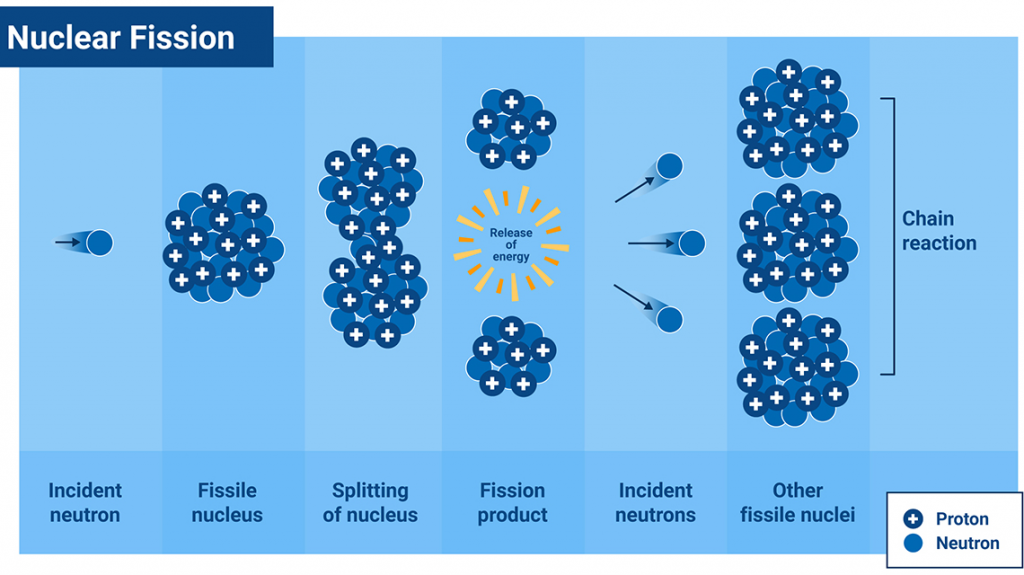
Need to Increase Nuclear Capacity
- Nuclear Capacity Goal: India’s plans to increase its nuclear power capacity from the current 8,180 MW to 22,480 MW by 2031-32 and eventually 100 GW by 2047.
- Energy Demand Growth: India’s electricity demand is expected to increase 4-5 times by 2047, and nuclear power will help meet base-load demand alongside renewables.
- India’s Targets: To reduce the emission intensity of its GDP by 44% by 2030 from the 2005 level.
- To achieve 50% cumulative electric power installed capacity from non-fossil fuel-based energy resources by 2030.
Challenges
- Limited Indigenous Experience: India’s nuclear programme has historically focused on Pressurized heavy-water reactor (PHWRs) and fast breeder reactors, leading to limited domestic expertise in Light Water Reactor (LWR) design and operation.
| Light Water Reactors – Light Water Reactors form a mainstay of the global nuclear program currently account for over 85% of the civil nuclear reactor capacity in the world. a. They use ordinary (light) water as both a coolant and a neutron moderator. – LWRs entail simpler design and engineering compared to heavy water reactors given that they use normal water as both coolant and moderator. – Low Cost: It usually involves lower construction costs due to economies of scale and they are considered more thermally efficient. |
- Limited domestic uranium: India has low-grade and limited uranium reserves, forcing dependence on imports.
- Long-term nuclear expansion needs assured fuel supply agreements with foreign countries.
- High capital cost: Nuclear plants require huge upfront investment and long construction periods.
- Technological constraints: Advanced technologies like Small Modular Reactors (SMRs) are still at an early stage in India.
- Safety and public concerns: Fear of nuclear accidents leads to local opposition and delays in projects.
- Thorium utilisation gap: Though India has large thorium reserves, commercial technology is still under development.
Government Initiatives
- Nuclear Energy Mission & Capacity Targets: The Government has launched a Nuclear Energy Mission aimed at expanding nuclear power capacity to about 100 GW by 2047.
- This mission emphasises enhancing domestic capabilities and adopting advanced technologies.
- Indigenous Reactor Development: Such as Bharat Small Reactors are under development to support scalable deployment.
- While these are PHWR and SMR variants, they lay the groundwork for a broader nuclear innovation ecosystem.
- Three-Stage Nuclear Power Programme: India has a long-term strategy to utilise India’s thorium reserves through PHWRs, Fast Breeder Reactors and thorium-based reactors.
- SHANTI Act, 2025: It enables capacity expansion, advanced reactor technologies and wider participation in nuclear power generation.
- Research & Development Funding: The Union Budget 2025-26 allocated significant funding (around ₹20,000 crores) for R&D in advanced nuclear technologies.
- International Cooperation & Tech Access: The government is working on international partnerships and technology transfer mechanisms that can help bridge experience gaps in technologies.
| India’s Thorium Reserves – India has one of the largest reserves of thorium in the world.
a. Together, Kerala and Odisha account for over 70% of India’s thorium. |

Conclusion
- India is all set for transformative and multi-dimensional growth of clean and renewable energy sources; however, India should accelerate R&D on thorium reactors by strengthening industry collaboration with the stakeholders.
- India can develop pilot and demonstration projects to move thorium technology from lab to commercial scale.
- Nuclear energy can give India clean, secure and indigenous power, but only sustained R&D, policy support and institutional commitment can unlock its full potential.
| Daily Mains Practice Question [Q] Examine the role of nuclear technology in ensuring India’s long-term energy security and meeting its climate commitments. |
Source: IE