
Brief Context
Published on: 23rd December, 2025 India urgently needs a National Insolvency Tribunal to uphold the promise of swift and effective resolution under the Insolvency and Bankruptcy Code (IBC), as the current system is struggling to meet the IBC’s time-bound mandates.</p
Source Content
Syllabus: GS3/Economy
Context
- India urgently needs a National Insolvency Tribunal to uphold the promise of swift and effective resolution under the Insolvency and Bankruptcy Code (IBC), as the current system is struggling to meet the IBC’s time-bound mandates.
Overview of India’s Insolvency Framework
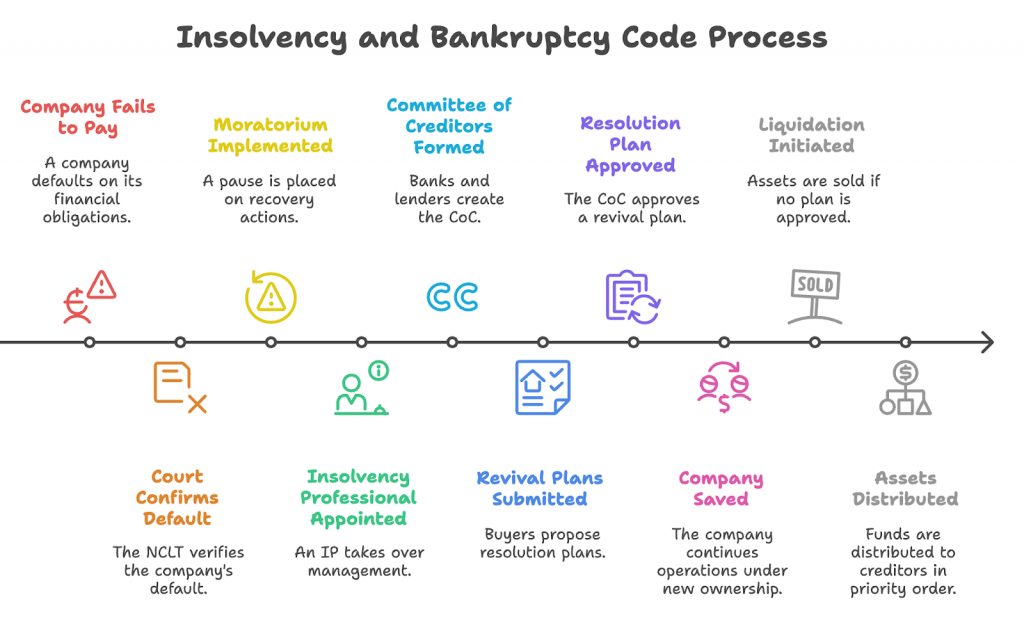
- India’s insolvency regime underwent a transformative shift with the enactment of the Insolvency and Bankruptcy Code (IBC), 2016, which consolidated and streamlined laws related to insolvency and bankruptcy for companies, partnerships, and individuals.
- Key Features of the IBC:
- Time-bound resolution: The IBC mandates a 180-day resolution period (extendable to 330 days), aiming to preserve asset value and ensure swift outcomes.
- Creditor-in-control model: Creditors, through the Committee of Creditors (CoC), take charge of the resolution process, replacing the earlier debtor-in-possession model.
- Institutional Framework:
- Insolvency and Bankruptcy Board of India (IBBI): The apex regulatory body overseeing insolvency professionals, agencies, and information utilities.
- National Company Law Tribunal (NCLT): The adjudicating authority for corporate insolvency cases.
- Debt Recovery Tribunals (DRTs): Handle individual and partnership insolvency cases.
Current Challenges With IBC
- Dual Mandate of the NCLT: The NCLT, originally created under the Companies Act, 2013, was tasked with adjudicating company law disputes.
- However, within months of its formation, it was designated as the primary adjudicating body for corporate insolvency under the IBC.
- The NCLT is handling both company law and insolvency matters, creating a severe structural imbalance and demands for the establishment of a dedicated National Insolvency Tribunal.
- Systemic Inefficiency of IBC: According to the Insolvency and Bankruptcy Board of India’s Q2 2025–26 Newsletter:
- The average time from initiation to approval of a resolution plan is 821 days (or 688 days, excluding excluded periods).
- 78% of ongoing CIRPs have exceeded the statutory 270-day limit, while 61% have crossed two years.
- Capacity Constraints: Parliamentary Standing Committee on Finance has recognized issues of resource shortages and procedural delays, highlighting gaps in institutional design and operational efficiency.
- Delays in Resolution: Many cases exceed the prescribed timelines due to overburdened tribunals and procedural inefficiencies.
- Cross-border Insolvency: India lacks a comprehensive framework for handling cross-border cases, which is increasingly critical in a globalized economy.
Case for a National Insolvency Tribunal (NIT)
- A dedicated National Insolvency Tribunal represents the next logical step in the evolution of India’s insolvency framework. Such a body needs to focus on:
- Exclusively on insolvency and bankruptcy cases;
- Allow the development of specialized expertise and consistent jurisprudence;
- Enable faster resolution and predictable outcomes; and
- Improve investor and creditor confidence in the insolvency process.
- International experience supports the NIT model, like the US Bankruptcy Courts demonstrate how specialization enhances both consistency and efficiency.
Reassigning Company Law Matters to High Courts
- The establishment of a National Insolvency Tribunal calls for transfer company law matters, particularly those relating to oppression, mismanagement, and capital restructuring, to the commercial divisions of the High Courts.
- These courts already handle complex, high-value commercial disputes within structured timelines and are better suited for detailed, fact-intensive adjudication.
- This reallocation would:
- Relieve pressure on the NCLT;
- Ensure that company law matters receive adequate judicial attention, and;
- Restore clarity in the jurisdictional roles of each adjudicatory body.
Transition and Implementation
- Transitioning from the current dual-forum model needs amendments to Sections 408–434 of the Companies Act, 2013, alongside relevant rule changes.
- Earlier, India has successfully executed such structural shifts in 2016 as the Company Law Board and High Courts to the NCLT.
- A phased implementation strategy, similar to that precedent, would ensure continuity and stability during the transition.
Conclusion
- India’s insolvency framework remains conceptually robust. The challenge lies not in the Code itself but in aligning its institutional machinery with its underlying intent.
- The creation of a National Insolvency Tribunal aims to mark a decisive step towards realizing the IBC’s original vision, a fast, predictable, and value-maximizing insolvency regime.
| Daily Mains Practice Question [Q] Examine the need for establishing a National Insolvency Tribunal in India. How would such an institution address the challenges faced by the current insolvency resolution framework under the IBC? |