
Brief Context
The recent Israel and Iran conflict has plunged West Asia into its most dangerous crisis that has far-reaching geopolitical and humanitarian consequences since the Arab-Israeli War 1973.
Source Content
Syllabus: GS2/International Relations
Context
- The recent Israel and Iran conflict has plunged West Asia into its most dangerous crisis that has far-reaching geopolitical and humanitarian consequences since the Arab-Israeli War 1973.
Historical Background: Israel & Iran
- Strategic Partnership (1948–1979):
- Israel was founded in 1948, Iran was one of the few Muslim-majority countries to maintain informal ties with it.
- Both shared strategic interests, particularly in countering Arab nationalism and Soviet influence.
- It led to extensive cooperation in intelligence, trade, and military affairs, often under the framework of Israel’s ‘Periphery Doctrine’, which sought alliances with non-Arab states like Iran and Turkey.
- Islamic Revolution (1979–1990s):
- The Iranian Revolution (1979) led by Ayatollah Khomeini, severed all ties with Israel and branded it the ‘Zionist Regime’.
- Iran adopted an anti-Israel stance, supporting Palestinian resistance movements and referring to Israel as the ‘Little Satan’ alongside the US, the ‘Great Satan’.
- Proxy Conflict and Nuclear Tensions (1990s–2010s):
- Tensions escalated as Iran supported groups like Hezbollah and Hamas, while Israel viewed Iran’s nuclear ambitions as an existential threat.
- The two countries engaged in cyber warfare, assassinations, and indirect military confrontations, particularly in Syria and Lebanon.
- Open Hostility (2020s–Present):
- The relationship has deteriorated into direct conflict, with missile strikes, sabotage operations, and assassinations on both sides.
- Recently, Israel launched Operation Rising Lion, targeting over 170 sites across Iran, including nuclear facilities at Natanz and Khondab.
- The strikes killed several high-ranking Iranian officials and scientists, prompting Iran to respond with a barrage of over 200 ballistic missiles and 100 drones aimed at Israeli cities like Tel Aviv and Jerusalem.
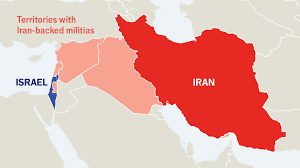
Global Impacts After Deepening Israel-Iran Conflict
- Energy Markets in Turmoil: With Iran’s oil facilities targeted and the Strait of Hormuz—a vital chokepoint for nearly 20% of global oil—under threat, Brent crude has surged over 6% and West Texas Intermediate by more than 5%.
- Inflation and Economic Strain: Countries heavily reliant on imported oil face rising fuel costs, inflationary pressure, and potential balance-of-payment issues.
- Countries which don’t import Iranian oil directly, are affected due to their fuel prices being pegged to global benchmarks.
- Shipping and Trade Disruptions: If Iran retaliates by targeting tankers or closing the Strait of Hormuz, global shipping lanes could be severely disrupted, affecting container traffic.
- Diplomatic Fallout and Strategic Realignments: The conflict has derailed U.S.-Iran nuclear talks.
- It raises the risk of US military involvement, especially if American bases in the Gulf are attacked.
- Meanwhile, global powers like Russia and China are recalibrating their positions, potentially reshaping alliances.
Implications For India
- Energy Security and Economic Strain: India imports over 80% of its crude oil, much of it via the Strait of Hormuz.
- Past Gulf tensions have shown how even short-term instability can rattle India’s energy markets.
- Trade Disruptions:
- Basmati Rice Exports: Iran is a major buyer of Indian Basmati rice. The conflict has already disrupted shipments, affecting exporters in Punjab and Haryana.
- Strategic Goods: Trade in fertilizers, dry fruits, and urea—key imports from Iran—may be affected by sanctions or logistical hurdles.
- Connectivity Projects at Risk: India’s ambitious Chabahar Port, and International North-South Transport Corridor (INSTC), which passes through Iran, faces delays and uncertainty.
- It undermines India’s efforts to diversify trade routes away from China-backed corridors.
- Diplomatic Balancing Act: India has taken a neutral stance, urging both sides to de-escalate and resolve issues through diplomacy.
- India distanced itself from a Shanghai Cooperation Organisation (SCO) statement condemning Israel, emphasizing its independent position and interest in regional stability.
- The Ministry of External Affairs (MEA) emphasized that ‘existing channels of dialogue and diplomacy should be utilised to work towards a de-escalation of the situation and resolving underlying issues’.
- Evacuation and Citizen Safety: India launched Operation Sindhu to evacuate its nationals from conflict zones, including students and workers transiting through Armenia.
- It underscores the human dimension of the crisis for India.
Way Forward for the Israel-Iran Conflict
- Rebuilding Diplomatic Channels: The derailment of US-Iran nuclear talks following Israel’s airstrikes have left a political vacuum.
- There is a need for the US, Russia, and the European Union to re-engage both parties and restore dialogue mechanisms that were previously in place under the JCPOA framework.
- Regional Mediation and Confidence-Building: Regional actors like India, Turkey, and Qatar could play a constructive role in mediation.
- India, in particular, with its historical ties to both nations and its neutral stance, is well-positioned to facilitate backchannel diplomacy.
- There is also a need for confidence-building measures, such as mutual ceasefire agreements and third-party monitoring of sensitive sites.
- Addressing Domestic Political Pressures: There is a need for international diplomacy to account for internal dynamics of Israel and Iran, offering off-ramps that allow both to de-escalate without appearing weak.
- In Israel, the Prime Minister faces internal dissent and coalition instability, while in Iran, hardliners are leveraging the crisis to consolidate power.
| Daily Mains Practice Question [Q] How has the ongoing Israel-Iran conflict challenged India’s strategic autonomy? What ways can India balance its diplomatic commitments amid escalating tensions in West Asia? |