
Brief Context
Context The Visakhapatnam Declaration on E-Governance, adopted at the 28th National Conference on e-Governance held in Visakhapatnam. Key Highlights Co-hosted By: Department of Administrative Reforms and Public Grievances (DARPG), the Ministry of Electronics and IT (MeitY), and the Government of Andhra Pradesh. Theme: Viksit Bharat: Civil Service and Digital Transformation with a vision of Minimum Government, Maximum Governance.
Source Content
Syllabus: GS2/Governance
Context
- The Visakhapatnam Declaration on E-Governance, adopted at the 28th National Conference on e-Governance held in Visakhapatnam.
Key Highlights
- Co-hosted By: Department of Administrative Reforms and Public Grievances (DARPG), the Ministry of Electronics and IT (MeitY), and the Government of Andhra Pradesh.
- Theme: “Viksit Bharat: Civil Service and Digital Transformation” with a vision of “Minimum Government, Maximum Governance.”
- Digital Inclusion: Focus on extending digital governance to underserved and connectivity-challenged regions such as the North-East and Ladakh through expanding mandatory e-services under the NeSDA (National e-Governance Services Delivery Assessment) framework.
- AI Platforms: Scaling AI-driven initiatives such as Digital India BHASHINI (multilingual communications), Digi Yatra (airport check-ins), and NADRES V2 (agricultural disaster risk reduction), with a focus on ethical, transparent AI use.
- Regional Innovation Models: Plans to replicate grassroots digital governance successes from places like Rohini (Maharashtra) and scale digital Panchayat models nationwide.
- Agriculture Support: Accelerating the rollout of the National Agri Stack for farmers’ access to credit, advisories, and markets, promoting climate-smart and sustainable farming practices.
- Civil Service Reform: Strengthening civil services with digital skills and agile, data-driven governance frameworks, endorsing a whole-of-government approach.
- Visakhapatnam as IT Hub: Supports Andhra Pradesh’s vision of developing Visakhapatnam as a premier IT and innovation hub with infrastructure and special IT zones.
What is e-Governance?
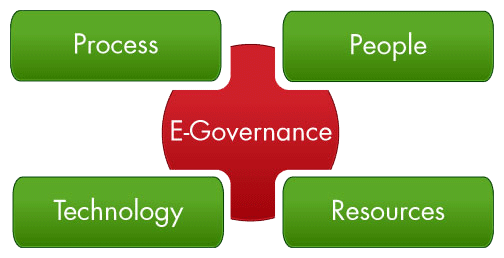
- e-Governance in India means the use of Information and Communication Technology (ICT) by the government to deliver services, exchange information, and interact with citizens.
Benefits
- Efficiency: Faster, cheaper, paperless transactions.
- Transparency & Accountability: Reduced corruption, direct monitoring.
- Inclusivity: Services to rural/remote areas via Common Services Centres (CSCs).
- Citizen Empowerment: 24×7 access, participatory governance.
- Economic Growth: Boosts startups, IT industry, and digital economy.
Key Challenges to e-Governance
- Implementation disparity: Some states or local governments lag in digital capacity, infrastructure, funding, or in adopting the central e-governance frameworks.
- Digital divide: Access to internet / smartphone and digital literacy remain bottlenecks especially in remote, tribal or underdeveloped districts.
- Data protection, security & trust: As scale increases, vulnerabilities, data leaks, misuse risk rise. Ensuring confidentiality, consent, and legal safeguards is critical.
- Sustainability and capacity-building: Maintaining and upgrading systems, training personnel, continuous feedback loops, user support are resource-intensive and ongoing tasks.
- Governance vs execution gap: Even when policy is strong, translating it on ground often faces administrative inertia, lack of technical staff, or legacy systems.
| Key Initiatives – Connectivity and Infrastructure: Over the years, Digital India has built strong digital infrastructure across the country. – Aadhaar & DBT: Aadhaar-enabled e-KYC simplified verification, reduced paperwork, and enhanced transparency. DBT ensured direct transfer of welfare benefits, curbing leakages. – Karmayogi Bharat: Initiative aims to nurture a future-ready civil service by equipping officials with the right Attitude, Skills, and Knowledge (ASK) to deliver efficient and citizen-centric governance. 1. It has 1.26 crore+ users, 3000 courses, and 3.8 crore+ certificates issued as of July 2025. – DigiLocker: Aims at ‘Digital Empowerment’ of citizens by providing access to authentic digital documents in the citizens’ digital document wallet. – UMANG: Provides a single platform for all Indian Citizens to access pan-India e-Gov services ranging from Central to Local Government bodies. |
Source: PIB