
Brief Context
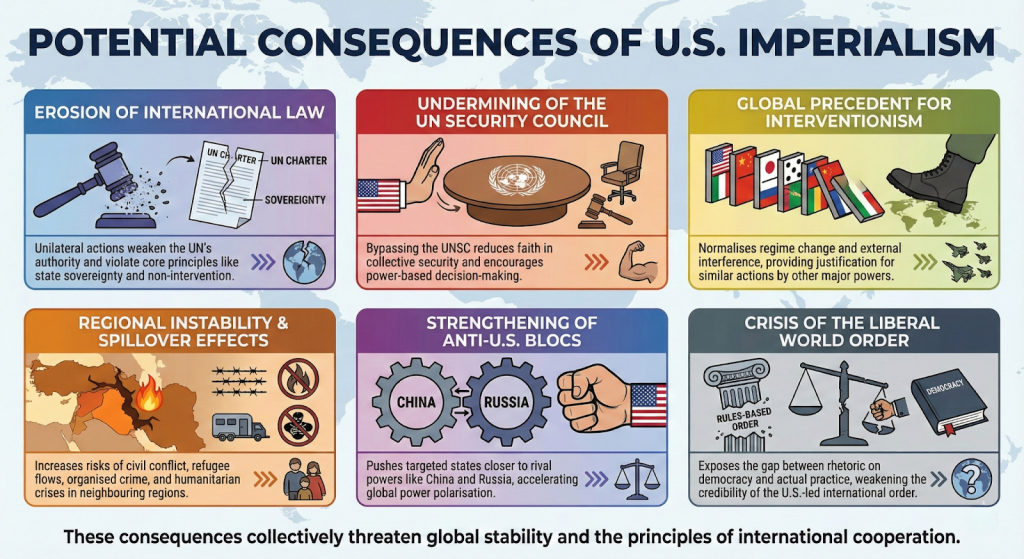
Context The US strikes on Venezuela have brought to the forefront concerns over violations of international law, breach of national sovereignty reinforcing perceptions of U.S. imperialism. Probable Reasons for US Attack on Venezuela Oil Reserves: Venezuela holds about 18% of the worlds oil reserves, more than Saudi Arabia (around 16%), Russia (about 5-6%), or the United States (around 4%).
Source Content
Syllabus: GS2/IR
Context
- The US strikes on Venezuela have brought to the forefront concerns over violations of international law, breach of national sovereignty & reinforcing perceptions of U.S. imperialism.
- However, data shows that the U.S. attack on Venezuela is unlikely to have any direct impact on India’s energy security.
Probable Reasons for US Attack on Venezuela
- Oil Reserves: Venezuela holds about 18% of the world’s oil reserves, more than Saudi Arabia (around 16%), Russia (about 5-6%), or the United States (around 4%).
- Venezuela alone has more crude oil reserves than the US and Russia combined.
- Countering China’s Expansion in Latin America: China, the world’s largest crude oil importer, has emerged as the biggest buyer of Venezuelan oil.
- Venezuela is a strategic node in China’s energy security and global influence, making it geopolitically sensitive for the U.S.
- U.S. Deals: The United States has signed trade deals with partners such as the European Union, Japan, South Korea and the United Kingdom, getting commitments from them to buy U.S. petroleum products and LNG, without having sufficient crude oil or refining capacity.
- Resurrection of the Monroe Doctrine: The US has described the operation as consistent with the US foreign policy known as the Monroe Doctrine.
- Other Stated and Unstated Motives: Allegations of state-sponsored drug trafficking
- Containment of socialist political ideology
- Addressing mass migration flows towards the U.S.
| Venezuela Share in Oil Supply
– Venezuela is a member of the Organization of the Petroleum Exporting Countries (OPEC), a group of countries that largely dominates the global oil market. Monroe Doctrine – Background: It was announced by US President James Monroe in 1823 during his annual address to Congress. |
Analysis of Impact on India
- Oil Import from Venezuela: India imported $255.3 million worth of oil from Venezuela in the current financial year in 2025, about 0.3% of its total oil import during this period.
- Since 2019, India has been cutting its oil imports and commercial engagements with Venezuela in response to U.S. sanctions.
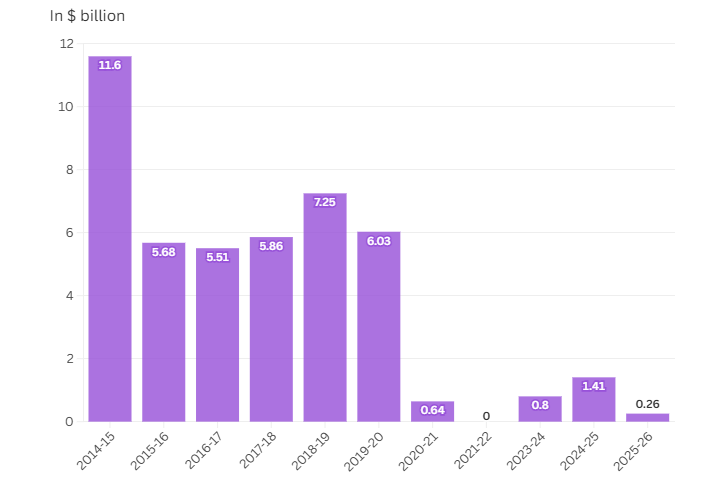
- Bilateral Trade: India’s bilateral trade is now relatively small and shrinking further.
- In 2024–25, India imported goods worth just $364.5 million from Venezuela, of which crude oil accounted for $255.3 million.
- This marked a steep 81.3% decline from imports of $1.4 billion in 2023–24.
- India’s exports to Venezuela stood at $95.3 million, led mainly by pharmaceutical products worth $41.4 million.
- Impact on India: Given the low trade volumes, existing sanctions constraints, and the large geographical distance, the current developments in Venezuela are not expected to have any meaningful impact on India’s economy or energy security.
Way Ahead
- The US invasion of Venezuela comes at a time when India is actively diversifying its crude basket, amidst the Indo-US trade negotiations.
- If sanctions on Venezuela are eased, Venezuelan crude could offer additional flexibility to Indian refiners and help ease supply concentration risk.
- In this emerging global order, wars for raw materials and energy resources are likely to intensify in the coming years.
- India must therefore act cautiously, protect its strategic autonomy, avoid deals that weaken sovereignty or long-term interests, and secure critical raw material and energy access without geopolitical pressure.
Source: TH