
Brief Context
Context A new study by researchers has revealed how two fundamental building blocks of life, RNA (ribonucleic acid) and amino acids, could have joined together under conditions resembling those of early Earth about four billion years ago. What is Ribonucleic acid (RNA)? Ribonucleic acid (RNA) is a fundamental biomolecule essential for life.
Source Content
Syllabus: GS3/ Biotechnology
Context
- A new study by researchers has revealed how two fundamental building blocks of life, RNA (ribonucleic acid) and amino acids, could have joined together under conditions resembling those of early Earth about four billion years ago.
- This discovery advances the understanding of how the interaction between genes and proteins may have first emerged.
What is Ribonucleic acid (RNA)?
- Ribonucleic acid (RNA) is a fundamental biomolecule essential for life. It carries genetic information, helps in the synthesis of proteins, and performs catalytic and regulatory roles.
- While similar to DNA, it is chemically less stable and functionally more versatile.
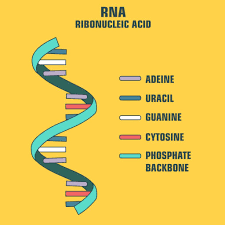
- Nucleotides: RNA is made of nucleotides, each containing a phosphate group, a ribose sugar, and one of four nitrogenous bases.
- Single-stranded: Unlike DNA’s double helix, RNA usually exists as a single strand. However, it can fold into complex three-dimensional structures with loops and helices.
- RNA is built from four nitrogenous bases: Adenine, Guanine, Cytosine and Uracil.
- Base Pairing: Uracil pairs with Adenine and Guanine pairs with Cytosine.
What is Amino Acid?
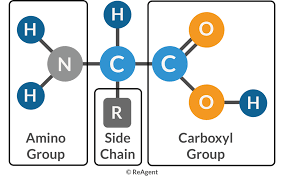
- An amino acid is an organic compound that serves as a fundamental building block for proteins.
- They can be used as a source of energy for the body when carbohydrates and fats are not readily available.
- Types of amino acids: There are 20 standard amino acids that combine to form proteins in the human body.
Key Findings of the Study
- Researchers found that amino acids can attach directly to RNA without enzymes, using only simple prebiotic chemistry in water at neutral pH.
- The amino acids first reacted with this thiol compound (pantetheine) to form a thioester, a high-energy intermediate, and then the thioester transferred the amino acid onto the end of the RNA strand.
- Peptide formation: Once amino acids were linked to RNA (aminoacyl-RNA), further reactions in the same system produced short peptides (chains of two or more amino acids) without any proteins or enzymes.
- This demonstrates a potential primitive pathway to proteins.
Significance for Origin-of-Life Theories
- The findings effectively bridge two theoretical frameworks;
- RNA World Hypothesis: Proposes that self-replicating RNA molecules were the first “life-like” entities, storing genetic information and performing catalytic functions.
- Thioester World (Metabolism-First) Hypothesis: Suggests that energy-rich thioester compounds drove early metabolic reactions before genetic systems evolved.
Source: TH