
Brief Context
Context The One District One Product (ODOP) initiative has completed 8 years of transformative impact by promoting traditional industries. About The ODOP initiative, spearheaded by the Department for Promotion of Industry and Internal Trade (DPIIT), aims to unlock each district’s unique economic potential, drive balanced regional growth, and equip local artisans to compete in national and global markets. Product Selection Framework under ODOP: Products are selected by States and Union Territorie
Source Content
Syllabus: GS3/ Economy
Context
- The One District One Product (ODOP) initiative has completed 8 years of transformative impact by promoting traditional industries.
About
- The ODOP initiative, spearheaded by the Department for Promotion of Industry and Internal Trade (DPIIT), aims to unlock each district’s unique economic potential, drive balanced regional growth, and equip local artisans to compete in national and global markets.
- Product Selection Framework under ODOP: Products are selected by States and Union Territories based on the existing ecosystem on the ground and the final list is communicated to the DPIIT.
- ODOP was first launched in 2018 with Moradabad’s brassware in Uttar Pradesh and has since expanded nationwide.
- The ODOP has so far identified 1243 products from 775 districts across the country encompassing various sectors such as textiles, agriculture, food processing, handicrafts and more
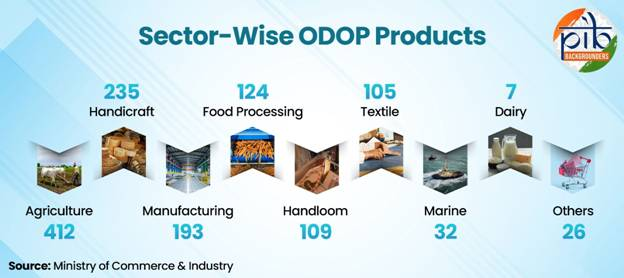
Government Initiatives for Promotion of ODOP
- Through e-commerce initiatives like the Government e-Marketplace (GeM)-ODOP Bazaar, India’s finest ODOP products are being showcased to wider markets, empowering artisans and expanding market access.
- PM Ekta Malls (Unity Malls) are envisaged as dedicated retail and display hubs for promoting and selling ODOP, GI and handicraft products.
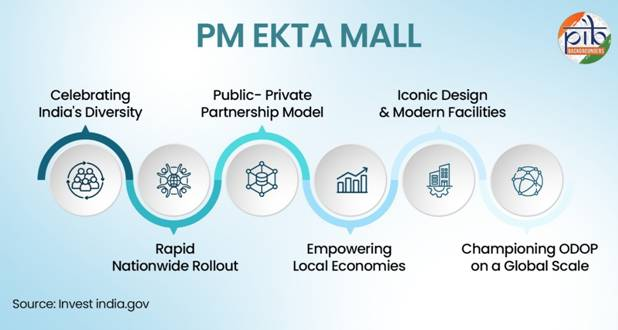
- Global Outreach of ODOP:
- 80+ Indian Missions have promoted products abroad through exhibitions, showcases, ODOP walls or diplomatic gifting.
- In order to popularize ODOP products internationally, they were included as part of gifting during G-20 meetings.
- Three international stores are selling ODOP products (02 in Singapore– in Mustafa Centre and in Kashmir Heritage and One in Kuwait-Hakimi Centre) to strengthen sustained overseas market presence.
- Under the District as Export Hub (DEH) initiative, identification of the products and services with export potential in all the districts of the country is done in consultation with all stakeholders including the States/UTs.
Significance of the Scheme
- Balanced Regional Development: The ODOP initiative promotes equitable economic growth by decentralising industrial activity and leveraging district-specific strengths.
- Empowerment of Artisans: By providing access to finance, skill development, technology, and market linkages, ODOP empowers local artisans and craftsmen enabling them to scale production and improve incomes.
- Preservation of Heritage: The initiative supports traditional crafts, indigenous knowledge systems, and cultural industries, ensuring the preservation of India’s rich artisanal heritage.
- Economic Impact: ODOP strengthens local value chains, encourages formalisation, and contributes to inclusive and sustainable economic growth at the grassroots level.
- Global Recognition: District-specific products gain global visibility, positioning India as a hub of quality, diversity, and craftsmanship.
Concluding remarks
- The One District One Product initiative has converted local skills into engines of economic growth, national recognition, and global opportunity.
- It now represents not just district-specific products, but the millions of aspirations finding recognition far beyond their villages.
Source: PIB