
Brief Context
Context India has firmly pushed back against NATO Secretary’s warning of secondary sanctions over its continued trade with Russia. Crude Oil Imports of India India is the world’s third largest crude oil importer, it depends on imports to meet around 88% of its crude oil needs. Since the Russian invasion of Ukraine in 2022, India has ramped up the purchase of discounted Russian oil.
Source Content
Syllabus: GS2/IR/GS3/Energy
Context
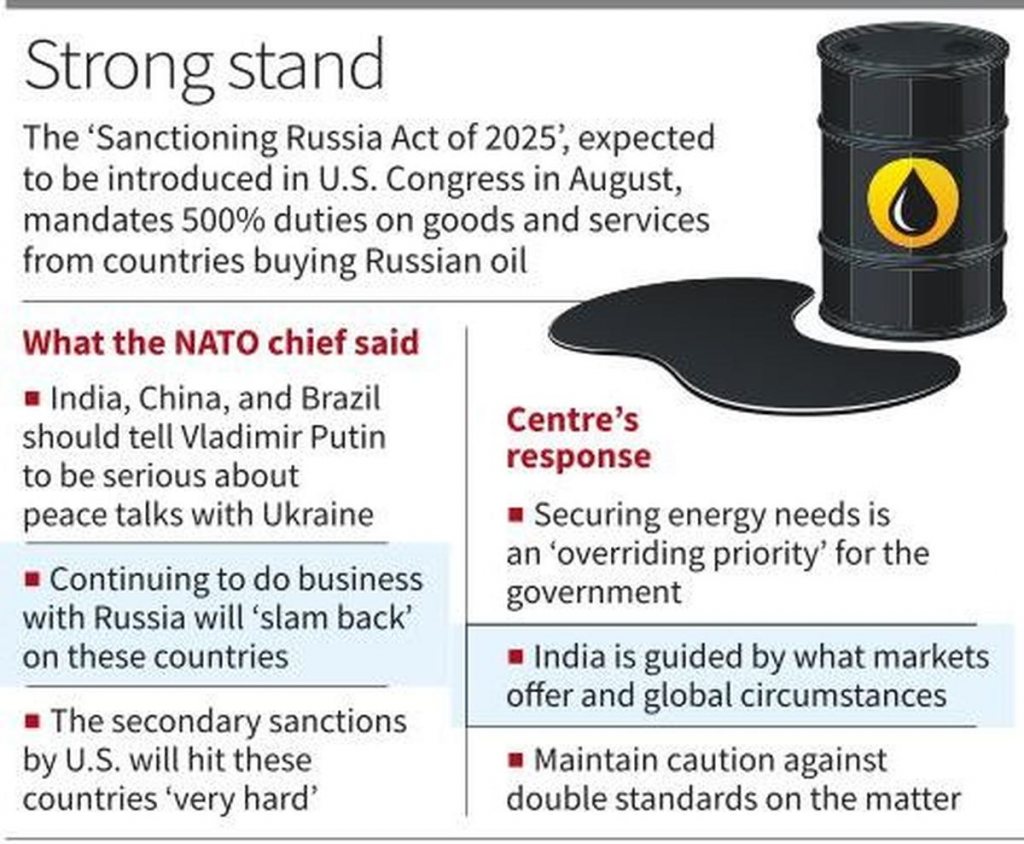
- India has firmly pushed back against NATO Secretary’s warning of secondary sanctions over its continued trade with Russia.
What are Secondary Sanctions?
- Secondary sanctions target third-party countries, companies, or entities that continue doing significant business with a sanctioned nation (in this case, Russia), even if they are not directly engaged in the initial conflict.
- These could include:
- Hefty tariffs (e.g., 100% on exports to the US from countries trading with Russia)
- Restrictions on access to US/EU financial systems and markets.
Crude Oil Imports of India
- India is the world’s third largest crude oil importer, it depends on imports to meet around 88% of its crude oil needs.
- Since the Russian invasion of Ukraine in 2022, India has ramped up the purchase of discounted Russian oil.
- India’s main sources of crude oil imports are Iraq, Saudi Arabia, Russia, United States and the United Arab Emirates.
India’s Stand
- Energy security first: India, with ~88% crude oil import dependence, has prioritized affordable energy supply to meet domestic economic and developmental needs.
- Global circumstances: India cites fluctuating oil markets and ongoing global volatility as key factors in its strategic sourcing decisions.
- ‘Double standards’ criticism: India points out that even as Western countries warn others against Russian oil, European countries themselves continue buying Russian gas/LNG (though they promise to end this by 2027), and also import refined fuels made from Russian crude in third countries like India.
Implications for India
- Trade risk: The threat of 100% tariffs or secondary sanctions could impact India’s exports to the US/EU and complicate broader trade negotiations.
- Oil import strategy: India can diversify imports to other suppliers, but this could lead to higher energy bills and inflationary pressures.
- Strategic autonomy: India’s resistance underscores its commitment to a multipolar, non-aligned foreign policy, maintaining ties with both the West and Russia based on national interest.
Steps Taken by India to Manage its Crude Oil Imports
- Diversification of Supply Sources: India is expanding its oil import base by sourcing crude from multiple countries, including Iraq, Saudi Arabia, the UAE, U.S. and even Russia to reduce dependency on any single region.
- Strategic Petroleum Reserves (SPR): India has developed strategic oil reserves to ensure supply during emergencies or geopolitical disruptions.
- Promotion of Domestic Production: India is encouraging domestic exploration and production of oil through initiatives like the Hydrocarbon Exploration and Licensing Policy (HELP) to increase self-sufficiency.
- Energy Efficiency and Alternatives: India is investing in renewable energy and improving energy efficiency to reduce overall reliance on crude oil.
- Bilateral Agreements: India has signed long-term agreements with countries like Saudi Arabia, Iraq, and Russia to ensure stable and reliable oil supplies.
Source: TH