
Brief Context
Context Recent scientific studies have found microplastics in human brains, raising concerns about potential health risks and need for a Global Plastics Treaty. What is Plastic and Microplastics? The word plastic is derived from the Greek word plastikos, meaning “capable of being shaped or moulded.” Plastic refers to a wide range of synthetic or semi-synthetic materials that use polymers as a main ingredient with their defining quality being their plasticity – the ability of a solid material to
Source Content
Syllabus: GS3/Environment
Context
- Recent scientific studies have found microplastics in human brains, raising concerns about potential health risks and need for a Global Plastics Treaty.
What is Plastic and Microplastics?
- The word plastic is derived from the Greek word plastikos, meaning “capable of being shaped or moulded.”
- Plastic refers to a wide range of synthetic or semi-synthetic materials that use polymers as a main ingredient with their defining quality being their plasticity – the ability of a solid material to undergo permanent deformation in response to applied forces.
- This makes them extremely adaptable, capable of being shaped as per requirement.
- The basic building blocks of plastics are monomers, which are small molecules that can join together to form long chains called polymers through a process called polymerization.
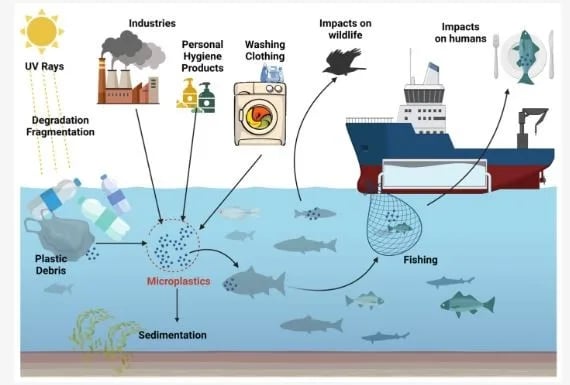
- Microplastics: Plastics break down into their smaller units called microplastics – officially defined as plastics less than five millimetres in diameter.
- Types of Microplastics:
- Primary: Manufactured small on purpose (e.g. microbeads in cosmetics).
- Secondary: Result from breakdown of larger plastic items (e.g. bottles, bags).
Impact of Plastic Pollution
- Neurological concerns: Microplastics in the brain may cause inflammation, cognitive dysfunction, and neurodegenerative diseases.
- Soil and water contamination: Microplastics affect soil fertility and contaminate freshwater and marine ecosystems.
- Threat to marine life: Ingestion of microplastics by marine organisms leads to bioaccumulation and death.
- Transfer of Pollutants: Microplastics can absorb other harmful chemicals from the environment, acting as carriers for these contaminants into organisms and potentially leading to toxicity
What is the Global Plastics Treaty?
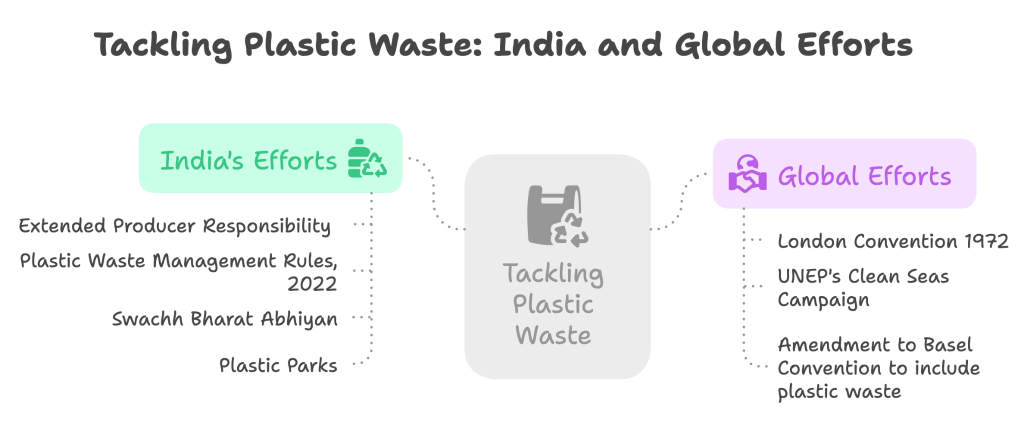
- It was Initiated by the Intergovernmental Negotiating Committee (INC) under UN Environment Assembly Resolution 5/14 in 2022.
- It aims to develop a legally binding international instrument to end plastic pollution.
- It mandates a full lifecycle approach, including upstream (production), midstream (use), and downstream (waste management) processes.
- The second part of the fifth session of the Intergovernmental Negotiating Committee (INC-5.2) is being held in Geneva from August 5–14, 2025, to finalise the Global Plastics Treaty.
- At the heart of the treaty discussions is Article 6, which focuses on regulating plastic supply, specifically production, imports, and exports.
Way Ahead
- The detection of microplastics in human brains is a stark reminder of how deeply plastic pollution has infiltrated human health and ecosystems.
- The Global Plastics Treaty, especially Article 6, offers a unique opportunity to tackle the problem at its source.
- For the treaty to be effective, it must adopt ambitious, enforceable, and science-backed measures to regulate plastic production and promote a circular economy for a healthier planet and population.