
Brief Context
Context Land subsidence at a dumping ground in Belgachia, West Bengal, left hundreds of families without water and electricity, highlighting the growing challenges of man-made urban crises. What is Land Subsidence? According to the National Oceanic and Atmospheric Administration (NOAA), subsidence is the “sinking of the ground because of underground material movement”.
Source Content
Syllabus: GS1/ Urbanization Issues
Context
- Land subsidence at a dumping ground in Belgachia, West Bengal, left hundreds of families without water and electricity, highlighting the growing challenges of man-made urban crises.
What is Land Subsidence?
- According to the National Oceanic and Atmospheric Administration (NOAA), subsidence is the “sinking of the ground because of underground material movement”.
- It can happen for a host of reasons, man-made or natural, such as the removal of water, oil, or natural resources, along with mining activities.
- Across the world, many cities are slowly sinking including tropical megacities like Jakarta in Indonesia or Manila in the Philippines, or places like New Orleans, Vancouver, Mexico City etc.
- Land subsidence has affected around 65 percent of the houses in the pilgrimage town of Joshimath in Uttarakhand in 2023.
Causes of Land Subsidence in Urban Areas
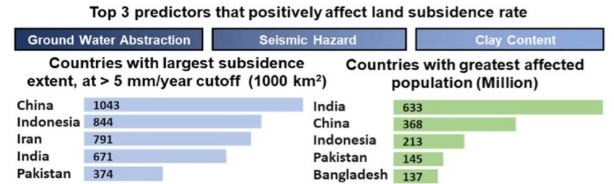
- Over-extraction of Groundwater: Unsustainable withdrawal of groundwater for domestic, industrial, and agricultural use causes aquifers to collapse.
- Unregulated Dumping of Waste: Municipal solid waste piles exert heavy pressure on land, especially if dumped on weak or marshy soils.
- Rapid Urbanization: High-rise buildings and infrastructure projects put enormous pressure on the land without assessing the soil’s carrying capacity.
- Natural Causes: Geological faults, tectonic activities, and the dissolution of underground rocks (e.g., limestone in karst areas).
Impacts of Land Subsidence
- Damage to Infrastructure: Cracks in roads, bridges, buildings, and pipelines increase maintenance cost for urban local bodies.
- Displacement of Populations: Slum dwellers and low-income families living near landfills or unstable areas are worst affected.
- Public Health Crisis: It increases the risk of urban flooding and vector-borne diseases.
- Exposure to chemical sludge and foul gases impacts respiratory and digestive health.
Way Ahead
- Scientific Landfill Management: Urban waste must be segregated, recycled, and processed using modern techniques.
- Height and weight restrictions on landfills must be enforced, with constant monitoring of slope stability.
- Soil testing and simulation models should be used to predict the likelihood of subsidence. Installing early warning systems could help prevent disasters in densely populated areas.
- Reviving local governance through elected municipal representatives is crucial. Without accountable civic bodies, disasters like Belgachia are likely to recur.
- Ragpickers must be integrated into urban development plans.
Source: TH