
Brief Context
Context India’s low-cost, cooperative-led dairying model ensures global price competitiveness, but its dependence on cheap labour and low productivity poses long-term sustainability challenges. Dairy Sector of India Global Leadership: India is the world’s largest milk producer, contributing 24.76% of global milk output. Production Growth: Milk production rose from 146.31 million tonnes in 2014-15 to 239.30 million tonnes in 2023-24.
Source Content
Syllabus: GS3/ Agriculture and Animal Husbandry
Context
- India’s low-cost, cooperative-led dairying model ensures global price competitiveness, but its dependence on cheap labour and low productivity poses long-term sustainability challenges.
Dairy Sector of India
- Global Leadership: India is the world’s largest milk producer, contributing 24.76% of global milk output.
- Production Growth: Milk production rose from 146.31 million tonnes in 2014-15 to 239.30 million tonnes in 2023-24.
- Economic Contribution: Dairy is India’s single largest agricultural commodity, contributing 5% to GDP and employing over 8 crore farmers.
- Growth Performance: Livestock sector grew at a CAGR of 7.9% (2014-15 to 2020-21), outpacing the agriculture sector.
- Per Capita Availability: Rose to 471 g/day in 2023–24, substantially above the world average of 322 g/day.
- Top Producing states: Uttar Pradesh, Rajasthan, and Madhya Pradesh.
Structural Weaknesses in Indian Dairying
- Breed Productivity Gaps: Yields still lag behind advanced dairy nations, especially among indigenous breeds.
- Average yield of Indian cows is 1.64 tonnes/year vs. 7.3 tonnes in EU and 11 tonnes in US.
- Land & Fodder Constraints: Unlike New Zealand, India lacks abundant pasture land.
- Reliance on crop residues and purchased feed makes dairying costly.
- Dependence on Cheap Labour: Dairy sector has labour-intensive tasks such as feeding, milking, bathing cattle, cleaning sheds. The model survives on unpaid family labour with little opportunity cost.
- Rising rural education and alternative jobs may make such labour unavailable.
- Climate Impact & Market Volatility: Extreme heat reduces yields and drives up prices.
- Slowing Growth: Production growth has slowed, from ~6% in earlier years to 3.78% in 2023–24, with buffalo milk output declining 16%.
- Post-Harvest Losses: Inadequate cold-chain and processing infrastructure cause wastage.
Significance
- Economic Contribution: India’s dairy is the single largest agricultural commodity, contributing 5 percent to the national economy and directly employing more than 8 crore farmers.
- Nutritional Security: Milk is a major source of protein, calcium, and vitamins, improving dietary diversity.
- Export Potential: India is emerging as a supplier of dairy products like skimmed milk powder, butter, and ghee to Asia and Africa.
- Women’s Participation: 35% of members in dairy cooperatives are women, highlighting the sector’s role in gender-inclusive growth.
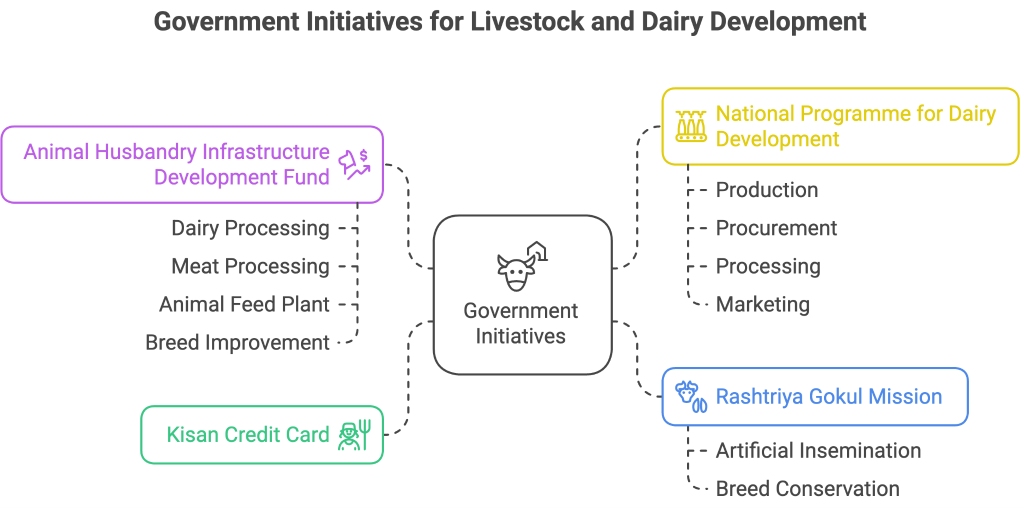
Way Ahead
- Boost Productivity: Intensify breed improvement (AI, IVF, indigenous genetics), nutrition reforms.
- Strengthen Infrastructure: Develop cold chains, chilling centres, and organized collection systems.
- Expand Cooperative Reach: Bring more farmers into organized frameworks; local-level cooperatives can cut inefficiencies.
- Risk Mitigation: Promote climate-resilient breeds, improve animal health (vaccination drives), and stable pricing frameworks.
- Enhance Inclusivity: Empower women through targeted interventions and enhanced participation.
Source: IE