
Brief Context
In News Madhya Pradesh is marking the 300th birth anniversary of Maratha queen Devi Ahilyabai Holkar with a major state-led campaign. Ahilyabai Holkar Early Life: She was the Holkar Queen of the Maratha-ruled Malwa kingdom in India. She was Born in Chaundi village, Maharashtra, to Mankoji Rao Shinde.
Source Content
Syllabus :GS 1/History
In News
- Madhya Pradesh is marking the 300th birth anniversary of Maratha queen Devi Ahilyabai Holkar with a major state-led campaign.
Ahilyabai Holkar
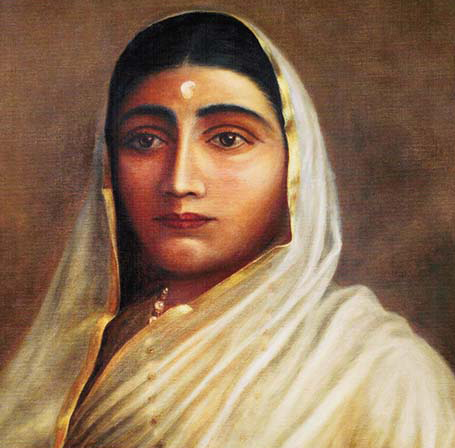
- Early Life: She was the Holkar Queen of the Maratha-ruled Malwa kingdom in India.
- She was Born in Chaundi village, Maharashtra, to Mankoji Rao Shinde.
- She received an education from her father despite the norms against women’s education at the time.
- Personal Tragedies: Ahilyabai Holkar’s husband, Khanderao, died in the Battle of Kumbher in 1754. Twelve years later, her father-in-law, Malhar Rao Holkar, also passed away.
- Her son Malerao, who was mentally ill, died in 1767.
- Role as a queen : In 1767, she became the queen of the Malwa kingdom.
- She moved the capital to Maheshwar south of Indore on the Narmada River.
- She defended her kingdom from invaders, led armies herself, and appointed Tukojirao Holkar as Chief of Army.
- She broke another tradition when she married her daughter to Yashwantrao, a brave but poor man after he succeeded in defeating the dacoits.
- Contributions : In the 18th century, she was instrumental in spreading the message of dharma and propagating industrialization. She was a devout ruler known for her charitable works.
- She built hundreds of Hindu temples and rest houses (Dharmashalas) across India.
- One of her most notable contributions was the renovation of the Kashi Vishwanath Temple in 1780.
- She also established a textile industry in Maheshwar, which today is very famous for its Maheshwari sarees.
- She held daily public audiences to address people’s issues and engaged in extensive philanthropic work, including building temples, ghats, wells, tanks, and rest-houses across India.
- She built hundreds of Hindu temples and rest houses (Dharmashalas) across India.
- Legacy: She was known as the ‘Philosopher Queen,’ she passed away on 13 August 1795 at the age of 70.
- Her reign is remembered as a period of peace, prosperity, and religious tolerance.
- She was a capable and respected ruler, and after her death, she was revered as a saint by the people.
- Her legacy endures through the many public works she commissioned.
Source :IE