
Brief Context
Context Artificial intelligence can optimise distributed renewable energy by improving grid management, forecasting, storage efficiency, and cost savings. Distributed Renewable Energy (DRE) Distributed renewable energy (DRE) refers to small-scale, decentralised power generation systems typically ranging from a few kilowatts to megawatts that produce electricity from renewable sources directly. Unlike conventional centralized power plants that require extensive transmission infrastructure, DRE sy
Source Content
Syllabus: GS3/Energy
Context
- Artificial intelligence (AI) can be a game changer for India’s rapidly expanding distributed renewable energy, said the Ministry of New and Renewable Energy (MNRE) at India AI Impact Summit.
Distributed Renewable Energy (DRE)
- Distributed renewable energy (DRE) refers to small-scale, decentralised power generation systems typically ranging from a few kilowatts to megawatts that produce electricity from renewable sources directly.
- Unlike conventional centralized power plants that require extensive transmission infrastructure, DRE systems operate independently or connect to the local distribution network.
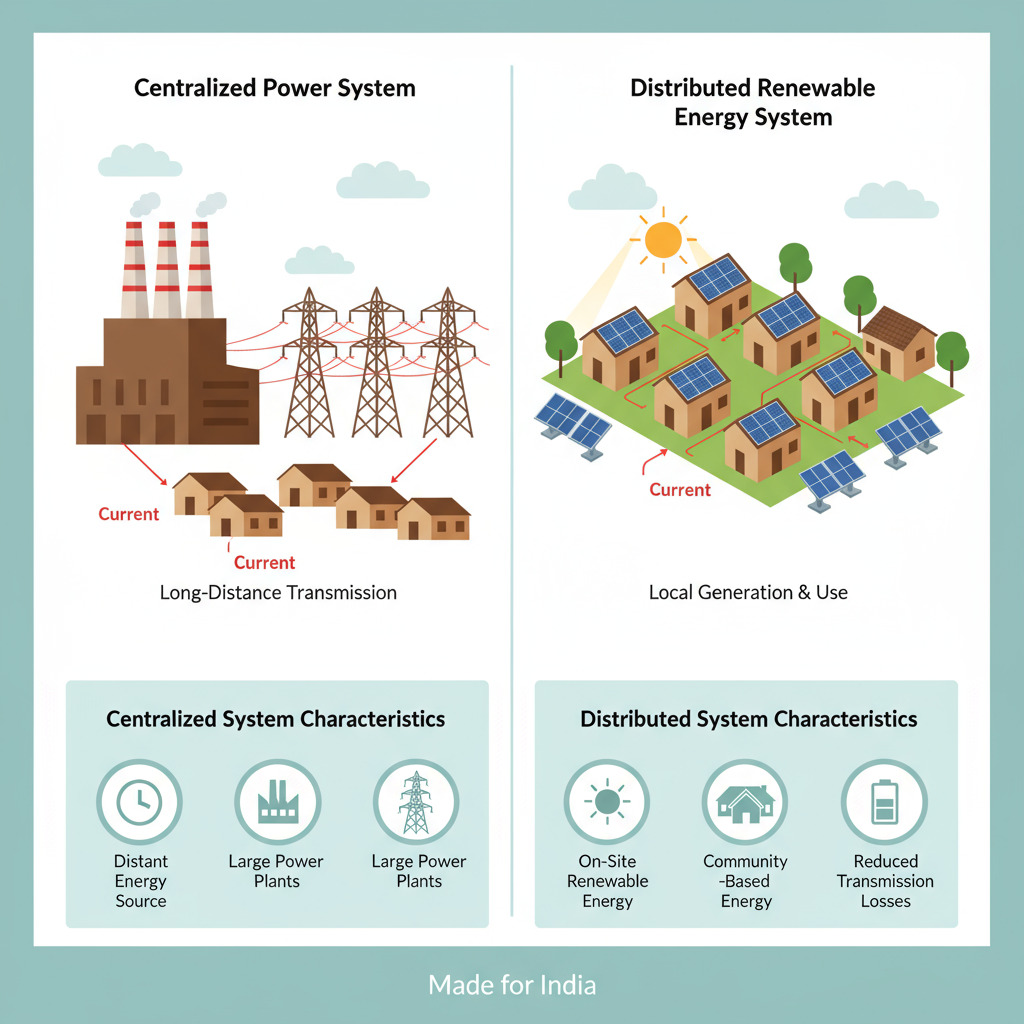
- Sources: rooftop solar, small wind turbines, or biomass.
- India has around 140 gigawatts (GW) of solar power capacity, of which DRE is about 35 GW.
- In the last 15 months, India has added close to 18 GW to DRE, both under the PM Surya Ghar and PM-KUSUM.
- Advantages of DRE in India:
- Rapid deployment in remote areas without waiting for grid extension.
- Reduced transmission and distribution losses.
- Enhanced energy security through diversification.
- Lower environmental impact compared to fossil fuels.
- Job creation and economic development in rural areas.
- Empowerment of local communities through energy ownership.
Use of AI in DRE
- Optimising Energy Systems: AI helps forecast solar and wind better, enabling higher renewable integration and reducing curtailment.
- AI-managed smart grids, batteries, and demand-response systems reduce energy wastage.
- Efficiency in Industries: AI-driven optimization reduces emissions in transport (fuel routing, logistics), buildings (smart HVAC), and manufacturing (process automation).
- Policy Framework: Energy Conservation Building Code & National Energy Efficiency Roadmap integrate AI in renewable energy, and sustainable design.
- Smart Real Estate: AI-driven solutions such as smart lighting, predictive Heating, Ventilation, and Air Conditioning (HVAC), automated building controls energy savings up to 25%.
Challenges
- Data Scarcity and Poor Quality: Limited availability of high-resolution, real-time data from rooftop solar, microgrids, and rural systems reduces the accuracy of AI forecasting and optimisation models.
- High Initial Costs: Deployment of smart sensors, AI software platforms, and skilled manpower increases upfront investment, making small DRE projects less financially viable.
- Skill and Capacity Constraints: Lack of trained professionals in AI–energy integration, especially at the local utility and DISCOM level, limits effective implementation.
- Cybersecurity and Interoperability Risks: AI-enabled DRE systems are vulnerable to cyberattacks and often face compatibility issues due to diverse hardware vendors and legacy grid infrastructure.
Key DRE Solutions Transforming India’s Energy
- Rooftop Solar Systems: These systems range from 1-10 kW for residential installations to larger capacities for commercial and industrial users.
- Solar + Storage Solutions: Integrated solar and battery storage systems address the intermittency challenge of solar power.
- Solar Agricultural Pumps: These systems eliminate farmers’ dependence on diesel pumps or unreliable grid electricity.
- Biomass and Small Hydro: Biomass gasification plants convert agricultural waste into electricity, providing a reliable baseload power source complementary to solar.
- Small hydro projects (up to 25 MW) harness flowing water in hilly regions.
Government Policies and Incentives Driving DRE Adoption
- PM-KUSUM Scheme: The Pradhan Mantri Kisan Urja Suraksha evam Utthaan Mahabhiyan (PM-KUSUM) aims to add 30.8 GW of solar capacity through:
- Component A: 10 GW of decentralized ground-mounted solar plants.
- Component B: Installation of 20 lakh standalone solar pumps.
- Component C: Solarization of 15 lakh grid-connected agricultural pumps.
- The scheme offers 30-90% subsidies depending on the component and beneficiary category.
- Pradhan Mantri Surya Ghar Yojana: This scheme targets one crore households with rooftop solar installations by providing:
- Subsidy of 40% for systems up to 3 kW.
- Subsidy of 20% for systems between 3-10 kW.
- Simplified application process through national portal
- Low-interest loans through partner banks.
- The initiative aims to save households up to ₹15,000 annually in electricity bills.
- State-Level Initiatives: Several states have introduced similar complementary policies.
Conclusion
- Distributed Renewable Energy represents a transformative approach to addressing India’s energy challenges.
- By generating clean power close to the point of use, DRE systems enhance energy access, improve reliability, reduce environmental impact, and create economic opportunities.
- The declining costs of technologies, supportive government policies, and innovative business models are accelerating DRE adoption across India.
Source: IE