
Brief Context
In News The Ministry of Tribal Affairs has launched the Adi Karmayogi Abhiyan, envisaged as the world’s largest tribal grassroots leadership programme. Core Philosophy Guided by Sewa (Service), Sankalp (Resolve), Samarpan (Dedication). Embodies the principle of “Sabka Saath, Sabka Vikas, Sabka Prayas, Sabka Vishwas.” Read More
Source Content
Syllabus: GS2/ Government Policies & Interventions
In News
- The Ministry of Tribal Affairs has launched the Adi Karmayogi Abhiyan, envisaged as the world’s largest tribal grassroots leadership programme.
- It aligns with the Janjatiya Gaurav Varsh celebrations and contributes to the vision of Viksit Bharat @2047.
Core Philosophy
- Guided by Sewa (Service), Sankalp (Resolve), Samarpan (Dedication).
- Embodies the principle of “Sabka Saath, Sabka Vikas, Sabka Prayas, Sabka Vishwas.”
Key Components & Outcomes
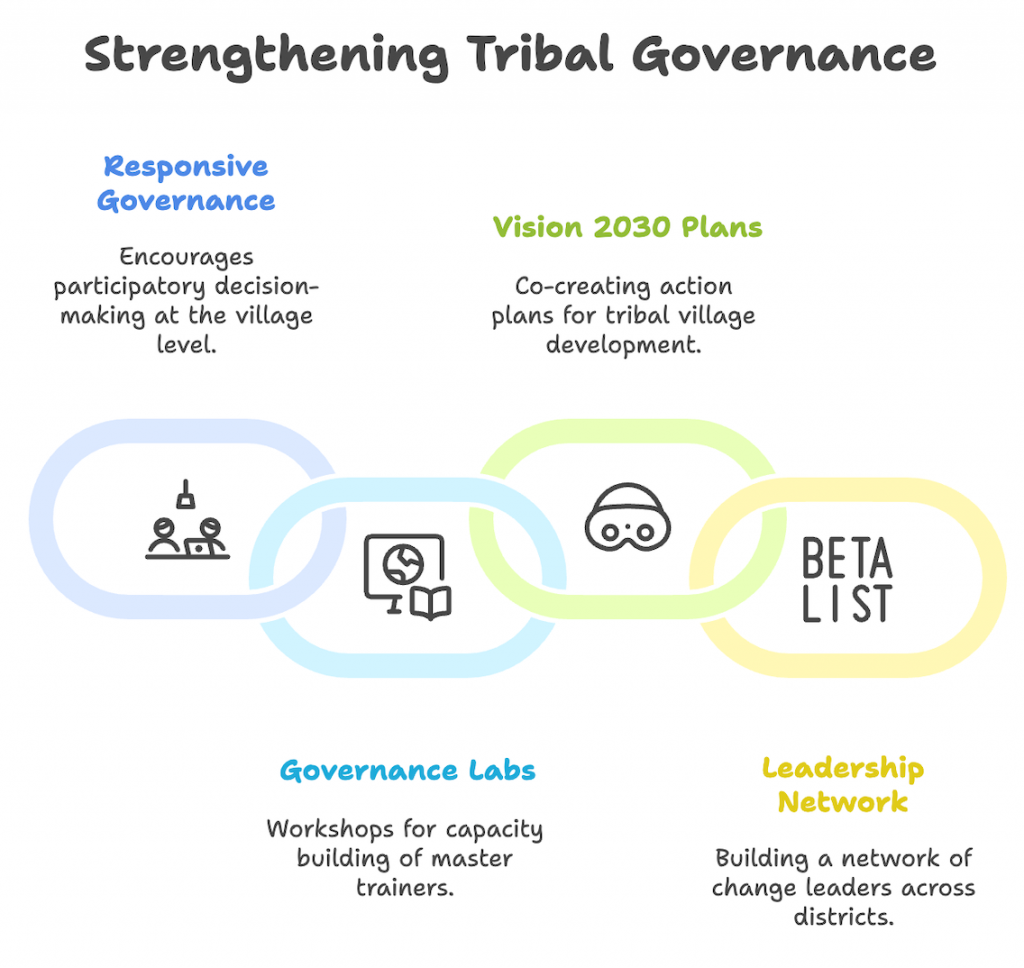
- Adi Sewa Kendra: Proposed in every tribal-dominated village, where government officials and villagers dedicate a few hours fortnightly as “Adi Sewa Samay.” These centres will address local problems, mentor youth, and support last-mile delivery of schemes.
- Governance Lab Workshops: Multi-departmental labs for collaborative problem-solving, ensuring convergence of welfare schemes.
- Tribal Village Action Plan (Vision 2030): Co-created by officers and villagers, aligning with national goals and the Sustainable Development Goals (SDGs).
- Role of Volunteers: Adi Sahyogi: Teachers, doctors, and professionals who mentor and mobilise communities.
- Adi Saathi: SHGs, tribal elders, NRLM members, and local leaders aiding outreach and implementation.
Significance
- Empowerment: Moves beyond welfare to leadership creation.
- Trust Building: Bridges the gap between tribal communities and government institutions.
- Conflict Mitigation: Reduces alienation and strengthens social harmony.
- Sustainable Development: Ensures grassroots action is aligned with Agenda 2030 and India’s vision for 2047.
Source: PIB