
Brief Context
Context At the Raisina Dialogue 2026, the need for early collaboration between scientists and diplomats was emphasized to design governance frameworks for emerging technologies such as quantum computing. What is Quantum Computing? Quantum computing refers to a new class of computers that use the principles of quantum mechanics rather than classical binary logic.
Source Content
Syllabus: GS3/ Science and Technology
Context
- At the Raisina Dialogue 2026, the need for early collaboration between scientists and diplomats was emphasized to design governance frameworks for emerging technologies such as quantum computing.
What is Quantum Computing?
- Quantum computing refers to a new class of computers that use the principles of quantum mechanics rather than classical binary logic.
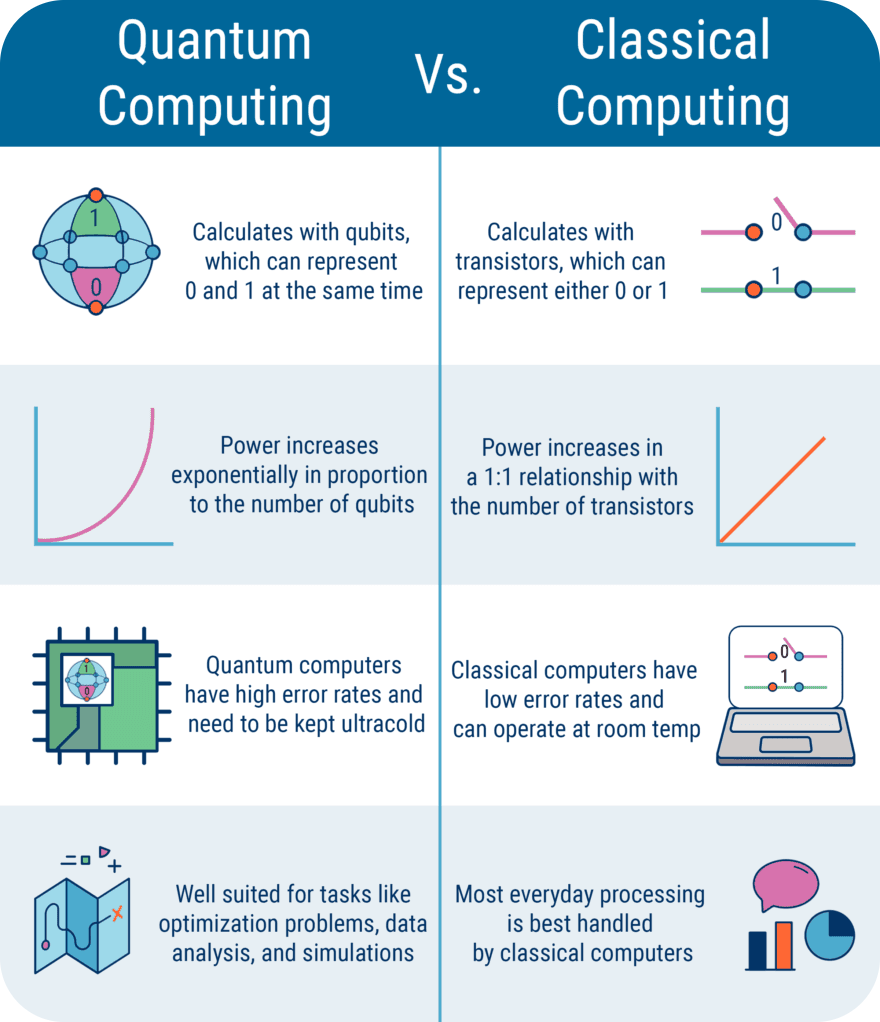
- Classical computers process information using bits (0 or 1), while quantum computers use qubits, which can exist in multiple states simultaneously.
- This capability allows quantum computers to perform certain calculations exponentially faster than conventional computers.
Principles of Quantum Computing
- Superposition: It allows a qubit to exist in multiple states simultaneously, enabling quantum computers to perform many calculations in parallel.
- Entanglement: It occurs when two or more qubits become strongly correlated, such that the state of one instantly determines the state of the other.
- This property allows quantum computers to process and link information efficiently, helping solve complex problems faster.
- Decoherence: Decoherence refers to the loss of a qubit’s quantum state due to interaction with the environment (such as radiation or heat).
- Preventing or delaying decoherence is a major challenge in building stable quantum computers.
Applications of Quantum Computing
- Cryptography & Cybersecurity: Enables ultra-secure communication through Quantum Key Distribution (QKD); for example, quantum communication networks being developed for secure government and military communication.
- Drug Discovery & Material Science: Can simulate complex molecular interactions; for example, designing new drugs or advanced batteries by modelling chemical reactions that classical computers struggle to process.
- Optimization Problems: Helps solve complex optimization tasks in logistics and finance; for example, optimizing airline routes, traffic flow in cities, or portfolio management in stock markets.
- Artificial Intelligence & Big Data Analysis: Enhances processing of massive datasets; for example, improving pattern recognition in climate modelling, fraud detection in banking, or advanced machine learning systems.
Source: TH
Sources and further reading
- THthehindu.com