
 Forest Services
Introduction to Aurangzeb's Reign
Aurangzeb Alamgir, the sixth and longest-reigning Mughal Emperor, ruled India from 1658 to 1707. His reign is often considered a turning point in Indian history, marking both the peak and the decline of the Mughal Empire. Unlike his predecessors, Aurangzeb followed a militaristic and orthodox approach, aiming to consolidate Mughal rule across the Indian subcontinent. His policies—ranging from administrative reforms and military campaigns to religious regulations—have made him one of the most controversial figures in Indian history.
- Religious Policy of Aurangzeb: A Detailed Analysis
- Chola Empire (9th -13th century AD): Administration, Local Govt., Village Economy, Society
- Early Medieval India (750-1200) – A detailed Overview
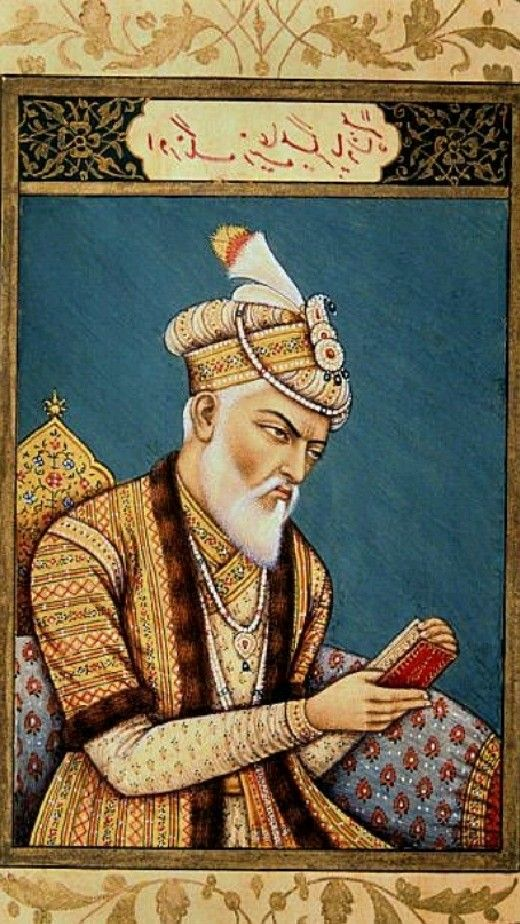
Born on November 3, 1618, in Dahod, Gujarat, Aurangzeb was the third son of Shah Jahan and Mumtaz Mahal. His early exposure to Mughal administration and military campaigns, coupled with his strategic acumen, played a crucial role in his rise to power. However, his reign was marked by continuous warfare, economic strain, and resistance from regional powers like the Marathas, Rajputs, Sikhs, and Jats.
The War of Succession (1657-1661)
Following Shah Jahan’s illness in 1657, a brutal war of succession broke out among his four sons—Dara Shikoh, Shuja, Aurangzeb, and Murad. Aurangzeb, known for his strategic planning and military prowess, forged alliances and methodically eliminated his rivals:
- Dara Shikoh, the eldest and Shah Jahan’s preferred successor, was defeated in the Battle of Samugarh (1658) and later executed.
- Shuja, the governor of Bengal, was defeated and forced into exile.
- Murad, initially allied with Aurangzeb, was imprisoned and executed for treason.
By 1661, Aurangzeb had consolidated power, imprisoning his father Shah Jahan in Agra Fort, where he remained until his death in 1666.
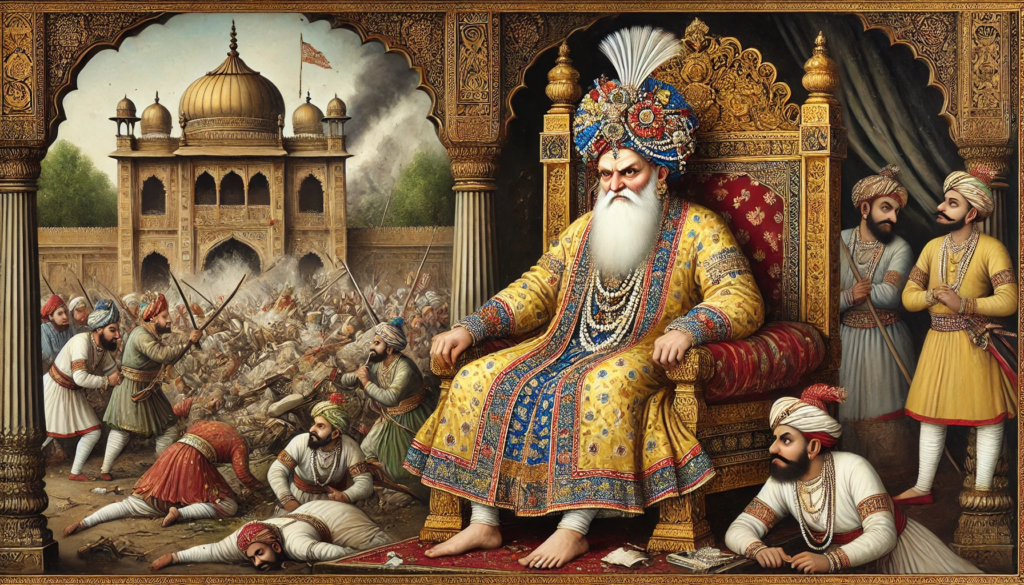
Aurangzeb's Administration and Policies
Aurangzeb’s governance was distinct from his predecessors, as he sought to enforce a more centralized and orthodox administration. Unlike Akbar’s policy of religious tolerance, Aurangzeb re-imposed Islamic laws and restricted non-Muslim influences in court.
Economic Policies and Reforms
Aurangzeb’s economic policies were aimed at strengthening the treasury and funding his expansive military campaigns. Some key reforms included:
- Expansion of Land Revenue System: The Zabti system, originally implemented by Todar Mal, was continued, ensuring efficient tax collection. However, excessive taxation led to unrest in certain regions.
- Abolition of Un-Islamic Taxes: Aurangzeb abolished taxes like the Pilgrimage Tax and Entertainment Tax, which were seen as un-Islamic.
- Re-imposition of Jizya Tax (1679): This tax on non-Muslims, abolished by Akbar, was reinstated by Aurangzeb, causing significant resentment among Hindus, Sikhs, and Jains.
- Military Expenditure: A large portion of state revenue was allocated to military expansion rather than infrastructure or welfare programs, leading to economic strain over time.
Religious Policies and Orthodoxy
Aurangzeb’s religious orthodoxy played a defining role in his rule, influencing administrative decisions and state policies.
- Destruction of Hindu Temples: Several temples, including the Kashi Vishwanath temple in Varanasi and the Keshav Rai temple in Mathura, were demolished and replaced with mosques. However, records indicate that some temples were spared and even received state funding.
- Ban on Music and Arts: Unlike Shah Jahan’s court, which flourished in art, literature, and music, Aurangzeb imposed a ban on court music and patronage of artists, considering them un-Islamic.
- Conflict with Sikh Gurus: His policy led to confrontations with Guru Tegh Bahadur, who was executed in 1675, intensifying Sikh resistance under Guru Gobind Singh.
Legal Reforms: Fatawa-e-Alamgiri
Aurangzeb codified Islamic laws into the Fatawa-e-Alamgiri, a collection of Sharia-based rulings that served as the legal code for the empire. These reforms centralized judicial authority but alienated non-Muslim subjects.
Military Campaigns and Expansion
Aurangzeb’s military campaigns were extensive, covering almost the entire Indian subcontinent. However, these endless wars weakened the empire, exhausting resources and manpower.
Conquest of Deccan Sultanates and Marathas
One of Aurangzeb’s most ambitious projects was the conquest of the Deccan Sultanates (Bijapur & Golconda) and the Maratha Empire.
- Annexation of Bijapur (1686) and Golconda (1687): Aurangzeb defeated the Shia rulers of these sultanates, expanding Mughal rule in South India.
- War Against the Marathas (1680-1707): The greatest challenge to Aurangzeb’s empire came from Shivaji and his successors. Despite capturing Sambhaji (Shivaji’s son) and executing him (1689), the Maratha guerrilla warfare continued, destabilizing the Mughal rule in the region.
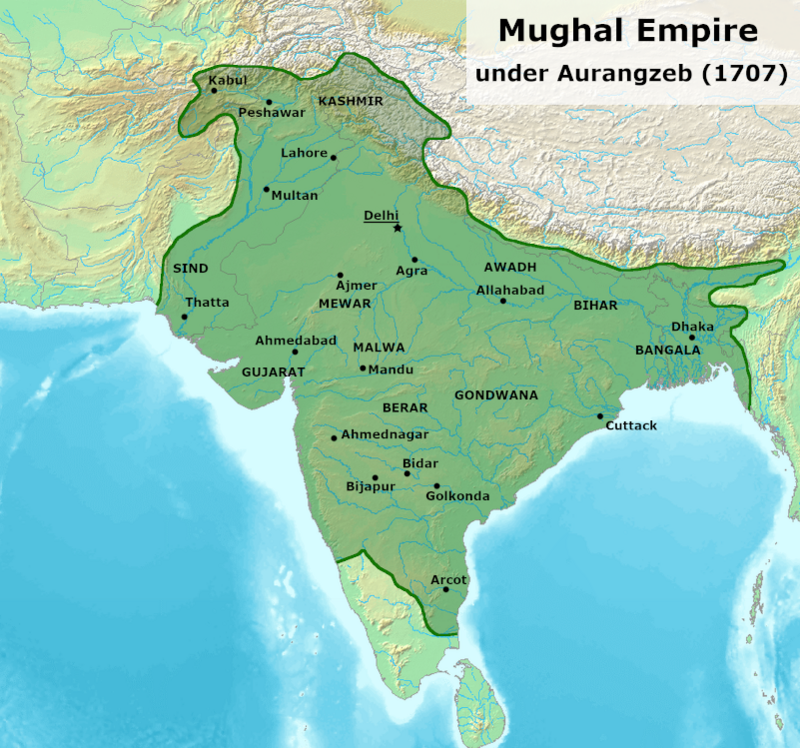
Mughal Empire under Aurangzeb Map
Conflicts with Rajputs and Jats
Aurangzeb’s aggressive policies alienated the Rajputs, leading to wars with Mewar and Marwar. The Jats of Bharatpur also revolted, posing another challenge to his authority.
Sikh Resistance
Aurangzeb’s execution of Guru Tegh Bahadur led to the militarization of Sikhs under Guru Gobind Singh. The formation of the Khalsa in 1699 marked the beginning of Sikh resistance against Mughal rule.
Decline of the Mughal Empire
Aurangzeb died on March 3, 1707, in Ahmednagar, Maharashtra at the age of 88. His last years were spent in continuous warfare, particularly in the Deccan, where he struggled to suppress the Marathas.
Factors Contributing to Decline
- Overextension of the Empire: His territorial conquests stretched the empire beyond administrative control.
- Economic Drain: Military campaigns exhausted financial resources.
- Religious Policies: Alienated Hindus, Sikhs, and Rajputs, leading to multiple rebellions.
- Rise of Regional Powers: Marathas, Jats, Rajputs, and Sikhs grew stronger after his death.
- Succession Crisis: The empire weakened as Aurangzeb’s successors lacked his military and administrative acumen.
By the mid-18th century, the Mughal Empire fragmented, paving the way for the British East India Company to establish control over India.
Conclusion: Aurangzeb's Legacy
Aurangzeb remains one of the most debated Mughal rulers in Indian history. His military brilliance, administrative efficiency, and expansionist policies made him a formidable ruler. However, his orthodoxy, religious intolerance, and excessive militarism contributed to the eventual decline of the Mughal Empire.
Key Takeaways from Aurangzeb's Reign
- Aurangzeb expanded the Mughal Empire to its greatest territorial extent.
- His policies led to economic and administrative instability.
- His religious intolerance alienated non-Muslim communities, leading to revolts.
- After his death, the Mughal Empire rapidly declined, leading to British colonial rule.
Aurangzeb’s reign was one of contradictions, marked by great military success but also significant internal strife. His policies had a lasting impact on Indian history, shaping the socio-political landscape for centuries to come. Understanding his rule provides critical insights into the rise and fall of the Mughal Empire, as well as the historical trajectory of modern India.

Frequently Asked Questions (FAQs) about Aurangzeb
Who was Aurangzeb?
Aurangzeb (1618-1707) was the sixth Mughal emperor of India and ruled from 1658 to 1707. He was the son of Shah Jahan and is known for expanding the Mughal Empire to its greatest territorial extent but also for his strict religious policies and prolonged military campaigns.
How did Aurangzeb ascend the throne?
Aurangzeb ascended the throne after a bloody war of succession (1657-1658) against his brothers Dara Shikoh, Shuja, and Murad following Shah Jahan’s illness. He defeated and executed Dara Shikoh, imprisoned Shah Jahan, and became the undisputed ruler.
What were Aurangzeb's major military campaigns?
Aurangzeb engaged in several military campaigns, including:
- Rajput Wars (1679-1707) – Conflicts with Marwar and Mewar.
- Deccan Campaign (1681-1707) – Subjugation of Bijapur, Golconda, and Marathas.
- Jat Rebellion (1669-1691) – Peasant uprising in Agra and Mathura.
- Sikh Rebellion (1675-1705) – Execution of Guru Tegh Bahadur, leading to militarization of Sikhs.
- Afghan Uprisings (1672-1675) – Wars against Pashtun tribes in Khyber Pass.
What were Aurangzeb's religious policies?
Aurangzeb is known for his orthodox Sunni Islamic policies, which included:
- Reimposition of Jizya tax (1679) on non-Muslims, abolished by Akbar.
- Destruction of newly built Hindu temples (e.g., Kashi Vishwanath, Mathura’s Keshav Rai Temple).
- Ban on music, dancing, and alcohol at the Mughal court.
- Restriction of Hindu participation in key administrative roles.
However, he also: - Employed more Hindu officials in Mughal bureaucracy than any of his predecessors.
- Issued grants to temples and Hindu religious leaders.
Why did Aurangzeb destroy temples?
Aurangzeb’s temple destruction policy was not uniform and was often politically motivated. He targeted temples that were seen as centers of political opposition, such as:
- Kashi Vishwanath Temple (Banaras) – Destroyed after a local rebellion.
- Keshav Rai Temple (Mathura) – Demolished following the Jat uprising.
- Somnath Temple – Attacked for symbolic and strategic reasons.
What was Jizya tax and why did Aurangzeb reintroduce it?
Jizya was a tax levied on non-Muslims in an Islamic state. It had been abolished by Akbar but was reintroduced by Aurangzeb in 1679. Scholars argue it was done:
- To assert Islamic supremacy.
- To gain favor among conservative Sunni clerics.
- To raise revenue for his costly Deccan campaigns.
How did Aurangzeb's policies affect the Rajputs?
Initially, Aurangzeb maintained good relations with the Rajputs but later alienated them by interfering in their succession disputes.
- Marwar War (1679-1707) – Caused by Aurangzeb’s attempt to annex Jodhpur after Maharaja Jaswant Singh’s death.
- Mewar Resistance – Rana Raj Singh fought against Mughal dominance.
These conflicts ended the traditional Mughal-Rajput alliance, weakening the empire.
Why was Guru Tegh Bahadur executed?
Guru Tegh Bahadur, the 9th Sikh Guru, was executed in 1675 in Delhi.
- Some sources claim he was executed for opposing forced conversions in Kashmir.
- Others argue he was seen as a political rebel by the Mughal administration.
His execution transformed Sikhism into a militant force, leading to the formation of the Khalsa by Guru Gobind Singh in 1699.
What was Aurangzeb's relationship with the Marathas?
Aurangzeb considered the Marathas a major threat. His conflicts included:
- Attacks on Shivaji (1660-1674) – Failed to subdue him, leading to Shivaji’s coronation in 1674.
- Execution of Sambhaji (1689) – Increased Maratha resistance.
- 27-Year Deccan War (1681-1707) – Aurangzeb’s prolonged war against Marathas drained Mughal resources and led to his downfall.
When and where did Aurangzeb die?
Aurangzeb died in 1707 in Aurangabad at the age of 88, leaving behind a militarily exhausted and financially drained empire. His successors were weak, leading to the rapid decline of the Mughal Empire.
What were the economic consequences of Aurangzeb's rule?
Aurangzeb’s economic policies were restrictive and included:
- High taxes on peasants, leading to several agrarian revolts.
- Discriminatory customs duty – Hindus paid 5% tax, while Muslims paid 2.5%.
- Banning of certain luxury goods, which negatively impacted trade and artisans.
- Heavy military expenditure, especially in Deccan wars, bankrupted the empire.
How did Aurangzeb's administration differ from previous Mughal rulers?
Aurangzeb followed a strict, centralized administration with:
- Expansion of Mughal territory to its largest extent.
- Replacement of Persian influence with Arabic and Islamic governance.
- Strict enforcement of Islamic law (Sharia), monitored by muhktasibs (moral police).
- More Hindu officials in Mughal service than previous emperors (despite anti-Hindu policies).
What were the main reasons for the decline of the Mughal Empire under Aurangzeb?
Aurangzeb’s policies overstretched the empire’s resources, leading to:
- Continuous wars (Deccan, Rajputs, Jats, Sikhs, Afghans) drained finances.
- Alienation of Rajputs weakened Mughal military alliances.
- Rise of regional powers (Marathas, Jats, Sikhs, Afghans) after his death.
- Economic crisis due to high taxation and endless military campaigns.
- Weakened central authority, leading to succession conflicts after his death.
What happened to the Mughal Empire after Aurangzeb's death?
After Aurangzeb’s death in 1707, the Mughal Empire rapidly declined due to:
- Succession struggles among his sons (Bahadur Shah I, Azam Shah, and Kam Baksh).
- Regional powers like the Marathas, Jats, and Sikhs gaining strength.
- Invasions by Nadir Shah (1739) and Ahmad Shah Abdali (1748-1761) further weakened the empire.
- By 1857, the Mughals were reduced to symbolic rulers, before being completely removed by the British Raj.
How do historians view Aurangzeb?
Historians are divided into three views:
- Jadunath Sarkar and S.R. Sharma – Aurangzeb was a religious bigot who persecuted Hindus.
- Shibli Nomani and Ishtiaq Hussain Qureshi – His actions were political, not religious.
- Satish Chandra and M. Athar Ali – Aurangzeb was pragmatic but his orthodox policies alienated key groups.
Why is Aurangzeb considered a controversial figure?
Aurangzeb remains a controversial historical figure. Some view him as:
- A devout ruler who expanded the empire.
- A religiously intolerant king who alienated his subjects.
- A failed administrator whose policies led to the Mughal decline.

Practice Questions for UPSC
Prelims Practice Questions
- Aurangzeb abolished the Pilgrimage Tax and Entertainment Tax.
- He continued the Zabti system of tax collection.
- Aurangzeb allocated a significant portion of revenue to infrastructure development.
Which of the above statements is/are correct?
- Reintroduction of religious taxes on non-Muslims.
- Promotion of arts and culture.
- Consolidation of power through military campaigns.
Which of the above statements is/are correct?
Frequently Asked Questions
What characterized Aurangzeb's approach to governance compared to his predecessors?
Aurangzeb adopted a more centralized and orthodox administration, moving away from his predecessor Akbar's policy of religious tolerance. This included re-imposing Islamic laws and limiting the influence of non-Muslims in the Mughal court, which significantly altered the socio-political landscape of his empire.
How did Aurangzeb's re-imposition of the Jizya tax affect his rule?
The re-imposition of the Jizya tax in 1679 on non-Muslims created substantial resentment among various religious groups, particularly Hindus, Sikhs, and Jains. This decision contradicted Akbar's earlier abolition of the tax and contributed to the declining support for Aurangzeb among his subjects, leading to increased unrest.
What were some of the key military challenges Aurangzeb faced during his reign?
Aurangzeb's reign was marked by continuous warfare as he faced resistance from powerful regional entities. Notable challenges came from the Marathas, Rajputs, Sikhs, and Jats, all of whom mounted significant opposition to his centralized rule and policies, leading to prolonged military engagement and strain on the empire's resources.
What were the consequences of Aurangzeb's destruction of Hindu temples?
Aurangzeb's destruction of several prominent Hindu temples, such as the Kashi Vishwanath temple, incited significant backlash and fostered resentment among Hindus. While some temples reportedly received state funding, the overall impact reinforced communal tensions and contributed to a fractious relationship with Hindu subjects.
In what ways did Aurangzeb's artistic policies differ from those of Shah Jahan?
Unlike Shah Jahan, who patronized artists and promoted cultural endeavors, Aurangzeb imposed a ban on music and the arts, deeming them un-Islamic. This shift not only affected the cultural vibrancy of his court but also reflected his austere approach to governance, firmly rooted in religious orthodoxy.
Source: LearnPro Editorial | History | Published: 22 February 2025 | Last updated: 10 March 2026
About LearnPro Editorial Standards
LearnPro editorial content is researched and reviewed by subject matter experts with backgrounds in civil services preparation. Our articles draw from official government sources, NCERT textbooks, standard reference materials, and reputed publications including The Hindu, Indian Express, and PIB.
Content is regularly updated to reflect the latest syllabus changes, exam patterns, and current developments. For corrections or feedback, contact us at admin@learnpro.in.