
Brief Context
In News Karnataka Platform-Based Gig Workers (Social Security and Welfare) Ordinance, 2025 was passed for establishing a legal framework for protecting and supporting gig workers across the state. Who are Gig workers? Section 2(35) of the Code on Social Security, 2020 defines a gig worker as “a person who participates in a work arrangement and earns from such activities outside of a traditional employer–employee relationship.” In the recent report titled India’s Booming Gig and Platform Economy,
Source Content
Syllabus: GS3/ Economy
In News
- Karnataka Platform-Based Gig Workers (Social Security and Welfare) Ordinance, 2025 was passed for establishing a legal framework for protecting and supporting gig workers across the state.
Who are Gig workers?
- Section 2(35) of the Code on Social Security, 2020 defines a gig worker as “a person who participates in a work arrangement and earns from such activities outside of a traditional employer–employee relationship.”
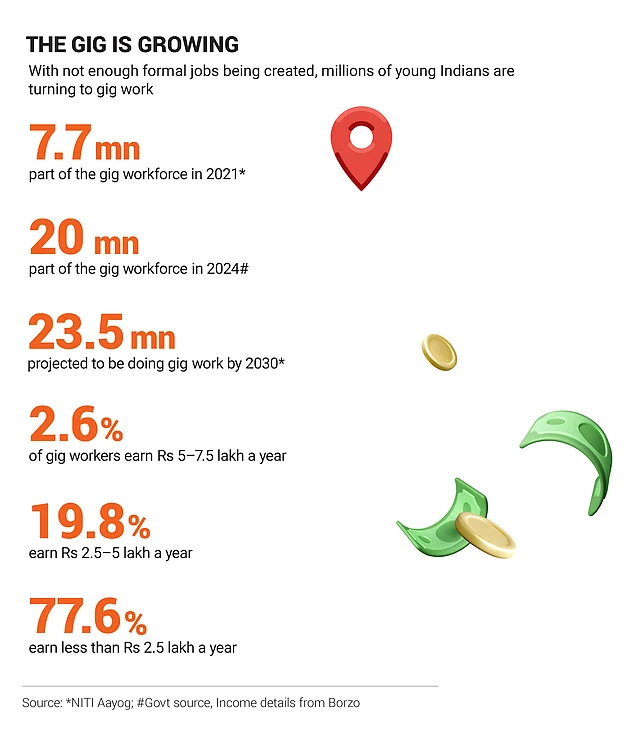
- In the recent report titled India’s Booming Gig and Platform Economy, projected that the number of gig workers in India may rise to 23.5mn by 2030.
Background
- The introduced labor codes in 2020, including the Code on Social Security, 2020, to extend welfare benefits to unorganized and gig workers.
- The code defines platform workers and mandates the formation of a National Social Security Board.
Key Provisions of the Law
- Gig Workers Welfare Board: The board would be established to implement the gig workers’ welfare law. The Board will look after all the issues of gig workers and platforms.
- Platform and Worker Registration: Aggregator platforms like Zomato, Ola, Swiggy, Amazon must register with a state welfare board and enroll all their gig workers, who will receive a unique ID.
- Welfare Contributions: Aggregator platforms like Zomato, Ola, Swiggy, Amazon must contribute 1% to 5% of their payout to workers into a state-run welfare fund for social security.
- Disclosing Algorithmic Logic: Platforms need to explain how their algorithms function for task allocation, pay, ratings, and access, ensuring no discrimination.
- Written Agreements: Platforms are required to provide clear, written contracts to workers detailing earnings, payment methods, and conditions for access blocking.
- Grievance Redressal and Working Conditions: A two-tier grievance system is established, starting with an Internal Dispute Resolution Committee within the platform, and escalating to the Welfare Board.
- Interest and Penalties for Non-Compliance: Late payment of welfare fees incurs a 12% annual interest. Non-compliance can lead to fines of up to Rs 5,000 for the first violation and up to Rs 1 lakh for subsequent violations.
Challenges to Gig Workers
- Job Insecurity and Lack of Social Protection
- Low Wages and Income Inequality
- Algorithms control task allocation, pay rates, performance ratings, and even deactivation, but their logic is often hidden from workers.
- The unclear employment status of gig workers makes it difficult to apply existing labor laws, which were designed for traditional employment.
Steps Taken by India for Gig Workers
- Social Security Code, 2020: This code recognizes gig workers as a separate category and aims to extend social security benefits to them.
- e-Shram Portal: This is a national database for unorganized sector workers, including gig and platform workers.
- Union Budget 2025-26: Included provisions of issuance of identity cards, and healthcare coverage under the Ayushman Bharat Pradhan Mantri Jan Arogya Yojana (AB-PMJAY).
- Rajasthan Platform-Based Gig Workers Act, 2023: This is India’s first state-level legislation specifically addressing gig worker rights.
Source: TH