
Brief Context
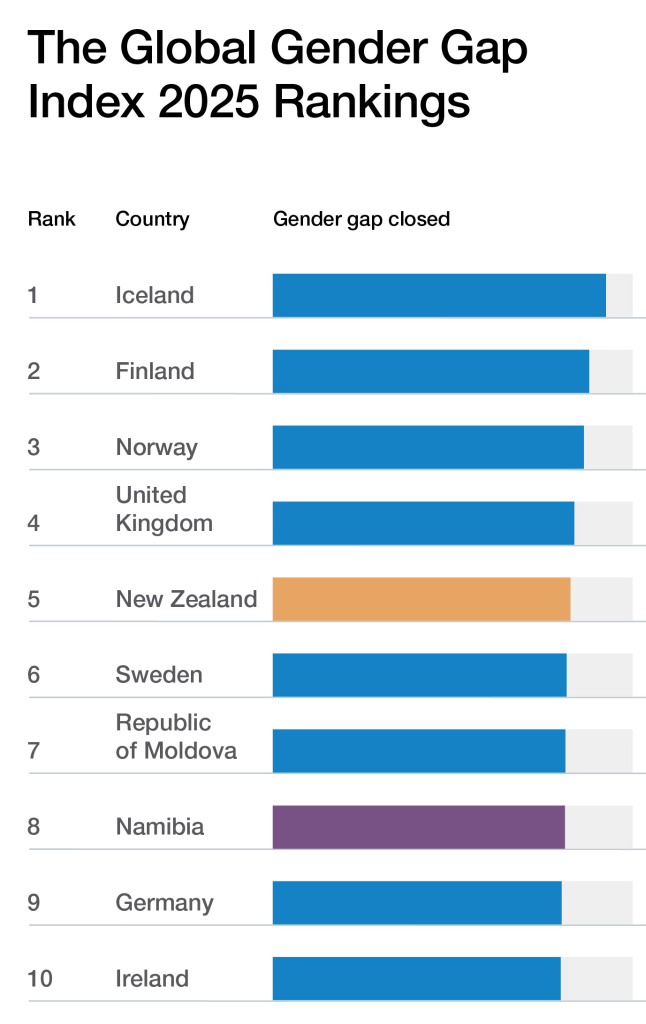
Context Recently, the World Economic Forum (WEF) released its 19th edition of Global Gender Gap Report 2025. Global Overview Overall Gender Parity: The world has closed 68.5% of the gender gap, a marginal improvement from the previous year. Top Performers:Iceland remains the most gender-equal country for the 16th consecutive year, achieving over 90% parity.
Source Content
Syllabus: GS2/Issues Related To Women
Context
- Recently, the World Economic Forum (WEF) released its 19th edition of Global Gender Gap Report 2025.
Global Overview
- Overall Gender Parity: The world has closed 68.5% of the gender gap, a marginal improvement from the previous year.
- Top Performers:Iceland remains the most gender-equal country for the 16th consecutive year, achieving over 90% parity.
- Other top-ranking nations include Finland, Norway and the United Kingdom etc.
India’s Performance
- Overall Rank: India slipped to 131st out of 148 countries, with a parity score of 64.1%.
- Economic Participation: Improved slightly to 40.7%, with a rise in estimated earned income parity from 28.6% to 29.9%.
- Educational Attainment: Scored 97.1%, reflecting strong gains in literacy and higher education enrollment.
- Health and Survival: Showed modest improvement in sex ratio at birth and healthy life expectancy.
- Political Empowerment: Declined, with women’s representation in Parliament dropping from 14.7% to 13.8%, and ministerial roles falling from 6.5% to 5.6%, marking a continued decline from the 2019 peak of 30%.
Regional Insights
- South Asia: India ranks below Bangladesh (24), Nepal (125), and Sri Lanka (130), but above Maldives (138), Bhutan (119) and Pakistan (148).
- Europe: Leads globally with 76.3% parity, surpassing North America.
- Middle East and North Africa: Remains the furthest from parity at 62.6%.
Key Concerns Highlighted in Report
- Time to Full Parity: At the current pace, it will take 123 years to close the global gender gap, highlighting the need for accelerated efforts.
- Economic Disparities: Despite progress, women still earn significantly less than men, with wage gaps persisting across industries.
- Regional Inequalities: Certain regions, particularly South Asia and the Middle East, continue to lag behind in gender parity, facing structural and cultural barriers.
| Other Key Reports by WEF – Global Competitiveness Report: Assesses the economic competitiveness of countries based on productivity and innovation. – Future of Jobs Report: Examines trends in employment, automation, and workforce transformation. – Global Risks Report: Identifies emerging global risks, including economic instability, climate change, and geopolitical tensions. – Technology and Innovation Reports: Covers advancements in AI, digital transformation, and the Fourth Industrial Revolution. |
| Read this in Hindi: वैश्विक लैंगिक अंतर सूचकांक 2025: WEF |
Sources and further reading
- World Economic Forumnextias.com
- WEFnextias.com
- Source: THthehindu.com
- वैश्विक लैंगिक अंतर सूचकांक 2025: WEFnextias.com