
Brief Context
In News Indias Direct Benefit Transfer (DBT) framework is offering valuable insights for governments worldwide revising their social protection systems. The Direct Benefit Transfer (DBT) system It was launched on January 1, 2013, to reform government welfare delivery by simplifying processes, ensuring accurate targeting of beneficiaries, reducing fraud, and facilitating faster flow of information and funds. The DBT Mission, originally in the Planning Commission, was transferred to the Cabinet Se
Source Content
Syllabus: GS 3/Economy
In News
- India’s Direct Benefit Transfer (DBT) framework is offering valuable insights for governments worldwide revising their social protection systems.
The Direct Benefit Transfer (DBT) system
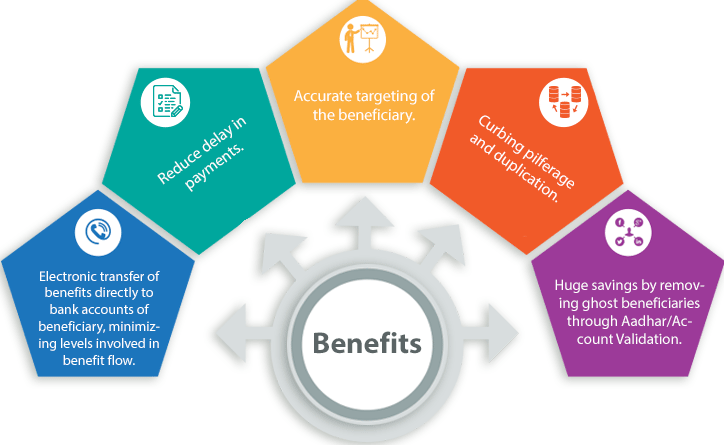
- It was launched on January 1, 2013, to reform government welfare delivery by simplifying processes, ensuring accurate targeting of beneficiaries, reducing fraud, and facilitating faster flow of information and funds.
- The DBT Mission, originally in the Planning Commission, was transferred to the Cabinet Secretariat in 2015 for better coordination.
- Jan Dhan, Aadhaar, and Mobile (JAM) form the backbone of the system, enabling efficient and transparent transfers.
- It aims to ensure maximum governance with minimum government, enhancing transparency and accountability.
- It covers schemes like scholarships, subsidies, wages, pensions, and cash for food grains.
- Its scope continues to grow rapidly with the adoption of new programs and digital technologies under the Digital India Programme.
Progress
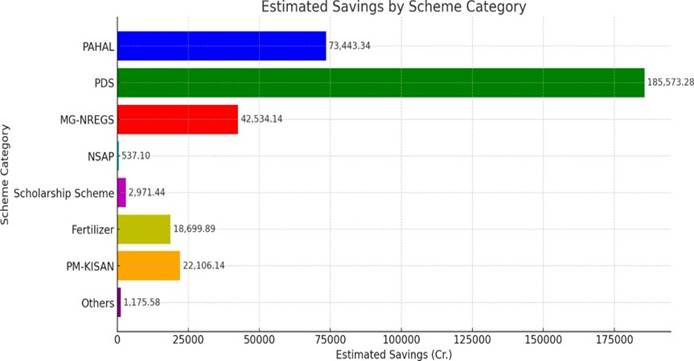
- India’s Direct Benefit Transfer (DBT) system has greatly improved welfare delivery, cutting fiscal leakages by ₹3.48 lakh crore and making subsidies more targeted.
- The rise in the Welfare Efficiency Index (WEI) highlights DBT’s success in optimizing fiscal resources while expanding beneficiary coverage.
- Savings in sectors like food subsidies, MGNREGS, and PM-KISAN demonstrate the effectiveness of Aadhaar and mobile-based transfers in reducing inefficiencies and misuse.
Sectoral Analysis: DBT has particularly benefited high-leakage programme
- Food Subsidies (PDS): ₹1.85 lakh crore saved, accounting for 53% of total DBT savings. This was largely due to Aadhaar-linked ration card authentication.
- MGNREGS: 98% of wages were transferred timely, saving ₹42,534 crore through DBT-driven accountability.
- PM-KISAN: ₹22,106 crore saved by deleting 2.1 crore ineligible beneficiaries from the scheme.
- Fertilizer Subsidies: Sales of 158 lakh MT of fertiliser were reduced, saving ₹18,699.8 crore through targeted disbursement.
- Subsidies dropped from 16% to 9% of government expenditure, while beneficiaries increased from 11 crore to 176 crore.
Challenges
- Issues with identifying real beneficiaries
- Aadhaar mismatches and biometric failures
- Poor banking access and digital infrastructure in rural areas
- Low digital literacy among beneficiaries
- Overlapping and complex subsidy structures
Suggestions and Way Forward
- India’s Direct Benefit Transfer (DBT) system successfully balances fiscal prudence with social inclusion.
- It offers a global model for efficient, transparent, and inclusive welfare delivery, demonstrating how direct transfers can drive both economic and social development.
- However, challenges like beneficiary identification issues, Aadhaar errors, limited banking access in rural areas, and low digital literacy remain.
- To address these, India should focus on improving data accuracy, expanding rural banking, enhancing digital infrastructure, promoting awareness, and customizing DBT models for specific regions.
Source: TH