
Brief Context
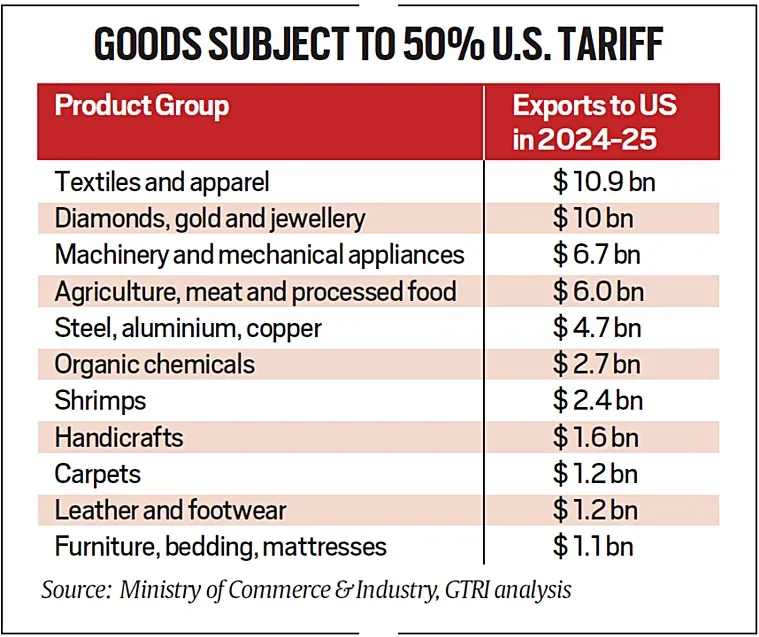
Context The United States has imposed 50% tariffs on a wide range of Indian merchandise exports starting August 27, 2025. About The move combines the 25% tariff announced in July 2025 and an additional 25% “penalty tariff” in August 2025 linked to India’s purchases of Russian oil and defence imports. Key sectors affected include textiles, apparel, gems and jewellery, shrimp, carpets, leather, and furniture — all of which are labour-intensive and job-generating industries.
Source Content
Syllabus: GS3/ Economy
Context
- The United States has imposed 50% tariffs on a wide range of Indian merchandise exports starting August 27, 2025.
About
- The move combines the 25% tariff announced in July 2025 and an additional 25% “penalty tariff” in August 2025 linked to India’s purchases of Russian oil and defence imports.
- Key sectors affected include textiles, apparel, gems and jewellery, shrimp, carpets, leather, and furniture — all of which are labour-intensive and job-generating industries.
- Major Goods Exempted from Tariffs: Pharmaceuticals, Electronics and Petroleum products.
Impact on India’s Economy
- Trade Impact: India’s exports to the US could fall from $87 billion in FY25 to $49.6 billion in FY26, a decline of 43%.
- The US accounts for 20 per cent of merchandise exports from India and 2 per cent of the GDP.
- Domestic Concerns and Industry Demands:
- Gems & Jewellery Council (GJEPC): Demanding a duty drawback/ reimbursement scheme covering 25–50% of tariffs to protect competitiveness.
- Textile Industry is seeking Immediate cash support, Loan moratoriums, Fast-tracking FTAs with the EU and other partners to diversify export markets.
- Job Protection: Industries fear widespread layoffs in labour-intensive export hubs like Surat (diamonds), Tiruppur (textiles), and Andhra Pradesh (shrimp farming).
- Competitors Benefiting: Countries such as Vietnam, Bangladesh, Cambodia, Pakistan, and China face lower tariff rates and are expected to capture India’s lost market share.
India initiatives to mitigate the impact
- E-Commerce Export Hubs (ECEHs): Proposed to provide integrated logistics, warehousing, and customs clearance facilities for online exporters.
- Consultations with Industry Stakeholders: Ongoing dialogue with MSMEs, global e-commerce giants, and retailers to balance regulatory reforms.
- Exploring Inventory-Based E-Commerce: Discussions underway to assess whether this model can reduce compliance burden for MSMEs.
- Tariff Negotiations: Efforts are being made to ensure India’s sensitive export sectors remain competitive despite global protectionism.
Way Ahead
- Short-Term Relief Measures:
- Targeted subsidies, duty drawback, or reimbursement schemes for heavily hit sectors.
- Temporary financial support packages to prevent job losses.
- Diversification of Export Markets:
- Accelerate FTA negotiations with EU, UK, and Gulf nations.
- Explore African and Latin American markets for textiles, gems, and marine products.
- Enhancing Competitiveness: Promote technology adoption, product innovation, and value addition in textiles and gems.
Source: IE
Sources and further reading
- IEie