
Brief Context
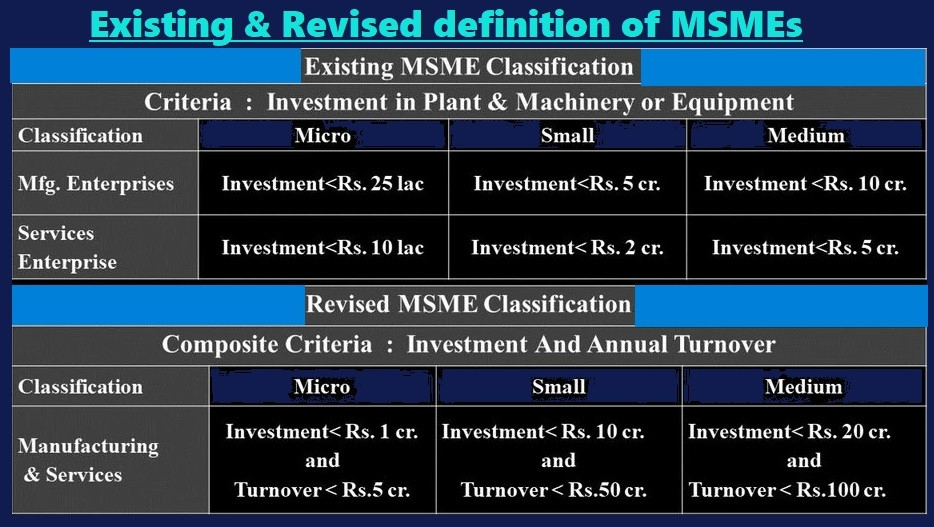
Context Ahead of the Union Budget 2026–27, representatives of MSME have flagged rising industrial stress and sought targeted reforms in credit access, risk protection, and compliance norms. What are MSMEs? MSMEs or Micro, Small, and Medium Enterprises are businesses that are defined by their investment and turnover levels.
Source Content
Syllabus: GS3/ Economy
Context
- Ahead of the Union Budget 2026–27, representatives of MSME have flagged rising industrial stress and sought targeted reforms in credit access, risk protection, and compliance norms.
What are MSMEs?
- MSMEs or Micro, Small, and Medium Enterprises are businesses that are defined by their investment and turnover levels.
- They are considered an important sector of the economy as they create jobs, generate income, and promote entrepreneurship.
Contribution of MSMEs
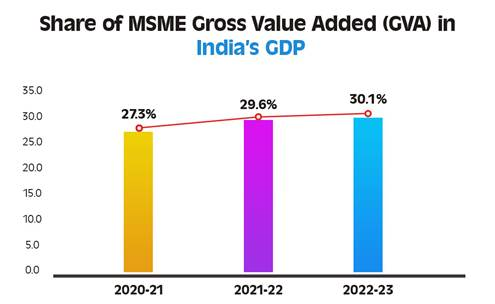
- Contribution in Economy: MSMEs are often called the backbone of the Indian economy; they account for more than 11 crore jobs and contribute around 27% of India’s GDP.
- Employment Generation: The sector consists of around 6.4 crore MSMEs , with 1.5 crore of them registered on the Udyam portal and employs around 23% of the Indian labor force, making it the second-largest employer in India after agriculture.
- Output and Exports: They account for 38.4% of the total manufacturing output and contribute 45.03% of the country’s total exports.
Challenges faced by MSMEs in India
- Access to Finance: MSMEs struggle to secure capital due to a lack of collateral, limited credit history, or inadequate access to formal financial institutions.
- Increased Competition: MSMEs face stiff competition from larger, more established companies that have greater resources and market influence.
- Lack of Technological knowledge: Many MSMEs lack the technical expertise needed to modernize their operations, adopt new technologies, and stay competitive in the market.
- Marketing and Networking Opportunities: Limited resources and networks prevent MSMEs from effectively marketing their products and services.
Key Demands of MSMEs
- Affordable Credit Access: Statutory collateral-free lending up to ₹1 crore for micro enterprises and interest rate cap of 6–7 percent on such loans to ensure affordability.
- Protection Against Trade Shocks: Establishment of an Export Risk Equalisation Fund to compensate micro exporters affected by sudden tariff hikes.
- Safeguards from Exchange Rate Volatility: Introduction of a forex fluctuation protection scheme for micro enterprises with limited hedging capacity.
- Simplified and subsidised foreign exchange hedging instruments to be considered by the Reserve Bank of India for micro units.
- Simplification of Compliance: Higher exemption thresholds under the Goods and Services Tax (GST) regime for micro enterprises.
- Introduction of a single, simplified GST return for micro units.
- Creation of an Emergency Working Capital Window during wars or global disruptions affecting raw materials, fuel, and shipping routes.
Government initiatives to promote the MSME sector
- MSME Champions scheme: The objective of the scheme is to modernize MSMEs’ manufacturing processes, reduce wastages, encourage innovativeness, sharpen business competitiveness and facilitate their National and Global reach and excellence.
- Udyam Registration: It is an online registration process to simplify the registration of MSMEs. The objective is to provide MSMEs with a streamlined process to avail themselves of various benefits and incentives offered by the government.
- Section 15 of the Micro, Small, and Medium Enterprises Development (MSMED) Act, 2006, and newly enacted Section 43B(h) of the Income-tax Act says that businesses must pay these MSME Registered Enterprises within 15 days, or up to 45 days if they have an agreement.
- Credit Guarantee Fund Trust for Micro and Small Enterprises (CGTMSE): This scheme provides collateral-free credit to micro and small enterprises through a credit guarantee mechanism.
- Scheme of Fund for Regeneration of Traditional Industries (SFURTI) was launched in 2005-06 to organise traditional artisans into clusters for improved competitiveness, product development and sustainable income generation.
Way Ahead
- MSMEs are revolutionising India’s growth story by driving innovation, generating employment, and empowering local communities.
- Addressing MSME concerns through targeted credit support, s and simplified compliance can strengthen enterprise resilience, protect employment, and reinforce India’s manufacturing and export ecosystem.
Source: IE
Sources and further reading
- IEindianexpress.com